Iran Regime Change: Netanyahu Says Regime Must Fall
Netanyahu says Iran is again pursuing a nuclear threat and argues that toppling Tehran’s regime is the only way to remove the danger permanently
Sinai Desk
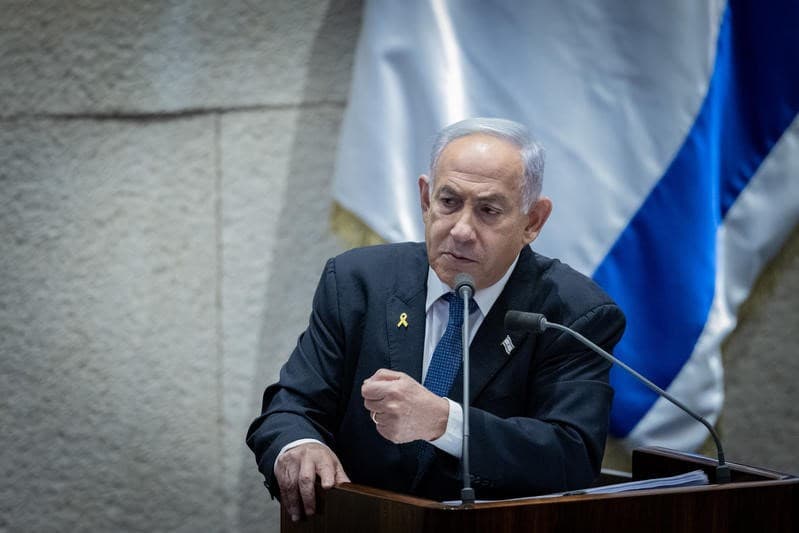
Iran regime change is now being presented by Prime Minister Benjamin Netanyahu as the only permanent answer to Tehran’s nuclear threat. Speaking Wednesday at an IDF officers’ course graduation ceremony at Bahad 1, Netanyahu said Iran was once again attempting to advance what he called its “bombs of death.” He also said Mojtaba Khamenei, Iran’s current supreme leader, had chosen to continue the path of his father.
“The regime in Iran still has not learned its lesson,” Netanyahu said. “Mojtaba Khamenei, the current dictator, decided to follow in his father’s footsteps. He pulled the pin, and Iran is once again trying to develop its bombs of death.” Netanyahu then made his conclusion explicit: “There is only one way to remove this threat once and for all: to topple the regime in Iran.”
Psalm 20:7 declares, “Some trust in chariots, and some in horses: but we will remember the name of the Lord our God.” The verse does not dismiss military strength. Instead, it places that strength within a larger moral framework. Netanyahu’s speech similarly centered on the combination of national resolve, military capability and what he described as responsibility for Israel’s survival.
Iran Regime Change Becomes an Explicit Israeli Goal
Netanyahu went further than describing regime change as a strategic preference. According to the Prime Minister’s Office transcript, he said overthrowing the Iranian government was now his directive to the IDF, Mossad and Israel’s other security branches. He framed Iran’s nuclear ambitions as an existential issue and said Israel could not rely on temporary setbacks to Tehran’s capabilities.
The speech builds on a position Netanyahu has articulated more openly in recent months. In September, he said the Iranian regime was weaker than ever and described toppling it as the “central mission” still facing Israel. Earlier this week, his government also published a revised national security doctrine emphasizing prevention and offensive action over containment when Israel identifies developing threats.
His latest remarks came as tension over Iran’s nuclear program remains high. Reuters reported this month that Iran’s three previously operating enrichment facilities were destroyed or severely damaged in earlier U.S.-Israeli strikes. However, Iran still possesses a significant stock of uranium enriched to 60%, while the status of a newer underground site near Isfahan remains uncertain.
That distinction is important. The International Atomic Energy Agency has not reported evidence of a coordinated active nuclear weapons program, and Reuters noted that Israel itself has not alleged Iran is currently enriching uranium. At the same time, the IAEA has lost significant visibility over Iran’s remaining nuclear material and facilities, while Tehran has resisted demands to surrender or sharply reduce its enriched uranium stockpile.
From the ‘Father of All Bombs’ to the Nuclear Question
Netanyahu’s warning comes directly after another escalation in Iranian rhetoric. In “Iran Father of All Bombs Threat Targets U.S. MOAB,” IRGC spokesman Hossein Mohebi claimed Tehran was preparing to unveil a new weapon in response to America’s GBU-43/B “Mother of All Bombs.” Iran provided no public technical specifications for that claimed weapon.
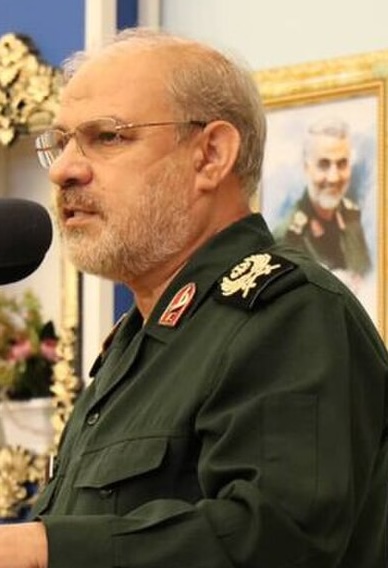
The sequence underscores how rapidly the confrontation has expanded beyond the nuclear file. Iranian officials have threatened Israel, American forces, Gulf infrastructure and regional energy assets. Israeli leaders, meanwhile, increasingly argue that simply damaging individual Iranian military capabilities cannot permanently remove the threat as long as the current regime remains in power.
President Donald Trump has also kept the nuclear issue at the center of U.S. policy. Last week, Trump said the United States might need to strike the fortified Pickaxe Mountain site if necessary to prevent Iran from acquiring a nuclear weapon. He ruled out using nuclear weapons and said he was not considering American ground troops.
Washington continues to demand substantial reductions in Iran’s enrichment capacity as part of any settlement. Tehran has resisted those demands and insists that its nuclear program is peaceful. Iranian officials have also said enriched uranium will remain inside the country.
Netanyahu’s position therefore goes beyond the current American negotiating demand. His argument is that even a damaged or constrained nuclear program remains dangerous if the same leadership continues pursuing it. Whether Washington ultimately embraces regime change as formal policy is a separate question.
Two Nations Facing the Same Iranian Threat
Israel’s covenantal mission before God is inseparable from the obligation to preserve Jewish sovereignty and protect Jewish life. After centuries in which Jews lacked the ability to defend themselves as a nation, Israeli security doctrine places extraordinary weight on preventing existential threats before they fully mature. Netanyahu’s language at Bahad 1 reflects that historical experience, even as the method he proposes carries major regional consequences.
America’s covenantal mission developed through a different national history, rooted in liberty, constitutional government and responsibility in the exercise of power. The United States also faces Iranian threats against its forces, citizens and regional partners. That creates a substantial overlap with Israel, but Washington must weigh its own interests, military commitments and the consequences of any effort aimed at replacing another government.
For both countries, the immediate issue remains Iran’s nuclear capability and Tehran’s ability to threaten their citizens and allies. Netanyahu’s speech moves the debate beyond how to damage that capability. He is now arguing that the political system directing it must also be removed.
That is a far more ambitious objective than another strike on a facility or missile plant. It also marks one of Netanyahu’s clearest statements yet that Israel views the future of the Iranian regime itself as part of the country’s national security problem.
For more stories on Israel, faith, and the values behind the headlines, follow Sinai on Facebook and Instagram.
Discussion0
No comments yet — be the first to share your thoughts.