Houthis Reportedly Capture Camp Khalid Near Mokha
Initial reports say Houthi forces may have captured Camp Khalid near Mokha as withdrawals and heavy fighting intensify close to Bab al-Mandab

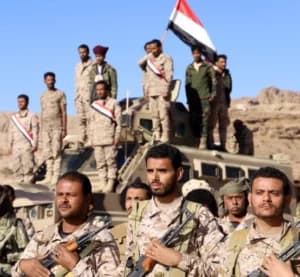
Initial reports say Camp Khalid near Mokha may have fallen to Yemen’s Iran-backed Houthis during a major west coast offensive. The reported capture has not yet been independently confirmed. However, local reporting indicates forces aligned with Tareq Saleh have withdrawn from the camp as fighting reached its immediate surroundings.
The development comes during the widest escalation in Yemen since the 2022 truce. Government and Houthi forces are fighting across Taiz, Al-Hudaydah, Al-Bayda, and other fronts. Government reinforcements have also been sent toward Mokha, which sits close to the Bab al-Mandab maritime chokepoint.
Proverbs 21:31 says, “The horse is prepared for the day of battle, but victory belongs to the Lord.” Camp Khalid demonstrates how quickly military preparations can be overturned when a front begins to collapse. Roads, high ground, supply lines, and fortified bases can determine whether an army advances or retreats.
Why Camp Khalid Matters
Camp Khalid ibn al-Walid sits near the Mokha junction in western Taiz province. Historically, it has been one of the most important fortified positions on Yemen’s western coast. The site lies about 40 kilometers from Mokha and roughly 60 kilometers from Taiz.
Its strategic value comes largely from the road network surrounding it. The junction connects Mokha with Taiz and the route north toward Al-Hudaydah. Control of the position can therefore affect military movements between Yemen’s interior and its Red Sea coastline.
The camp also sits within the broader defensive depth protecting Mokha and the approaches to Bab al-Mandab. Government-aligned forces captured it from the Houthis in 2017 after months of fighting. At the time, military officials described the base as critical to securing the western coast and nearby maritime routes.
Current local reports say Tareq Saleh’s forces began moving equipment and vehicles out of Camp Khalid as clashes approached. One Yemen-based outlet reported that military convoys were seen leaving the facility. Another reported withdrawals from both the camp and nearby strategic positions. These reports do not yet establish that Houthi forces have completed a takeover.
Houthi Advance Raises Red Sea Stakes
Any confirmed Houthi capture would matter far beyond one military base. Mokha sits near Bab al-Mandab, the narrow passage connecting the Red Sea with the Gulf of Aden. The Houthis have already used missiles, drones, and maritime attacks to threaten shipping across this corridor.

The renewed offensive is unfolding while the Houthis are also attacking Saudi Arabia. Their latest missile and drone barrage struck southern Saudi cities and energy infrastructure, wounding dozens. Saudi-backed forces have responded with renewed ground operations and airstrikes inside Yemen.
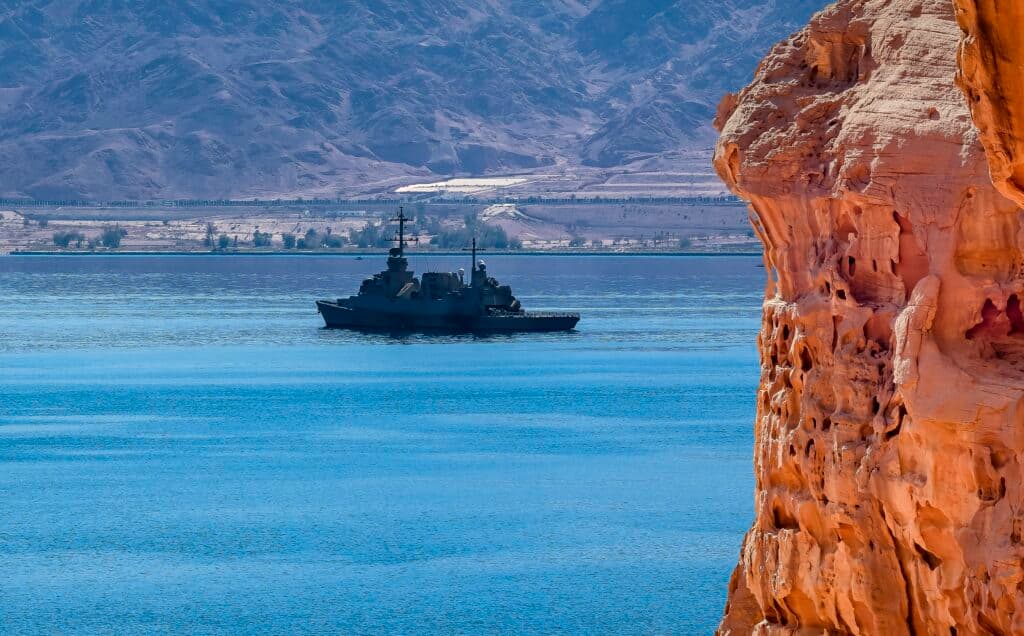
That creates a wider strategic problem for Israel. Bab al-Mandab is the southern gateway to the Red Sea and therefore affects maritime access toward Eilat. A stronger Houthi position near the strait could increase pressure on shipping already threatened by the group’s missile and drone arsenal.
Washington has the same concern from a broader regional perspective. The United States has repeatedly defended freedom of navigation against Houthi attacks. American forces also face an expanding confrontation with Iran itself around the Strait of Hormuz and at military positions elsewhere in the Middle East.
That wider escalation was evident in “IRGC Retaliation Warning: 20 Targets for Every 2 or 3.” The Revolutionary Guards openly threatened responses far larger than any attack against Iran. The reported Houthi advance in Yemen is a separate battlefield development, but it comes as Iran and its regional partners exert pressure across several fronts at once.
A direct operational link between Tehran and the current Camp Khalid fighting has not been established. The Houthis, however, receive Iranian military and political support. Their territorial gains therefore have consequences for the same regional balance Washington and Jerusalem are trying to contain.
Holding the Gate to the Red Sea
Israel and the United States have distinct covenantal histories, yet both place national defense within a wider responsibility to protect life and preserve freedom. Israel’s covenantal mission requires the Jewish state to defend its people and maintain sovereign access to the wider world. America’s national tradition joins military strength with the defense of allies and open international waterways.
Bab al-Mandab is where those interests become tangible. Israel cannot treat control of Yemen’s western coast as a distant civil war when hostile missiles can threaten Eilat and Red Sea shipping. Washington cannot treat it as purely local when global commerce and American naval operations depend on secure passage.
A Houthi breakthrough toward Mokha would also add pressure to Saudi Arabia. Riyadh increasingly depends on Red Sea infrastructure as instability disrupts routes around the Strait of Hormuz. Houthi control of additional territory near the southern Red Sea could strengthen the group’s ability to threaten that alternative.
For that reason, the status of Camp Khalid deserves careful verification. Reports of withdrawals and fighting around the camp are now circulating, but major international outlets have not yet confirmed full Houthi control. The distinction between an evacuation, a contested position, and a completed capture matters militarily.
If the capture is confirmed, it would represent a notable Houthi gain on one of Yemen’s most strategically sensitive fronts. It could place additional pressure on Mokha and strengthen Houthi positions near Bab al-Mandab. For Israel, the United States, and their regional partners, that would make an already dangerous Red Sea theater significantly more difficult.
For more stories on Israel, faith, and the values behind the headlines, follow Sinai on Facebook and Instagram.
Discussion0
No comments yet — be the first to share your thoughts.