Houthis Threaten Saudi Arabia After Alleged Prison Strike
The Houthis threatened Saudi Arabia with further retaliation after an alleged Al-Jawf prison strike as fighting intensifies across Yemen and the Red Sea

Houthis threaten Saudi Arabia with further retaliation as Yemen moves closer to another major round of war. Houthi military spokesman Yahya Saree said Monday that what he called continued Saudi aggression “will not go unanswered or unpunished.” His warning followed an alleged strike on a detention facility in Al-Jawf province and several days of renewed fighting.
Houthi authorities accused Saudi Arabia of striking the Central Corrective Facility in Al-Hazm. The Houthi-run health ministry said seven people died, including a child, while at least seven others were wounded. The prison warden also claimed dozens remained trapped beneath the rubble. Saudi Arabia had not issued an immediate public response to the allegation when the Associated Press reported the incident.
Responsibility for that specific strike therefore remains unverified. Yemeni government forces separately confirmed air operations against Houthi positions across Al-Jawf and other provinces. They said their aircraft targeted military sites, camps, and concentrations of Houthi forces.
Psalm 46:9 declares that God “makes wars cease to the end of the earth.” Yemen’s renewed fighting shows how distant that goal remains when missiles, drones, airstrikes, and maritime attacks continue replacing political settlement. Civilian suffering should not become another instrument in a conflict already stretching across more than a decade.
Houthis Threaten Saudi Arabia as Fighting Returns
Saree accused Saudi Arabia of conducting airstrikes and supplying weapons to forces fighting the Houthis. He also claimed Houthi fighters destroyed four Saudi reconnaissance drones within 24 hours. Those drone claims have not been independently verified.

The latest escalation follows months of growing hostility between Riyadh and the Iran-backed organization. The Houthis resumed missile attacks against Saudi Arabia in July after years of relative calm. They later declared what they called a naval blockade of the kingdom and threatened Saudi energy infrastructure.
The threats soon moved beyond rhetoric. Reuters reported Houthi attacks against Saudi oil facilities in Jizan and Yanbu, along with attacks on Saudi-linked vessels. The United States later told the UN Security Council that Houthis had targeted more than seven Saudi-linked commercial ships. Washington also cited attacks on energy infrastructure and Saudi civilian facilities.
That pressure was already visible in “Saudi Oil Exports Sink to Nine-Year Low.” Saudi Arabia had relied increasingly on its Red Sea export route after Iranian restrictions disrupted the Strait of Hormuz. Houthi attacks then threatened the alternative route, placing Riyadh between two dangerous maritime fronts.
The renewed Yemen conflict therefore has consequences well beyond the Saudi-Yemeni border. Saudi oil infrastructure, Bab al-Mandeb shipping, and Red Sea trade now sit inside the same expanding regional confrontation.
Washington and Jerusalem Face the Same Houthi Network
The United States has taken an unusually clear position on the latest escalation. During an August UN Security Council meeting, the American representative said Washington “stands firmly” with Saudi Arabia against the Houthi threat. The United States also condemned attacks on Saudi territory and international shipping.
Washington identifies Ansarallah, commonly known as the Houthis, as a Foreign Terrorist Organization. The Treasury Department also describes the group as an Iran-backed terrorist organization. U.S. sanctions have targeted networks that move Iranian support, weapons components, oil products, and financing to the group.
Israel has confronted the same organization from another direction. The IDF says the Houthis have launched missiles and drones toward Israel while threatening commercial traffic through Bab al-Mandeb. Israel describes the organization as part of Iran’s wider regional axis and says Tehran provides funding and military support.

That makes the Saudi-Houthi confrontation directly relevant to Israeli security. A stronger Houthi military position in Yemen can threaten Saudi Arabia, Israel, and international trade at the same time. The same missiles, drones, and maritime capabilities can serve several fronts without requiring Iran itself to operate openly.
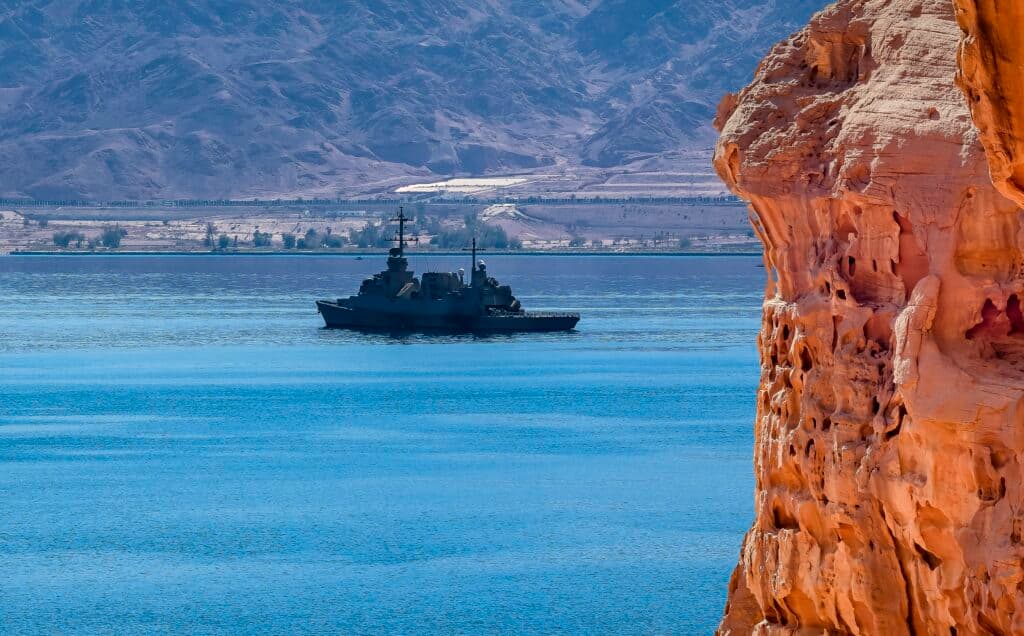
The danger is particularly acute in the Red Sea. Israel’s southern maritime access depends on secure shipping through Bab al-Mandeb. The United States relies on the same waterway as part of a global system of free navigation and energy security.
Free Seas Require Responsible Strength
The renewed fighting also illustrates a principle shared by the United States and Israel: military strength carries obligations as well as power. America’s national tradition links freedom with the rule of law and protection of commerce. Israel’s covenantal responsibility includes defending Jewish life and preserving sovereign access to the sea.
Both countries therefore have reason to oppose Houthi attempts to use shipping routes as political weapons. The UN Security Council has warned that attacks around the Red Sea threaten seafarers, global supply chains, international trade, and energy security. Those consequences eventually reach civilians far beyond Yemen.
At the same time, civilian casualties inside Yemen cannot be dismissed because the Houthis themselves are an armed terrorist organization. Allegations involving strikes on prisons or other civilian facilities require evidence and scrutiny. Israel and the United States strengthen their own moral position when they insist that military force distinguish between legitimate targets and protected civilians.
The larger responsibility remains preventing an Iran-backed armed movement from controlling strategic waterways through missiles and coercion. The United States has emphasized freedom of navigation as a fundamental principle. Israel has similarly identified Houthi attacks on international shipping as a threat to both regional and global stability.
Yemen now faces its most serious danger of renewed large-scale war since the 2022 truce. The UN has warned that further escalation could deepen an already severe humanitarian crisis while destabilizing the wider region.
Saree’s threat makes clear that the Houthis intend to answer military pressure with more military pressure. Saudi Arabia has likewise reserved the right to protect its citizens, vessels, and critical infrastructure from Houthi attacks.
The question is whether deterrence can stop the cycle before Yemen again becomes a full battlefield. Washington, Jerusalem, and Riyadh all have strong interests in preventing an Iranian-backed Houthi force from dictating regional security through missiles, drones, and maritime attacks.
For more stories on Israel, faith, and the values behind the headlines, follow Sinai on Facebook and Instagram.
Discussion0
No comments yet — be the first to share your thoughts.