Kyiv Strike Pause Begins During U.S.-Led Peace Talks
Russia paused strikes on Kyiv as Jared Kushner and Steve Witkoff continue U.S.-led peace talks, while Ukraine offered reciprocal restraint toward Moscow

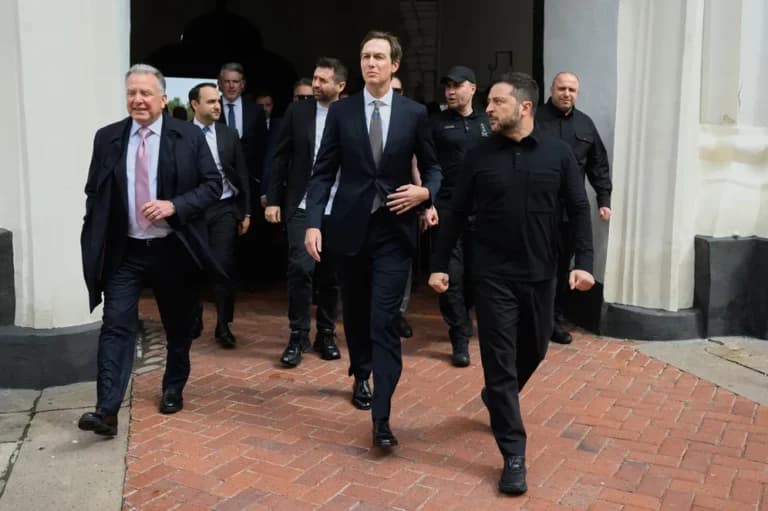
A Kyiv strike pause has opened a narrow diplomatic window as U.S. envoys Jared Kushner and Steve Witkoff shuttle between Moscow and Ukraine. The Kremlin announced that Vladimir Putin ordered Russian forces to halt attacks on Kyiv for three days. Moscow said the pause was tied directly to the American delegation’s visit and preparations for talks in the Ukrainian capital.
Ukraine has announced reciprocal restraint around the negotiations. President Volodymyr Zelensky said Kyiv would refrain from strikes on Moscow during the period surrounding the American mission. He said Ukraine expected Russia to do the same toward Kyiv. The Ukrainian presidency also confirmed that Kushner and Witkoff would travel from Moscow to Kyiv as part of the U.S. effort.
Psalm 34:15 says, “Seek peace and pursue it.” The verse does not present peace as passive or automatic. It requires deliberate action, persistence, and the willingness to create space for diplomacy even during conflict. The temporary pause around Kyiv is small, but it shows what determined American mediation can sometimes achieve.
Kyiv Strike Pause Gives U.S. Diplomacy Room
Russian Presidential Aide Yury Ushakov said Putin met Kushner and Witkoff for more than three hours. He described the talks as substantive and said Russia presented its view of the battlefield and possible terms for a settlement. Ushakov also said Putin thanked President Donald Trump for his effort to advance negotiations. Those comments represent Moscow’s official account and should be understood as the Russian government’s presentation of the meeting.
Ukraine’s account confirms the central American role from the other side. Zelensky said his government had received details directly from President Trump’s team and was preparing for the envoys’ arrival. He also said Ukraine was willing to suspend strikes on Moscow for the period needed to conduct the talks safely. That reciprocal adjustment gives Washington something tangible before negotiations even begin.
The pause should not be confused with a ceasefire or peace agreement. Ukraine’s presidency has continued to report Russian attacks elsewhere and has repeatedly said any lasting agreement must protect Ukrainian sovereignty and security. Moscow, meanwhile, continues to insist that a settlement address what it calls the conflict’s “root causes.” The two sides therefore remain far apart even while accepting a temporary diplomatic opening.
That makes the immediate American achievement more limited, but still significant. Washington has persuaded both sides to alter military behavior around its negotiators. In a war defined by missile and drone attacks, even a temporary protected window carries practical value. It also tests whether localized restraint can eventually grow into something broader.
Why the Ukraine Talks Matter to Israel
The relevance to Israel begins with the United States. Jerusalem depends on an American ally capable of combining military strength, economic leverage, and direct diplomacy. The Ukraine talks show Washington using another tool of power: personal mediation backed by enough influence that both combatants adjust operations around American envoys.

That same principle matters closer to Israel. “Israel-Turkey Tensions Spread Across Syria and Mediterranean” examined how competing Israeli and Turkish interests increasingly overlap across Syria and the Eastern Mediterranean. As regional military forces operate in tighter geographic spaces, American deconfliction can help prevent rivalry from becoming accidental war.
The situations are not identical. Russia and Ukraine are active belligerents in a major war, while Israel and Turkey remain in a tense but very different relationship. Yet Washington’s strategic value is similar in both cases. A powerful United States can help allies maintain deterrence while keeping channels open when military interests collide.
Israel also has direct ties to Ukraine. Israel’s Foreign Ministry says the country has stood in solidarity with Ukraine since Russia’s full-scale invasion and has provided extensive humanitarian assistance. Official Israeli records also note continued security discussions and efforts to strengthen Ukrainian-Israeli relations.
For Israelis, the war has also reinforced familiar lessons about air defense and civilian resilience. Ukraine continues to face missiles and drones aimed at cities and infrastructure. Israel faces its own missile threats from Iran and Iranian-backed forces. Both countries therefore understand that diplomacy works best when supported by credible defense.
Peace Through Strength and Responsibility
The American and Israeli covenantal traditions are distinct, but they meet around several enduring principles before God. Both emphasize the defense of life, national sovereignty, ordered liberty, and the responsibility to use strength with purpose. Neither tradition requires weakness in pursuit of peace.
President Trump’s approach in Ukraine reflects that balance when diplomacy creates real restraint rather than symbolic declarations. The current pause does not resolve the war. It does, however, show that American engagement can produce immediate changes on the ground when both sides believe Washington must be taken seriously.
Israel has a strong interest in that kind of American power. A United States capable of mediating between major adversaries is also better positioned to deter Iran, manage tensions among regional partners, and protect freedom of navigation. American diplomatic credibility therefore has consequences far beyond Europe.
The same principle applies to Israel’s own security doctrine. Peace is strongest when adversaries understand that Israel can defend itself, while allies know Jerusalem remains open to serious diplomacy. Deterrence and negotiation are not opposites when both serve the protection of life.
The next stage will depend on what Kushner and Witkoff carry from Moscow into Kyiv. Russia says it wants continued political negotiations, while Ukraine says it is ready to support diplomatic steps that can produce a genuine end to the war. The gap between those positions remains substantial.
For now, the most concrete result is simple. Russian strikes on Kyiv are temporarily paused, Ukraine has offered reciprocal restraint toward Moscow, and American negotiators are moving between the two capitals. That is not peace, but it is the kind of opening from which serious diplomacy must begin.
For more stories on Israel, faith, and the values behind the headlines, follow Sinai on Facebook and Instagram.
Discussion0
No comments yet — be the first to share your thoughts.