Houthis Dig 20 KM of Trenches at Bab al-Mandab
Satellite imagery reportedly shows roughly 20 kilometers of new Houthi trenches around Bab al-Mandab as the group fortifies its Red Sea gains

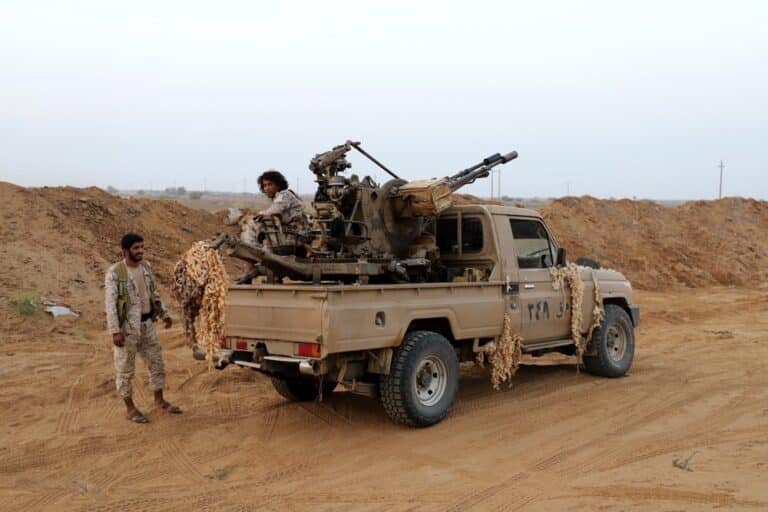
New Houthi trenches at Bab al-Mandab suggest the Iran-backed group is moving quickly to fortify its recent territorial gains. An analysis of satellite images from September 8 and 16 shows roughly 20 kilometers of new trenches across mountains surrounding the strategic strait. The images appear to show extensive earthworks and new defensive positions on the slopes overlooking the Red Sea corridor.
The reported construction follows the Houthis’ rapid seizure of territory along Yemen’s western coast. Earlier this month, the group captured Mokha, Dhubab, Perim Island and other positions around Bab al-Mandab. Reuters reported that those gains significantly strengthened the Houthis’ position beside one of the world’s most important shipping routes.
Psalm 127:1 says, “Except the Lord keep the city, the watchman waketh but in vain.” The image of a watchman overlooking a vulnerable gateway has particular resonance here. Bab al-Mandab is not simply another battlefield. Whoever holds the heights around it gains a powerful vantage point over a route connecting the Red Sea, Suez Canal and global commerce.
Houthi Trenches at Bab al-Mandab Strengthen Coastal Defenses
The satellite analysis identifies two likely purposes for the trenches. One is defense against a Saudi-backed counteroffensive aimed at recovering the coastline. The other is improving observation positions overlooking vessels moving through the Bab al-Mandab Strait.
Military analysts have separately described the same terrain as important to Houthi defensive strategy. Al Jazeera reported this week that the group often compensates for vulnerability along open coastal areas by moving into nearby mountains. From there, it establishes defensive and firing positions that protect the coast below.
That strategy could make reversing the recent Houthi advance more difficult. Saudi-backed Yemeni forces have already launched counterattacks around Dhubab, Mokha and nearby fronts. However, mountain fortifications could force attacking units to overcome prepared positions before they can regain secure access to the shoreline.
The Fight for Bab al-Mandab Widens
The fortification effort comes as Saudi Arabia searches for regional support. In “Saudi-Egypt Security Talks as Houthi Threat Grows,” Crown Prince Mohammed bin Salman traveled to Egypt amid concern over the Houthi advance. President Abdel Fattah el-Sisi met him in Cairo on September 15 for talks on regional developments and bilateral coordination.
Saudi Arabia has strong reasons to prevent the Houthis from consolidating their new position. The kingdom increasingly depends on Red Sea routes while instability limits traffic through the Strait of Hormuz. Reuters reported that Saudi-backed forces plan further operations to recover territory lost during the Houthi offensive.
Egypt also has a direct economic interest because Bab al-Mandab feeds traffic into the Red Sea and Suez Canal. Any prolonged disruption can reduce shipping through Suez and pressure Egyptian revenues. That gives Cairo, Riyadh and other regional governments overlapping interests even when their wider policies differ.
Washington and Jerusalem Watch the Same Strait
The United States has treated open access through the Red Sea as a major strategic interest. Saudi Arabia has asked Washington for stronger assistance during the latest Houthi offensive. The Trump administration has so far limited its role, while continuing intelligence and targeting support rather than launching a new direct intervention.
Israel faces a geographic concern of its own. Bab al-Mandab forms the southern gateway to the Red Sea route serving Eilat. The Houthis also possess missiles and drones capable of reaching Israel, and Reuters reports that the group has developed into a far more capable military force with Iranian support.
The trenches therefore matter beyond Yemen. Fortifying the mountains around the strait can help the Houthis defend territorial gains while improving their ability to observe a waterway used by commercial and military vessels. Shipping data this week already showed reduced traffic through Bab al-Mandab amid the broader regional conflict.
Guarding a Strategic Gateway
The United States and Israel share a tradition that treats national strength as a responsibility to protect life, preserve sovereignty and keep vital routes open. Both countries also depend on alliances and secure commerce beyond their own borders. A maritime chokepoint controlled or threatened by an Iran-backed armed group therefore carries consequences well beyond Yemen.
The challenge is not simply who holds another mountain ridge. It is whether the Houthis can turn new territorial control into a durable military position overlooking one of the world’s critical sea lanes. The trench network suggests they are preparing to hold their gains rather than treat the latest offensive as temporary.
The reported Houthi trenches at Bab al-Mandab add a new phase to that struggle. Territorial expansion is now being followed by fortification, observation and preparation for counterattack. For Israel, the United States, Saudi Arabia and Egypt, the strategic question is increasingly whether those positions can become permanent features of the Red Sea security landscape.
For more stories on Israel, faith, and the values behind the headlines, follow Sinai on Facebook and Instagram.
Discussion0
No comments yet — be the first to share your thoughts.