Ghazi Hamad Claims Hamas Did Not Kill Civilians On Oct 7
Ghazi Hamad claimed Hamas did not kill civilians on October 7 during a Piers Morgan interview, raising new concerns over denial, accountability, and future Gaza policy

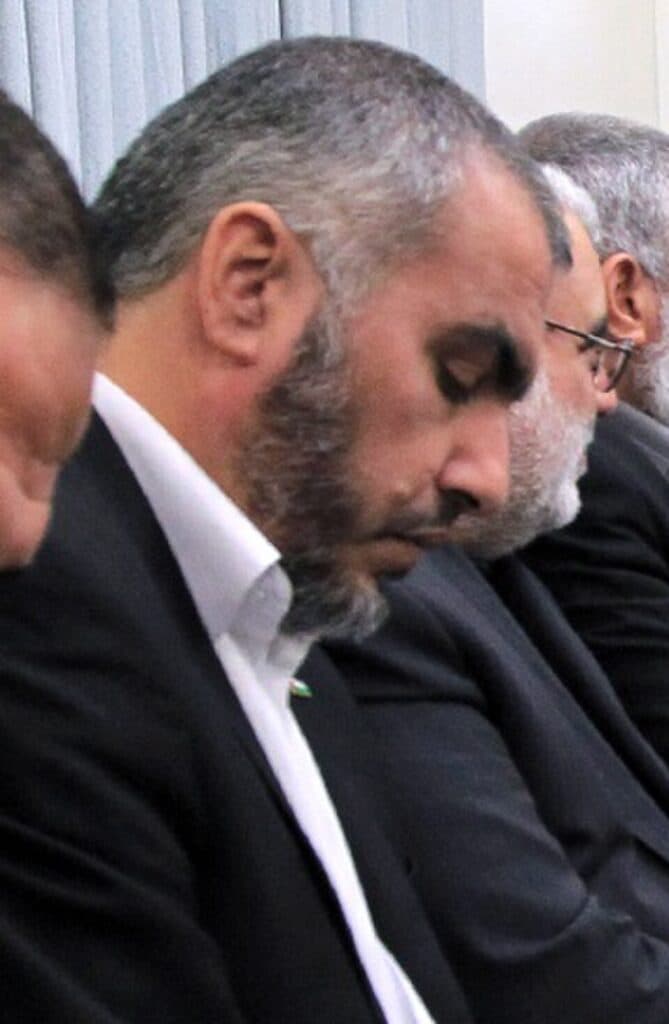
Ghazi Hamad’s October 7 claim drew attention after the senior Hamas official told British journalist Piers Morgan that Hamas did not kill civilians during the massacre.
Morgan interviewed Hamad about the October 7 attack, pressing him on Hamas’s actions that day. Hamad responded by denying that Hamas killed civilians, “We did not kill civilians,” Hamad said. “That is not Hamas policy. Maybe mistakes happened.”
The statement is likely to deepen outrage in Israel and among supporters of the Jewish state abroad. For Israelis, October 7 was not an abstract military event. It was a massacre of civilians, families, children, and communities.
The Tanakh says, “You shall not bear false witness against your neighbor.” That verse gives this story its moral frame. Denial after atrocity is not only a political tactic. It is an attack on memory, justice, and the victims themselves.
Ghazi Hamad October 7 Claim
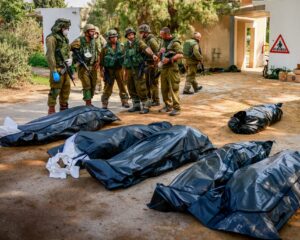
Hamad’s remarks matter because they show how Hamas tries to reshape the narrative after the massacre. Instead of accepting responsibility, he presented civilian deaths as outside Hamas policy and reduced the events to possible “mistakes.” That language matters. It turns organized terror into ambiguity and mass violence into a public relations dispute.
For Israel, this is not only about one interview. It is about the international battle over memory. Hamas wants the world to forget what happened, blur who committed it, and pressure Israel as if October 7 never revealed the true nature of the organization.
For the United States, the interview also carries significance. American policymakers, media figures, and voters are watching debates over Gaza, ceasefires, hostages, and Hamas’s future role. If Hamas can deny the massacre while receiving airtime, Washington must treat its statements with extreme caution.
October 7 Accountability
This issue connects directly to “IDF Eliminates October 7 Abduction Cell Commander.” The IDF eliminated Mohammad Khalil Mohammad Aslam in Khan Yunis, citing his role in leading a cell involved in October 7 abductions.
While Hamas officials deny or soften the massacre in interviews, Israel continues pursuing the commanders and operatives tied to the attack. The gap between those two realities shows the central conflict: Hamas wants narrative escape, while Israel seeks accountability.
For Jerusalem, the lesson is clear. A terror organization that denies civilian slaughter cannot receive trust in future agreements without strict verification and enforcement.
For Washington, the same logic applies. Any American-backed Gaza plan must account for Hamas’s pattern of denial. A group that calls atrocities “mistakes” may also treat disarmament promises as temporary language rather than binding commitments.
Covenant Of Witness Against Denial
The United States and Israel share a covenantal understanding before God rooted in truth, justice, protection of life, and the duty to remember evil honestly.
America’s covenantal tradition emphasizes liberty under God, moral accountability, and the defense of innocent life. Israel’s covenant is ancient and unique, rooted in the God of Israel, Torah, Jewish peoplehood, memory, and return to the land. The United States must reject terror denial because free nations cannot build policy on lies. Israel must preserve the truth of October 7 because Jewish survival depends on memory, clarity, and the refusal to let murderers rewrite history.
Hamad’s interview shows why words after war matter. Denial can prepare the ground for future violence by removing shame from the past.
Ultimately, Hamas’s claim does not erase October 7. It exposes the organization’s strategy: deny, minimize, and survive. For Israel and the United States, the answer must be truth, accountability, and a policy that treats Hamas by its actions, not its excuses.
For more stories on Israel, faith, and the values behind the headlines, follow Sinai on Facebook and Instagram.
Discussion0
No comments yet — be the first to share your thoughts.