Erdoğan Says Trump Promised F-35s, Vows Gaza Support
Erdoğan said Trump promised Turkey F-35 aircraft, criticized Israeli action in Lebanon, and vowed that Turkey will support Gaza

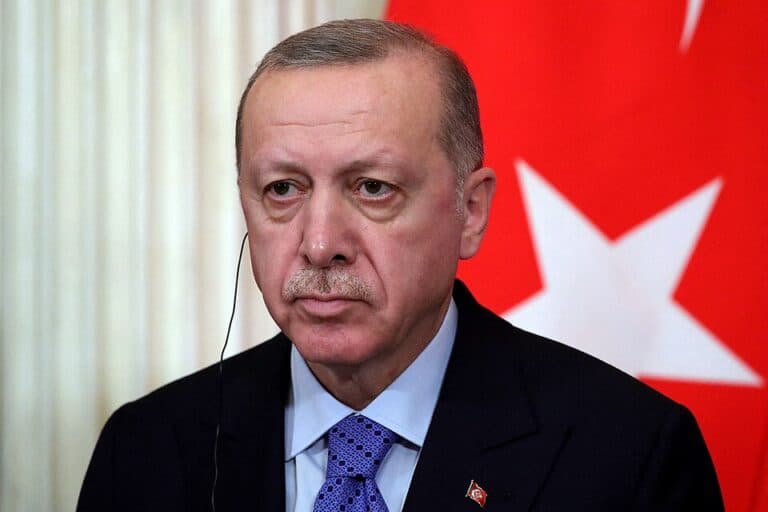
Erdoğan F-35 remarks in an interview with Al Jazeera placed Turkey’s demands from President Donald Trump alongside sharp criticism of Israel and a renewed pledge to involve Ankara in Gaza.
Turkish President Recep Tayyip Erdoğan said the continued Israeli attacks on Lebanon are “a source of great concern” for Turkey. He also said Ankara received a promise from Trump regarding F-35 aircraft and expects him to fulfill it.
The interview touched several major fronts at once: Lebanon, Gaza, Syria, the European Union, and Turkey’s relationship with Washington. Erdoğan said Europe does not appear interested in Turkey joining the EU. He also said he will visit Syria in the near future.
The Tanakh says, “A prudent man foreseeth the evil, and hideth himself; but the simple pass on, and are punished.” That warning fits the moment because alliances must be judged by conduct, not only formal labels. Turkey remains a NATO member, but Erdoğan’s words again raise serious questions about where Ankara is placing its pressure.
Erdoğan F-35 Demand
The F-35 issue matters because it sits at the center of U.S.-Turkey security tensions. Erdoğan framed the matter as a promise from Trump, saying Turkey expects Washington to follow through. For Israel, however, advanced American aircraft in Turkish hands would carry direct strategic meaning.
Turkey is not acting like a neutral defense customer. Erdoğan is openly criticizing Israeli operations in Lebanon, preparing deeper engagement with Syria, and insisting that Turkey cannot leave Gaza alone. Those positions affect Israel’s security from multiple directions.
Washington must therefore weigh more than a weapons transaction. It must ask whether giving Turkey access to advanced military power strengthens NATO stability or rewards a government that repeatedly pressures Israel while seeking influence in the same arenas where Iranian-backed forces operate.
Turkey Pushes Into Gaza And Syria

Erdoğan’s Gaza comments were direct. “Turkey cannot leave Gaza alone,” he said, adding that Ankara will do whatever is necessary to support it. In the same interview, he placed that position beside criticism of Israel in Lebanon and plans to visit Syria.
The warning in “Trump’s Former Intelligence Chief: Turkey Is Not America’s Ally” gives important context to this debate. In that article, Tulsi Gabbard warned that Erdoğan’s Turkey is not America’s ally and argued that U.S. policy toward Ankara could harm Israel, NATO, and regional security.
Erdoğan’s latest interview shows why that warning continues to matter. Turkey wants F-35s from Washington while attacking Israel diplomatically, expanding its regional role, and presenting Gaza as a Turkish priority. That combination should concern anyone who sees Israel’s security as central to American strategy in the Middle East.
Covenant Of Strength And Discernment
The United States and Israel share a covenantal worldview that treats power as a responsibility before God. Both nations, at their best, understand that strength must defend life, protect allies, resist terror, and preserve freedom against hostile regimes.
That shared moral framework does not require blindness toward every country that carries the label “ally.” It requires discernment. A real ally does not use American trust to pressure Israel, empower unstable regional ambitions, or blur the line between diplomacy and strategic coercion.
Erdoğan’s interview put the issue plainly. He wants Trump to deliver on F-35s, but he also vows that Turkey will not leave Gaza alone and signals a wider Turkish role in Syria and Lebanon. Those are not separate issues. Together, they form a test of American judgment and Israeli security.
If Washington strengthens Ankara without firm conditions, Turkey may read that as permission to push harder against Israel while still claiming NATO privileges. That is why Erdoğan’s remarks matter beyond one interview. They raise the same question again: whether Turkey is behaving like a dependable ally, or like a power using alliance language to pursue its own regional agenda.
For more stories on Israel, faith, and the values behind the headlines, follow Sinai on Facebook and Instagram.
Discussion0
No comments yet — be the first to share your thoughts.