Baghaei Europe Threats Target U.S. Bases In Iran War
Esmail Baghaei warned Iran could strike U.S. bases in Europe if European countries join aggression, while addressing Hormuz and the Mecca Agreement

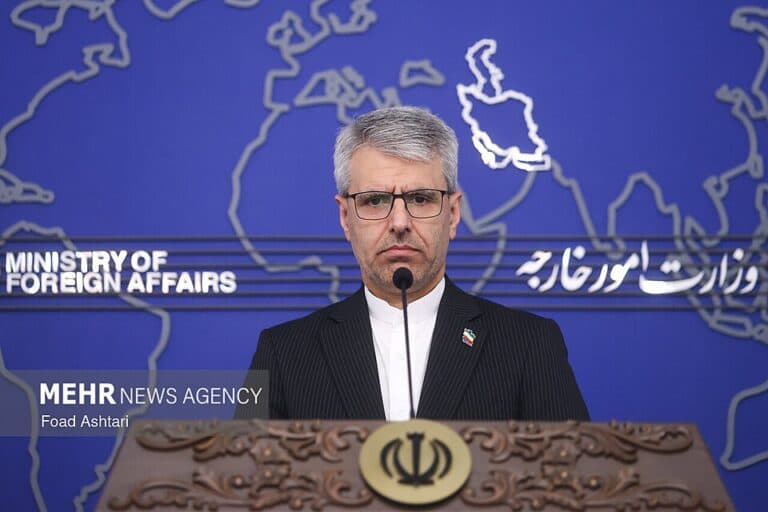
Baghaei Europe threats added a new layer of tension Monday, as Iranian Foreign Ministry spokesperson Esmail Baghaei warned that Iran could strike American bases on European soil if European countries join aggression against Tehran.
Baghaei said no country has reason to fear Iran unless it allows its territory to serve as a platform for American attacks. He added that Iran reserves the right to strike the source of any aggressive action against the Islamic Republic.
The warning directly concerns NATO countries that host U.S. forces, aircraft, logistics hubs, or intelligence assets. It also broadens the Iran crisis beyond the Persian Gulf, Israel, and the immediate Middle East battlefield.
Nehemiah says, “Nevertheless we made our prayer unto our God, and set a watch against them day and night.” The verse speaks to vigilance without panic. Prayer did not replace watchmen. Faith did not cancel security. That same balance now defines the challenge facing Israel, the United States, and European allies as Iran threatens bases far from its own borders.
Baghaei Europe Threats
Baghaei’s message follows earlier reporting that Iranian officials had considered potential military targets in Europe if the United States escalates the war. His language now places diplomatic weight behind that threat.
The basic Iranian argument is simple: any country that enables an American strike becomes part of the battlefield. That position creates pressure on European governments that rely on U.S. security cooperation but fear direct confrontation with Iran.
For Washington, the warning tests deterrence. The United States maintains forces across Europe to defend allies, project power, and support operations beyond the continent. If Tehran can threaten those bases without consequence, it will try to turn allied geography into political leverage.
Israel will also read Baghaei’s remarks carefully. Iran has spent years building pressure through proxies, missiles, drones, cyber attacks, and threats against civilian and military targets. A warning toward U.S. bases in Europe fits the same pattern: expand the threat map, create fear, and make democracies hesitate.
Hormuz And The Mecca Agreement
Baghaei also addressed reports about oil moving through the Strait of Hormuz. He said claims that several million barrels of oil pass daily through the strait are part of the enemy’s psychological warfare, adding, “There is no such thing.”

That claim clashes with the wider strategic reality. The Strait of Hormuz has long served as one of the world’s most important oil transit chokepoints. Even amid war, reduced traffic, and blockade pressure, Hormuz remains central to global energy markets.
Iran wants to control the narrative around Hormuz because the waterway is one of Tehran’s last major leverage points. If the United States and Gulf states reduce dependence on the strait, Iran loses a key pressure tool.
Baghaei also commented on the Mecca Agreement. He said Iran has not received an official invitation to join the pact, though proposals on the matter have been conveyed to Tehran.
That statement adds nuance to “Mecca Defense Agreement: Iran Says Invitation Under Review.” That article reported that Iranian official Mehdi Rahimi said Tehran had received an invitation to join the agreement signed by Pakistan, Saudi Arabia, and Turkey.
Baghaei’s version is more cautious. Iran is signaling interest in regional security talks, while avoiding confirmation of a formal invitation. That allows Tehran to appear important without admitting dependence on a Saudi-Turkish-Pakistani framework.
Europe, Israel And American Deterrence
The warning toward Europe matters because Iran is trying to widen the psychological battlefield. Instead of facing only U.S. pressure in the Gulf, Tehran wants European capitals to worry about becoming targets.
That creates a direct issue for the United States. American power depends not only on aircraft carriers and sanctions, but also on allied trust. If Europe grows afraid to host U.S. forces, Iran gains strategic space.
Israel faces the same challenge in a more concentrated form. Tehran’s threats are not theoretical for Israelis. Iran arms Hamas, Hezbollah, the Houthis, and other forces that target the Jewish state. When Iran threatens American bases in Europe, Israel sees another version of the same doctrine: pressure the West until it backs away.
The Mecca Agreement adds another dimension. If Iran can move from isolation into regional defense conversations while still threatening U.S. bases and denying basic energy realities, Tehran may try to convert escalation into legitimacy.
That is why Washington and Jerusalem need clarity. Regional dialogue can be useful only if it restrains Iran. It cannot become a shield for threats, proxy warfare, or nuclear ambition.
Watchmen From Hormuz To Europe
The United States and Israel carry separate covenantal missions before God, and Baghaei’s warning touches both. America’s covenantal burden is to protect ordered liberty, defend its forces, and prevent hostile regimes from intimidating allies into paralysis. Israel’s covenantal burden is to guard Jewish life when Iran turns every arena, from Gaza to Lebanon to Europe, into a pressure front.
Those missions require patience, but not naivety. They require diplomacy, but not surrender to blackmail.
Baghaei’s comments show how Iran talks when pressure rises. It denies vulnerability, threatens wider retaliation, disputes energy realities, and keeps one foot inside regional diplomacy.
The answer cannot be confusion. The United States must keep its alliances firm. Europe must understand that weakness invites more threats, not fewer. Israel must continue reading Iranian statements through the hard lessons of October 7 and decades of proxy war.
Iran says countries have nothing to fear unless they help America attack. But that is exactly how coercion works: Tehran wants every ally to calculate fear before cooperation.
The free world cannot let Iran decide where America may stand, where Israel may defend itself, or which bases become too politically dangerous to use.
For more stories on Israel, faith, and the values behind the headlines, follow Sinai on Facebook and Instagram.
Discussion0
No comments yet — be the first to share your thoughts.