Akram al-Kaabi Threatens U.S. Troops In Iraq
Akram al-Kaabi threatened U.S. troops with death if any remain after Iraq’s September 30 withdrawal deadline, raising new questions over militia power

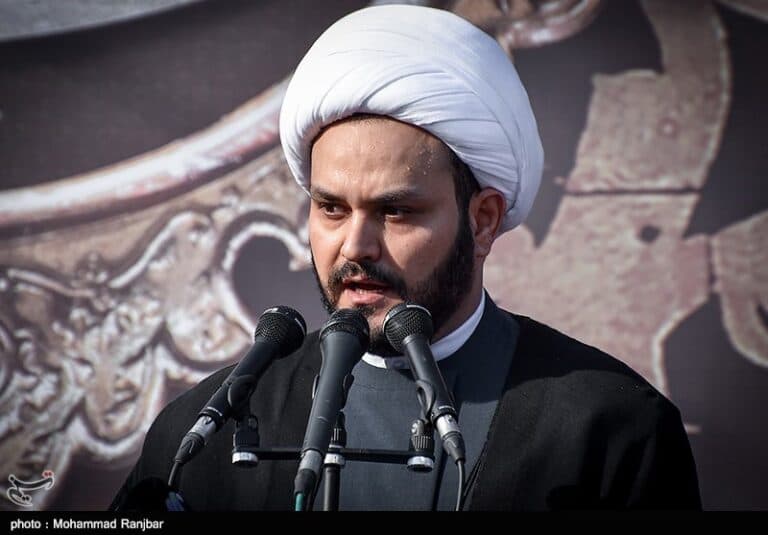
Akram al-Kaabi threatened to kill any American soldier who remains in Iraq after the September 30 withdrawal deadline. The Harakat al-Nujaba leader said his Iran-backed faction is preparing for a “decisive battle” if Washington does not complete its planned military departure. The warning comes as Baghdad simultaneously demands that armed groups outside state control give up their weapons.
“If even one soldier remains after that date, we will not let him return safely,” al-Kaabi said. “We will send him back to them as a lifeless corpse.” He said the faction is watching September 30 with “full readiness” and would fight if the United States failed to complete its withdrawal by land and air.
Psalm 122:7 declares, “May there be peace within your walls, and security within your citadels.” For Iraq, that aspiration requires more than the departure of foreign troops. It also requires a sovereign state strong enough to decide questions of war and peace without armed factions taking orders from outside powers.
Akram al-Kaabi Turns Withdrawal Deadline Into a Threat
The September 30 deadline was not created by al-Nujaba. Washington and Baghdad agreed to wind down the U.S.-led coalition mission, and Iraq’s government has called the date “fixed and final.” American officials said last month that the withdrawal remained on schedule.
That distinction matters. A negotiated withdrawal between two governments is fundamentally different from an armed militia threatening to murder soldiers if the timetable changes.
Al-Kaabi and Harakat al-Nujaba have long been tied to Tehran. The United States designated both the organization and al-Kaabi under terrorism authorities in 2019. The State Department described the group as an Iranian proxy that openly pledged loyalty to Iran and Supreme Leader Ayatollah Ali Khamenei. U.S. officials have also accused Iran-backed Iraqi factions of repeated attacks against American personnel.
The contradiction inside Iraq is becoming sharper as the deadline approaches. Baghdad wants the coalition mission finished, but it has also demanded that non-state armed groups disarm. AP reported that September 30 is also the government’s deadline for restricting weapons to official state institutions. Several Iran-aligned factions have resisted that demand.
In other words, the real sovereignty test will not end when the last American soldier leaves. It will be whether Baghdad, rather than Tehran-backed militias, controls Iraq’s weapons and determines its foreign policy.
Iran-Backed Militias Keep Expanding the Conflict
Al-Kaabi’s threat follows months of escalating attacks involving Iran-backed factions throughout the region. The Islamic Resistance in Iraq has claimed attacks against both American and Israeli targets, while several of its member groups maintain extensive missile and drone capabilities. Reuters reported that the umbrella network includes roughly 10 hardline factions with tens of thousands of fighters.
That history gives added context to “Iraqi Militias Vow Revenge On U.S. And Saudi Arabia.” In that earlier confrontation, Iraqi Shiite militias threatened retaliation after U.S. and Saudi strikes reportedly killed at least 20 militia members. The strikes followed attacks blamed on Iran-backed forces against American personnel and Saudi energy infrastructure.

The latest threat therefore is not isolated rhetoric. It comes from a network that has repeatedly used Iraq as part of Iran’s wider confrontation with the United States, Israel, and Gulf states.
For Israel, the consequences of an American withdrawal will depend heavily on what happens next. A sovereign Iraq capable of controlling its territory could reduce opportunities for Tehran to use Iraqi soil as another front against Israel. An Iraq where militias retain independent missiles, drones, and command structures could produce the opposite result.
Washington faces a similar calculation. Ending a coalition deployment agreed upon with Baghdad can respect Iraqi sovereignty. Allowing Iran-backed factions to portray that negotiated departure as a military victory, while threatening Americans and retaining their own arsenals, would strengthen precisely the forces the United States has spent years trying to contain.
Sovereignty Requires One Authority
America and Israel share a covenantal understanding that sovereignty carries responsibilities before God. Both national traditions connect freedom with law, defense of life, and the right of a people to govern themselves without coercion from hostile powers.
That principle applies just as clearly to Iraq. A genuinely sovereign Iraq should be able to ask foreign troops to leave. It should also be able to prevent an armed faction loyal to Tehran from deciding when Americans, Israelis, Saudis, or anyone else becomes a military target.
America’s experience has tied ordered liberty to civilian authority over armed power. Israel’s restored sovereignty rests on the equally fundamental Jewish conviction that decisions about the nation’s defense must belong to the Jewish state, not to foreign empires or outside militias. Both understand that national independence becomes hollow when unelected armed groups can override the government.
The September 30 deadline therefore presents two very different possible outcomes. One is an orderly American withdrawal followed by stronger Iraqi control over its own security. The other is a vacuum in which Iran-backed militias claim victory, keep their weapons, and expand Tehran’s influence.
Al-Kaabi has already made clear which future he wants. His threat to return American soldiers as corpses is not a declaration of Iraqi sovereignty. It is a warning that an armed organization intends to reserve for itself the power to decide when Iraq goes to war.
For Washington, Jerusalem, and Iraq itself, that distinction will matter long after September 30 passes.
For more stories on Israel, faith, and the values behind the headlines, follow Sinai on Facebook and Instagram.
Discussion0
No comments yet — be the first to share your thoughts.