Hakan Fidan Calls Netanyahu ‘Genocidal Murderer’
Hakan Fidan called Netanyahu a “genocidal murderer” and global threat as tensions deepen between Turkey and Israel over Gaza, Syria, and regional security

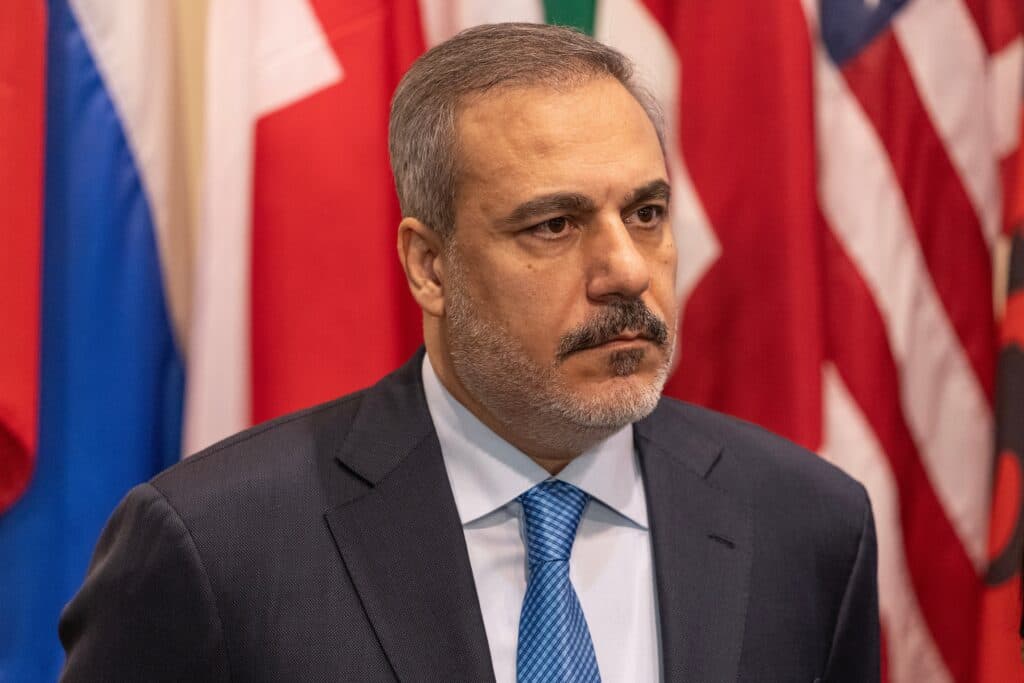
Hakan Fidan launched an extraordinary verbal attack on Prime Minister Benjamin Netanyahu on Monday, calling the Israeli leader a “genocidal murderer” and a threat to global security. The Turkish foreign minister claimed Netanyahu was harming Israel, the Jewish people, the Middle East, and the wider international community.
Fidan delivered the remarks in Istanbul after the first meeting of the Strategic Political and Defense Committee under the Mecca Joint Defense Agreement. The new alliance brings together Turkey, Saudi Arabia, and Pakistan and is intended to expand regional military cooperation. Turkey’s Foreign Ministry confirmed senior foreign, defense, and military officials from all three countries attended the meeting.
The rhetoric gives particular force to Proverbs 12:18: “There is one whose rash words are like sword thrusts, but the tongue of the wise brings healing.” When a foreign minister describes another country’s elected leader as a bloodthirsty murderer, the words themselves become part of the regional conflict. They shape alliances, public opinion, and the possibility of future diplomacy.
Hakan Fidan Escalates Attack on Israel
“Netanyahu and the ideology he represents pose a threat not only to Turkey, but to global security as a whole,” Fidan said.
He called for the international community to stop what he described as the damage Netanyahu has caused “to the region, to Israel, to the Jewish people, and to the entire world.” Fidan also accused Netanyahu of taking pleasure in Palestinian and Muslim bloodshed.

Anadolu reported similar remarks from the press conference, including Fidan’s claim that Netanyahu had become a “common enemy” of humanity and international security. He called on the international system to confront what he described as the “Netanyahu threat.”
Fidan also accused Netanyahu of opposing Palestinian statehood and seeking continued Israeli military control in several parts of the region.
The genocide accusation remains deeply contested. A United Nations commission has accused Israel of genocide in Gaza, while Israel has rejected that conclusion as biased and maintains that its campaign has targeted Hamas following the October 7 massacre. The broader genocide case before the International Court of Justice remains unresolved.
Ankara’s Rhetoric Meets a Wider Security Dispute
The confrontation is no longer limited to Gaza. Turkey and Israel are increasingly at odds over Syria, regional military influence, and Ankara’s role in postwar arrangements.
Earlier this month, U.S. officials began working on a deconfliction mechanism involving Israel, Turkey, and Syria. The effort followed Israeli strikes on a Syrian airbase amid Israeli concerns over a potential Turkish military presence there. U.S. envoy Tom Barrack warned that the situation could otherwise have triggered a direct Turkish response.
That makes Fidan’s rhetoric especially significant for Washington. Turkey remains a NATO member, while Israel remains one of America’s closest strategic partners. The United States therefore has a strong interest in preventing hostility between the two from developing into military confrontation.
That concern also echoes “Trump’s Former Intelligence Chief: Turkey Is Not America’s Ally.” In that article, Tulsi Gabbard warned that Washington should reconsider assumptions about Ankara as Turkey’s policies increasingly collide with Israeli and broader American security interests.

The contradiction is becoming difficult to ignore. Ankara describes Netanyahu as a danger to the entire world while Turkey itself expands its military role in Syria and helps build a new regional defense alliance. At the same time, Israel faces threats from Iran, Hezbollah, Hamas, and other armed actors that openly challenge its security and sovereignty.
Turkey has also escalated its legal campaign against Netanyahu. On August 21, Ankara announced plans to seek an Interpol red notice against the Israeli prime minister over a Turkish case related to the Gaza flotilla. Israel dismissed the move as an attempt by President Recep Tayyip Erdogan’s government to intimidate its leadership.
Truth, Alliance, and the Duty of Nations
America and Israel share covenantal traditions that place truth, liberty, justice, and the defense of life under the authority of God. Both understand that national power carries moral obligations. Those obligations include protecting citizens, resisting terrorism, and speaking about allies and enemies with enough clarity to distinguish disagreement from demonization.
That shared principle matters when a NATO foreign minister claims to speak for the interests of the Jewish people while describing Israel’s prime minister as a genocidal murderer. Americans and Israelis can debate governments, military decisions, and political leaders. Neither nation requires unquestioning loyalty to another government.
But an alliance built on shared values also requires moral clarity about the threats confronting democratic societies. Israel’s fight against Hamas, Hezbollah, and Iran cannot simply be erased from the discussion while its elected leadership is portrayed as the source of regional evil.
Washington now faces a difficult strategic test. It must maintain important NATO structures while also recognizing when the rhetoric and policies of a NATO member increasingly undermine another American ally.
For Israel, the principle is simpler. Jewish sovereignty cannot depend on whether Ankara approves of the government chosen by Israeli voters. Israel has both the right and responsibility to defend its people, even when that defense brings harsh criticism from powerful regional states.
For more stories on Israel, faith, and the values behind the headlines, follow Sinai on Facebook and Instagram.
Discussion0
No comments yet — be the first to share your thoughts.