Adidas Single Shoe Campaign Sparks Israel Boycott
Adidas faces boycott calls after featuring wounded IDF veteran Shalev Biton while promoting a service that lets amputees buy a single shoe

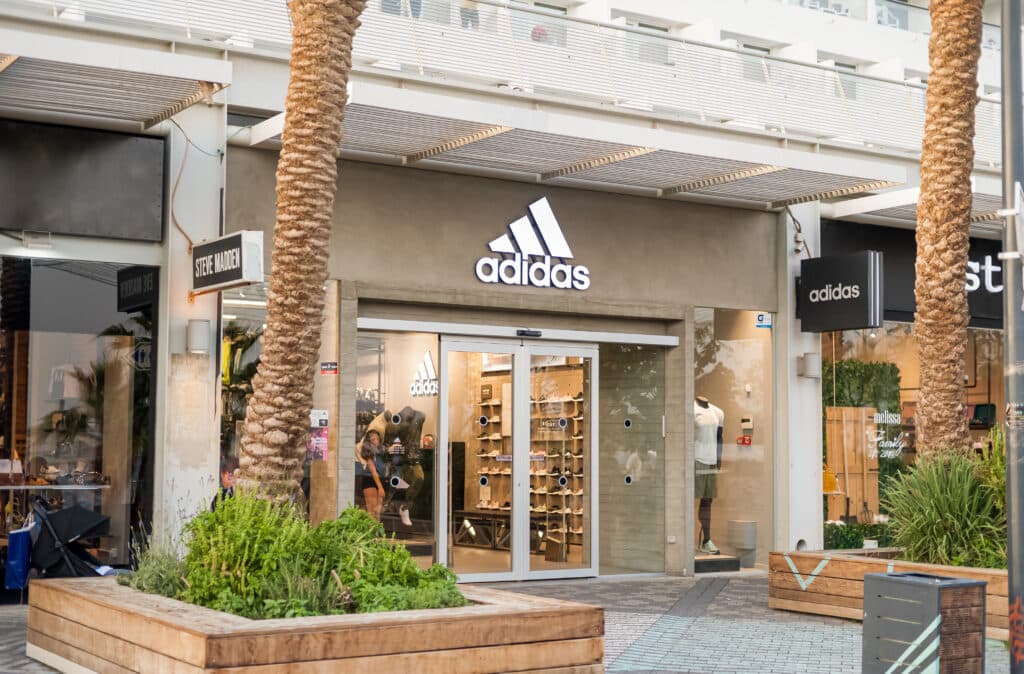
The Adidas Single Shoe campaign has turned a practical accessibility initiative into the latest target of anti-Israel boycott calls. Adidas featured wounded IDF veteran Shalev Biton while promoting a service that lets amputees buy one shoe instead of paying for a full pair. Pro-Palestinian activists responded with demands for a global boycott of the company.
Biton served in Battalion 931 of Israel’s Nahal Brigade. During Operation Guardian of the Walls in May 2021, Hamas terrorists fired an anti-tank missile at his military vehicle near Gaza. The attack killed Sgt. Omer Tabib and seriously wounded Biton. Doctors later amputated Biton’s left leg, and he eventually returned to running with a prosthesis.
Isaiah 35:6 offers a particularly fitting image: “Then shall the lame man leap like a deer.” The verse speaks to restoration, movement, and renewed strength. Adidas built its Single Shoe service around a similarly practical idea. People who need only one shoe should not have to buy two.
Adidas Single Shoe Service Expands Accessibility
Adidas launched the Single Shoe service in Europe earlier this year. The company allows customers with lower-limb differences to buy one shoe for 50% of the price of a pair. Adidas developed the program with disability communities and organizations including ParalympicsGB.
The company initially offered the service across 23 European countries. It has since expanded the program into additional markets, including Israel. Adidas says the initiative forms part of a broader effort to remove barriers for athletes with disabilities.
Biton became one of the Israelis associated with that effort. His promotion focused on a simple frustration familiar to amputees: paying for a second shoe that they cannot use. The Hebrew-language video did not discuss his IDF service or explain how he lost his leg.
Yet activists quickly made his military history the center of the campaign.
Some accused Adidas of celebrating an Israeli soldier while Palestinian amputees continue to suffer in Gaza. Others circulated comparisons between Biton and injured Palestinian children. Palestinian cartoonist Ala’a al-Lakta also joined the backlash with a cartoon aimed at the company.
Those images address real Palestinian suffering, but they do not answer the basic question raised by the campaign. Why should helping an Israeli amputee become unacceptable because he once wore an IDF uniform?
When Inclusion Suddenly Excludes Israelis
The controversy exposes a recurring contradiction in anti-Israel activism. Accessibility campaigns normally celebrate people overcoming severe injuries. Veterans who learn to walk, run, work, or compete again often become symbols of resilience throughout the democratic world. In Biton’s case, however, some activists appear to treat the nationality of the amputee as more important than the disability itself.
That pattern resembles the exclusion highlighted in “Israeli Athletes Barred From Northern Ireland Triathlon.” Four Israeli athletes lost the opportunity to compete after local organizers objected specifically to Israeli representation.

The circumstances are different, but the principle is familiar. Israeli participation becomes the objection. In the Adidas case, the company did not launch a military campaign. It did not ask consumers to endorse an Israeli government policy. It offered disabled customers a cheaper and more practical way to buy footwear and included an Israeli amputee among those promoting that accessibility.
Critics remain free to condemn Israel’s actions in Gaza. They can protest Israeli policy and advocate for Palestinians. But reducing Biton to the uniform he wore when Hamas struck his vehicle strips away the very individual dignity that disability advocacy claims to protect. Adidas deserves credit for refusing that logic.
Resilience Should Cross Political Lines
The story also carries meaning for the United States. American culture places enormous value on wounded veterans, rehabilitation, adaptive sports, and helping people with disabilities return to independent lives. Israel shares that instinct through its own experience of war, terrorism, and national service.
The two countries have distinct covenantal histories before God, yet both place human dignity, resilience, and responsibility toward the injured near the center of national life. America has long honored those who sacrifice in defense of the republic. Israel carries an especially intimate responsibility toward soldiers and civilians wounded while defending Jewish sovereignty.
A company that makes daily life easier for amputees is serving those principles in a concrete way.
That does not mean Adidas must become a political symbol for Israel. In fact, the strength of this initiative comes from its simplicity. The company saw an unnecessary burden faced by amputees and removed it.
The boycott campaign risks turning that act of inclusion into another political loyalty test. If brands can support disabled people everywhere except when the disabled person happens to be Israeli, then “inclusion” has become conditional.
For Israelis wondering how to respond, there is a strong case for doing the opposite of what the boycott campaign demands.
Support companies that continue operating in Israel. Support businesses willing to feature Israelis without apologizing for their nationality. Support accessibility initiatives that recognize wounded veterans as human beings rather than political abstractions.
And if the controversy makes someone more inclined to choose Adidas, the activists demanding a boycott may have achieved precisely the opposite of what they intended.
For more stories on Israel, faith, and the values behind the headlines, follow Sinai on Facebook and Instagram.
Discussion0
No comments yet — be the first to share your thoughts.