Majd al-Krum Protest Exposes Galilee Land Dispute
Protests in Majd al-Krum over a Jewish grazing encampment have opened a wider debate over sovereignty, Arab property rights and governance in the Galilee

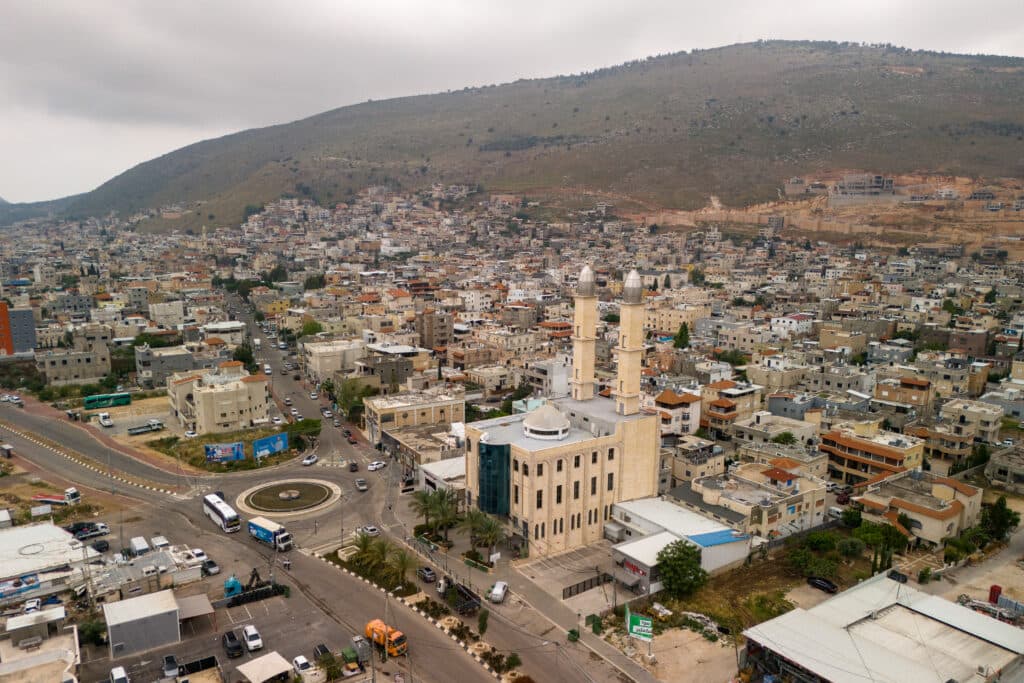
A Majd al-Krum protest in northern Israel escalated Monday evening as Arab citizens demonstrated over the arrival of Jewish shepherds near the Galilee town. Protesters were heard chanting “Long live Palestine” as police deployed near the demonstration. The dispute centers on land inside or near Majd al-Krum’s municipal boundaries and an encampment established by Jewish youths from the West Bank.
KKL-JNF says it legally leased land in the area for grazing. However, the Majd al-Krum council argues that the encampment threatens local property rights and access to nearby agricultural land. Reporting from the site also showed tents and infrastructure but no visible sheep or goats, adding to local suspicions that the activity could become something more permanent.
Micah 6:8 calls on man “to do justly, and to love mercy, and to walk humbly with thy God.” That standard is useful precisely because this dispute cannot be reduced to one slogan. Israel has both a right to exercise sovereignty throughout the Galilee and an obligation to apply law fairly to Jewish and Arab citizens living there.
Majd al-Krum Protest Raises Competing Claims
Ra’am chairman Mansour Abbas arrived in Majd al-Krum following the demonstration and called for action through legal, political, media and grassroots channels. He argued that residents have a history of defending their rights and land. Abbas also warned against attempts to turn the confrontation into an election-season clash between Jews and Arabs.
The local council has said a large share of land surrounding the site belongs to Majd al-Krum residents, while other parcels belong to KKL-JNF or the Israel Land Authority. That mixed ownership makes legal precision especially important. A valid grazing lease deserves enforcement, but private property rights and lawful access to agricultural land deserve the same protection.
The chants of “Long live Palestine” add another dimension. Majd al-Krum is not in the West Bank. It is an Arab town inside the State of Israel, and its residents are Israeli citizens who participate in the country’s political, economic and civic life. Protest against government policy is legitimate, but citizenship also carries a responsibility to recognize the state whose legal system protects those rights.
Smotrich Calls for a Wider Galilee Shift
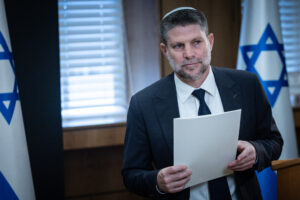
Finance Minister Bezalel Smotrich responded by describing the chants as evidence of a wider loss of governance in the Galilee. He called for a comprehensive change in Israeli policy and said Religious Zionism would bring the approach it has pursued in Judea and Samaria to the Negev and Galilee.
That answer addresses a real concern but risks deepening another one. Israel cannot ignore nationalist rhetoric that rejects its legitimacy inside its sovereign borders. At the same time, governance cannot mean allowing ideological groups to establish facts on the ground through intimidation, informal outposts or coercion against Arab communities.
The two principles are not contradictory. Israel should enforce its sovereignty firmly, protect lawful Jewish activity and reject violence or incitement against the state. It should also prevent Jewish extremism, vigilante behavior or politically driven land seizures from becoming substitutes for ordinary law.
That tension resembles the issue raised in “Jerusalem Christian Schools Strike Over Teacher Permits.” There, legitimate Israeli security concerns collided with the daily lives of Arab families and Christian institutions. The broader lesson is similar: security and sovereignty are essential, but their legitimacy is strengthened when the state also protects minority rights consistently.
One State Requires Equal Responsibility
Israel and the United States share a national tradition built around the idea that liberty and sovereignty depend on law applying to citizens as citizens. A strong country does not have to choose between national identity and minority rights. It protects both because unequal enforcement eventually weakens trust in the state itself.
Arab Israelis should be able to challenge land decisions, demonstrate peacefully and defend legitimate property claims through the courts and political system. They should also recognize that Majd al-Krum is part of Israel and avoid rhetoric that suggests Israeli sovereignty itself is temporary or illegitimate.
Jewish citizens have an equal responsibility. Zionism does not require lawlessness, religiously justified intimidation or importing the most destructive elements of the Judea and Samaria conflict into mixed areas of sovereign Israel. Building Jewish life in the Galilee should strengthen the country, not produce permanent confrontation with Arab neighbors who are also Israeli citizens.
The Majd al-Krum protest therefore reveals a deeper question about Israel’s future in the Galilee. The answer cannot be surrendering sovereignty, but neither can it be replacing law with demographic struggle. A confident Jewish state should be capable of defending its national character while ensuring that every citizen’s property, safety and legal rights receive equal protection.
For more stories on Israel, faith, and the values behind the headlines, follow Sinai on Facebook and Instagram.
Discussion0
No comments yet — be the first to share your thoughts.