Nauru Embassy in Jerusalem Opens With Biblical Message
Nauru opened its embassy in Jerusalem as Gideon Sa’ar emphasized Jewish ties to the land and Lionel Aingimea connected support for Israel with faith

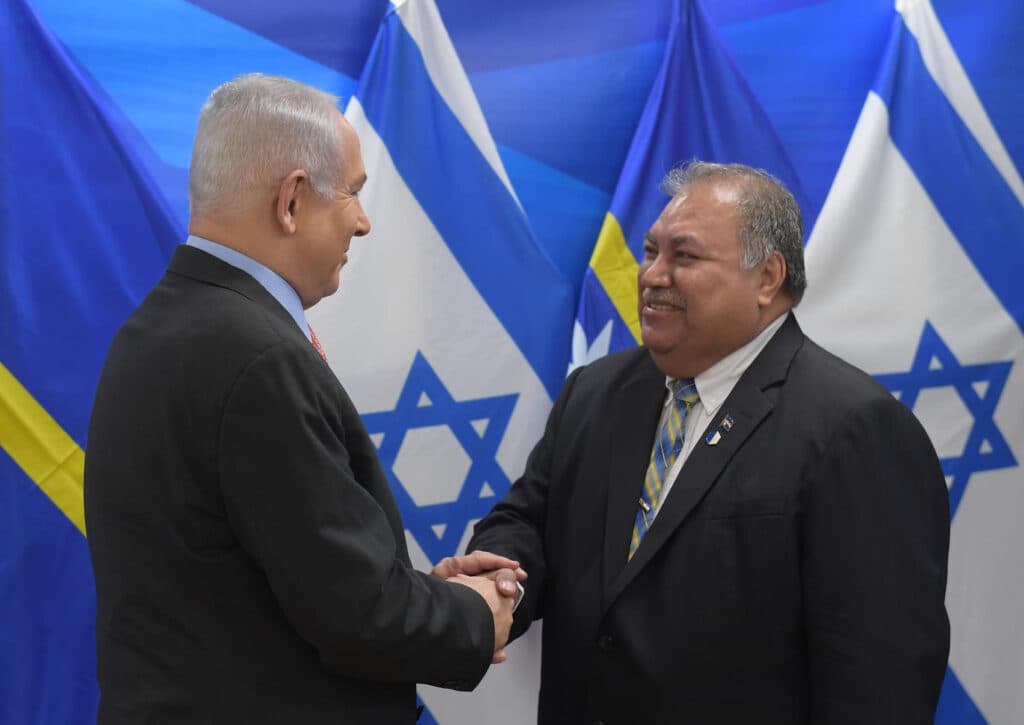
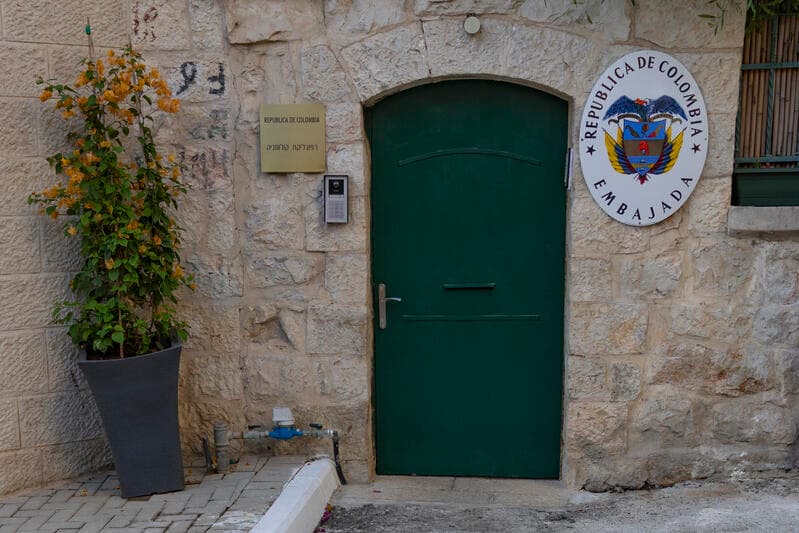
The Nauru Embassy in Jerusalem officially opened Monday with unusually direct statements about Jewish history, biblical connection, and faith. Foreign Minister Gideon Sa’ar welcomed Vice President Lionel Aingimea to the ceremony in Israel’s capital. Nauru had already recognized Jerusalem as Israel’s capital in 2019 and has consistently supported Israel in international forums.
“We are the indigenous people of this land, the Land of Israel,” Sa’ar said at the opening. “Jews are called Jews because they come from Judah.” He stressed that Jerusalem, Judea, and Samaria are ancient names rooted in Jewish history rather than modern political terminology.
Aingimea answered with an explicitly religious expression of solidarity. “Israel always has a special place in our hearts,” he said. He added that Nauru believes supporting Israel brings divine blessing and said churches in his country prominently display Israeli flags. According to Aingimea, prayers for Israel are also a regular part of religious life in Nauru.
Those words closely echo Genesis 12:3, where God tells Abraham, “I will bless those who bless you.” At the Jerusalem ceremony, that biblical idea was not confined to history or scripture. A foreign government openly connected its modern friendship with Israel to faith, blessing, and the enduring place of the Jewish people in their ancestral homeland.
Nauru Embassy in Jerusalem Affirms Jewish History
The embassy opening completes a diplomatic step that Israel and Nauru agreed upon earlier this summer. Israel’s Foreign Ministry announced in July that Nauru’s cabinet had decided to establish an embassy in Jerusalem. Sa’ar and Aingimea reached the agreement during a meeting in Fiji in June.
The relationship extends beyond the embassy itself. Israel’s Foreign Ministry describes Nauru as one of Israel’s most consistent supporters at the United Nations. The Pacific nation also submitted a written statement supporting Israel in proceedings before the International Court of Justice. Its decision to establish an embassy therefore gives physical form to a diplomatic relationship that has already been unusually steadfast.
Sa’ar used the ceremony to emphasize that Jewish attachment to the land predates contemporary diplomacy. His reference to Judah is particularly significant because the English word “Jew” derives historically from Judah and Judea. Jerusalem also stood at the center of Jewish national and religious life centuries before the modern State of Israel.
That historical framing reaches directly into current political debates. In “Israel Katz Warns Palestinian Authority of Full-Scale War,” Katz addressed the security of Jewish communities in Judea and Samaria. Sa’ar’s remarks approach the same geography from another direction. Whatever modern governments decide politically, he argued, the names Jerusalem, Judea, and Samaria belong to an ancient Jewish historical landscape rather than a recently invented Israeli vocabulary.
America Helped Change the Diplomatic Map
Nauru’s move also follows a diplomatic path transformed by the United States. President Donald Trump recognized Jerusalem as Israel’s capital in 2017 and moved the U.S. Embassy there in 2018. That decision broke with decades of international diplomatic convention and established a precedent other governments have since followed.
The U.S.-Israel commitment to Jerusalem has continued to deepen. In July, Sa’ar and U.S. Ambassador Mike Huckabee signed an agreement for the future permanent American embassy compound in Jerusalem. Israel’s Foreign Ministry described the agreement as another stage in the diplomatic process that began with Trump’s recognition decision.

That American precedent matters when a small country such as Nauru makes the same choice. Washington demonstrated that recognizing Jerusalem did not prevent strong diplomacy or international engagement. Instead, it allowed American policy to acknowledge the reality that Israel’s government, parliament, Supreme Court, and central national institutions operate from Jerusalem.
Nauru’s decision carries a different weight because of the country’s size, but sovereignty is not measured by population. Each state has its own diplomatic voice. When another nation independently chooses Jerusalem for its embassy, it strengthens Israel’s argument that relations with the Jewish state should reflect the reality of its capital.
Faith, Sovereignty, and Friendship
The ceremony also revealed something less common in modern diplomacy. Aingimea did not present Nauru’s support for Israel as merely transactional. He described it as part of his country’s religious identity, saying that Israel holds a special place in Nauruan hearts and prayers.
That language creates a natural point of connection with the United States. American support for Israel is strategic and political, but it has also long drawn strength from biblical faith among millions of American Christians. Nauru’s public embrace of Israel reflects a similar religious current, even though the two countries have very different histories and roles in world affairs.
America and Israel have distinct covenantal identities before God, but both national traditions understand that history, faith, and political liberty can shape public life. Israel’s covenant is inseparable from the Jewish people, the Land of Israel, and Jerusalem. America’s tradition has repeatedly linked liberty and national responsibility to belief in providence, while protecting the freedom of citizens to practice their faith.
Nauru’s embassy opening brings those ideas together in a striking way. It recognizes Israel’s sovereign choice of Jerusalem as its capital while openly respecting the biblical history behind that sovereignty. It also demonstrates that support for Israel can grow from something deeper than temporary political interests.
For a country whose vice president says his people regularly pray for Israel, the embassy is more than another diplomatic office. It is a public declaration that friendship with the Jewish state, recognition of Jerusalem, and faith can stand together.
For more stories on Israel, faith, and the values behind the headlines, follow Sinai on Facebook and Instagram.
Discussion0
No comments yet — be the first to share your thoughts.