White House Presses Arab States to Take in Gazans
President Donald Trump made it clear that despite opposition from Egypt and Jordan, he remains confident that these countries will ultimately accept Palestinians from Gaza.

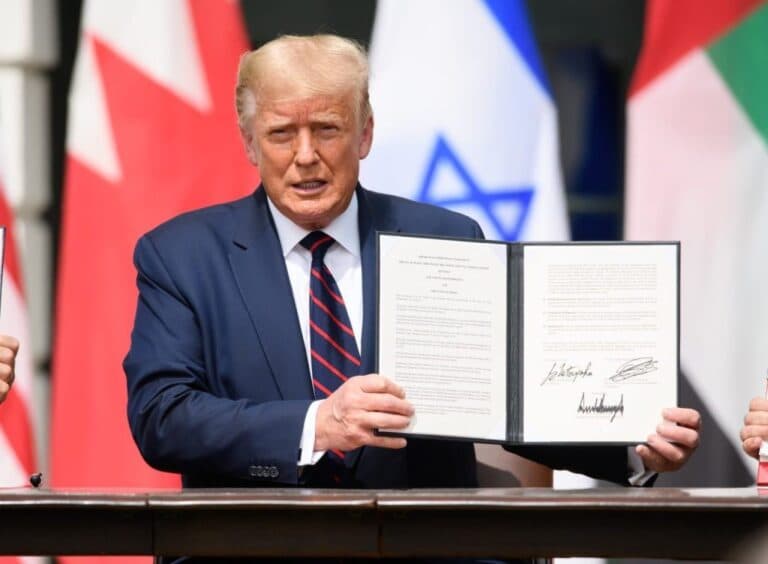
At a White House press conference on Thursday, President Donald Trump reaffirmed his confidence that Egypt and Jordan will ultimately align with his proposal to resettle Gazans outside the region. When asked about Egyptian President Abdel Fattah el-Sisi and Jordan’s King Abdullah II rejecting the plan, Trump was firm in his response, stating, “They will do it. We do a lot for them, and they will do it.”
Watch President Trump’s Response:
כתב: נשיא מצרים ומלך ירדן אמרו שניהם שלא יקבלו עקורים מעזה כפי שהצעת. האם יש משהו שתוכל לעשות שיגרום להם לעשות את זה? למשל, מכסים נגד המדינות האלו?
הנשיא טראמפ: הם [סיסי ועבדאללה] יעשו את זה. הם הולכים לעשות את זה. אנחנו עושים הרבה עבורם והם הולכים לעשות את זה. pic.twitter.com/jKswPtJyY5
— דונלד טראמפ בעברית (@DonaldJTrumpHeb) January 30, 2025
Gaza Resettlement Plan
Last week, Trump introduced his initiative to relocate Gaza residents to neighboring Arab nations—primarily Egypt and Jordan—as a way to “clear out” the war-torn region and facilitate its reconstruction. According to his estimates, approximately 1.5 million people would need to be resettled, making Arab nations’ cooperation essential. He stressed that their involvement could provide either temporary or permanent safe havens for displaced Palestinians.
Despite Trump’s push, Egypt has firmly rejected the proposal. President Abdel Fattah el-Sisi called the forced displacement of Palestinians an “injustice” and warned that any such move could pose a direct threat to Egypt’s national security. Similarly, Jordan’s King Abdullah II voiced strong opposition, arguing that Palestinians must remain in their homeland. He also pointed out that Jordan already hosts millions of Palestinian refugees, and additional resettlements could destabilize the country.
Watch Egyptian President el-Sisi’s Press Conference:
“Thinking Outside the Box”
While some Middle Eastern leaders oppose the plan, several Israeli officials have expressed enthusiastic support. Finance Minister Bezalel Smotrich welcomed the proposal, calling it “thinking outside the box” and pledging to push for an operational framework to implement the idea swiftly.
Voices from the broader Arab world have also expressed support for the initiative, recognizing the potential for long-term stability in the region. Amjad Taha, a strategic analyst from the UAE, noted that such a move could accelerate the reconstruction of Gaza, dismantle Hamas’s influence, and expose Gazans to educational systems that promote peace rather than hatred. This highlights the vital role education plays in rehabilitation and fostering a culture of coexistence. As King Solomon wisely stated, “Train a child in the way he should go, and when he is old, he will not depart from it.” – Proverbs 22:6. Investing in education is the most effective way to break cycles of violence and lay the groundwork for a lasting peace.
With diplomatic negotiations intensifying, Trump’s proposal remains a major geopolitical issue, drawing both resistance and support across the region. The coming weeks will determine whether Egypt and Jordan yield to U.S. pressure or maintain their opposition.
Discussion0
No comments yet — be the first to share your thoughts.