Nepal-Tibet Flood Leaves Hundreds Missing
The Nepal-Tibet flood killed dozens and left hundreds missing, including foreign tourists, as rescuers struggle through damaged roads and mountain terrain

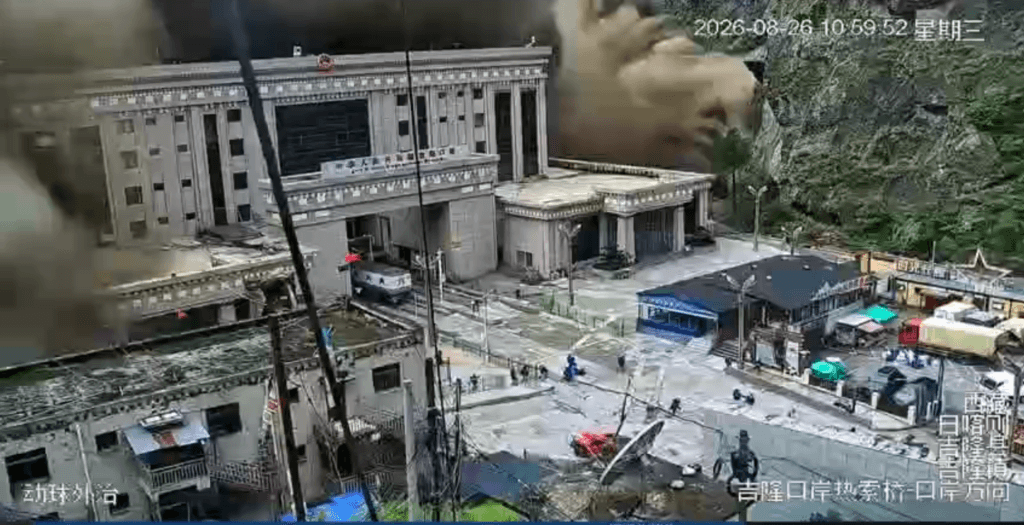
The Nepal-Tibet flood has left at least 98 people dead and hundreds missing after a wall of mud, rock, and water tore through the Himalayan border region. Authorities reported devastation on both sides of the Nepal-China border, with some of the worst damage in Nepal’s Rasuwa district and in Tibet’s Gyirong County.
Reports said many of the missing are tourists and pilgrims, including more than 100 Indians, as well as Americans, Britons, South Koreans, and other foreign nationals. Nepalese authorities said hundreds of people remain unaccounted for, while rescue crews continue searching in difficult mountain conditions. May the memory of those who died be honored with dignity, and may the missing be found quickly. May God strengthen the families waiting for news, the injured fighting to survive, and the rescuers risking their lives in the flood zone.
Psalm 46 says, “God is our refuge and strength, a very present help in trouble.” In a disaster where whole communities were overwhelmed in minutes, that verse gives language to grief, urgency, and duty. Human life is fragile, but the obligation to rescue remains firm.
Nepal-Tibet Flood Devastates Border Region
The flood reportedly began after a wall of mud and rock collapsed into a river near the Himalayan border of Nepal and China’s Tibet region. Officials and early scientific assessments pointed to an ice-rock avalanche or landslide that blocked the Lhende Khola or related river system, triggering a sudden surge downstream.
The flood destroyed or damaged homes, roads, bridges, power infrastructure, and hydropower projects. Rescue operations have been slowed by steep terrain, mud, damaged roads, and difficult helicopter access. The International Federation of Red Cross and Red Crescent Societies said it released emergency funding to support Nepal’s Red Cross response, including drinking water, emergency supplies, first aid materials, stretchers, and body bags.
The disaster also carried an international dimension almost immediately. Reports listed missing citizens from India, Nepal, the United States, Britain, South Korea, Malaysia, Australia, Canada, and other countries. The U.S. Embassy in Nepal said it was deeply saddened by the loss of life and urged Americans in affected areas to avoid riverbanks and seek higher ground.
Americans, Israelis And Rescue Responsibility
For the United States, the Nepal-Tibet flood is already a consular and humanitarian concern because American citizens are among the missing. It also highlights the importance of embassies, emergency alerts, and rapid coordination when tourists or pilgrims travel through remote mountain regions where communications can collapse quickly.
No official Israeli rescue deployment had been reported in the major sources reviewed at publication time. Still, Israel has a meaningful history with Nepal disaster relief. After the 2015 earthquake, Israel sent a large IDF humanitarian delegation to Kathmandu that provided search-and-rescue and medical services. That history matters because Israel has repeatedly shown that its national strength is not only for war. It is also for rescue, medicine, and emergency response far from home.
That same theme appeared in “Colombia Turns To U.S. And Israel After Earthquake.” That article reported that Colombia’s government said it would receive rescuers from the United States, Israel, Ecuador, and El Salvador after a deadly earthquake. The connection is clear: when disaster strikes, America and Israel often stand out not only for power, but for the ability to move quickly, save lives, and help stabilize broken communities.
Mercy Across The Mountains
The United States and Israel carry separate covenantal missions before God, and disasters like this reveal those missions through mercy. America’s responsibility includes protecting its citizens abroad and helping vulnerable nations when catastrophe overwhelms local capacity. Israel’s responsibility includes using Jewish sovereignty not only to defend Jewish life, but also to bring skill, medicine, and rescue to others when the door opens.
This is not a political battlefield. It is a human tragedy. Nepalese villagers, Chinese border communities, Indian pilgrims, foreign tourists, and rescue teams now face the same urgent reality: life must be found, bodies recovered, families informed, and survivors cared for.
The flood also reminds the region how quickly Himalayan terrain can become deadly. Glaciers, landslides, earthquakes, monsoon rains, and narrow valleys can turn a river into a weapon of nature without warning. For governments, the lesson is practical: early-warning systems, safer tourism routes, rescue coordination, and cross-border cooperation can decide who lives when minutes matter.
For now, the work is search, rescue, prayer, and accountability. The dead deserve honor. The missing deserve every possible effort. The survivors deserve help that reaches them quickly, without politics delaying mercy.
For more stories on Israel, faith, and the values behind the headlines, follow Sinai on Facebook and Instagram.
Discussion0
No comments yet — be the first to share your thoughts.