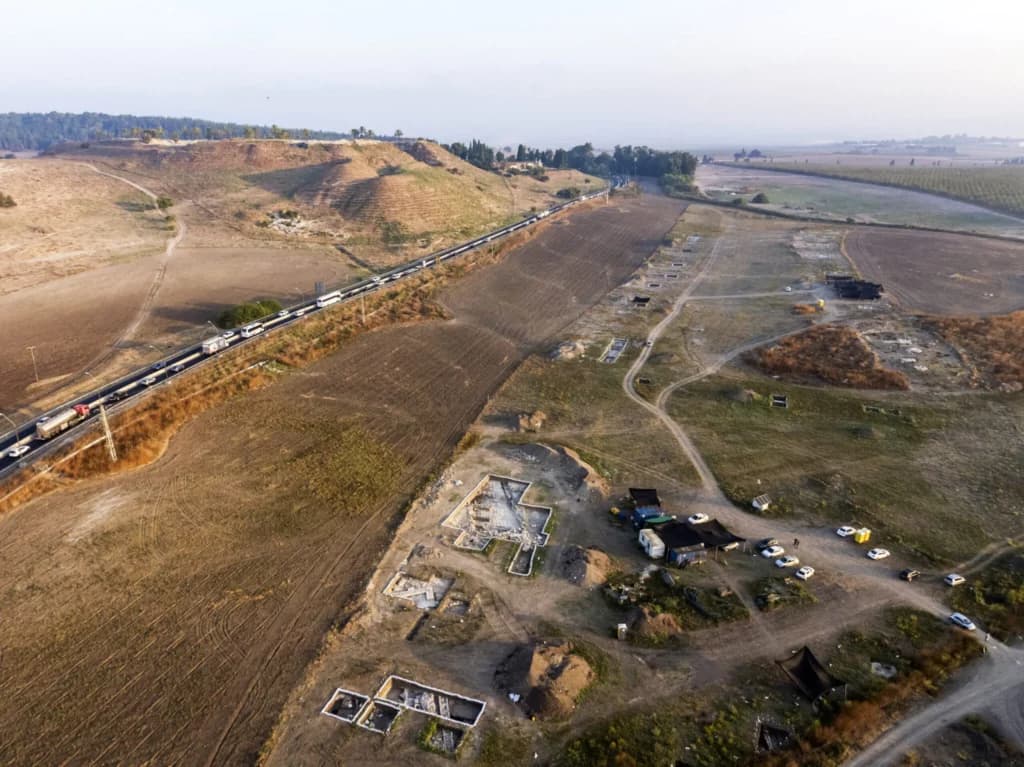
“When Israel Invests in Joshua’s Altar, It Proudly Declares: This is Our Ancestral Land”
Earlier this week, the government advanced a series of landmark decisions reinforcing Israel’s civilian presence in Judea and Samaria. Another initiative, more technical in form but no less historic in implication, has also been recently promoted: the Israel Antiquities Authority Bill (Amendment—Power of the Israel Antiquities Authority in Judea and Samaria), 2023. The bill, which

Earlier this week, the government advanced a series of landmark decisions reinforcing Israel’s civilian presence in Judea and Samaria. Another initiative, more technical in form but no less historic in implication, has also been recently promoted: the Israel Antiquities Authority Bill (Amendment—Power of the Israel Antiquities Authority in Judea and Samaria), 2023.
The bill, which was approved on 3 February for its first reading in the Knesset, proposes to establish direct responsibility by the State of Israel for antiquities, heritage, and archaeological sites in Judea and Samaria. In practical terms, it would create a new statutory body, “The Judea and Samaria Heritage Authority”, modeled after the Israel Antiquities Authority, with an annual budget estimated at no less than 30 million shekels.
Currently, neither the Antiquities Law nor the Israel Antiquities Authority Law formally applies in Judea and Samaria. Oversight of archaeological matters in the region falls under the Staff Officer for Archaeology in the Civil Administration, who is subordinate to the military commander. The proposed legislation would shift that responsibility from a military framework to a civilian, government-appointed authority under the Ministry of Heritage.
According to the Knesset protocol, the new authority would be charged with preservation, restoration, development, excavation, rescue operations, site management, and public accessibility – while also strengthening enforcement against looting and destruction, an issue which local officials and residents have long been warning of.
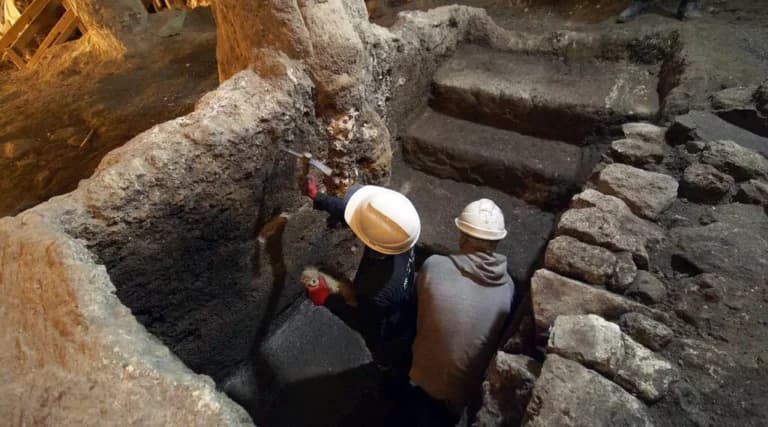
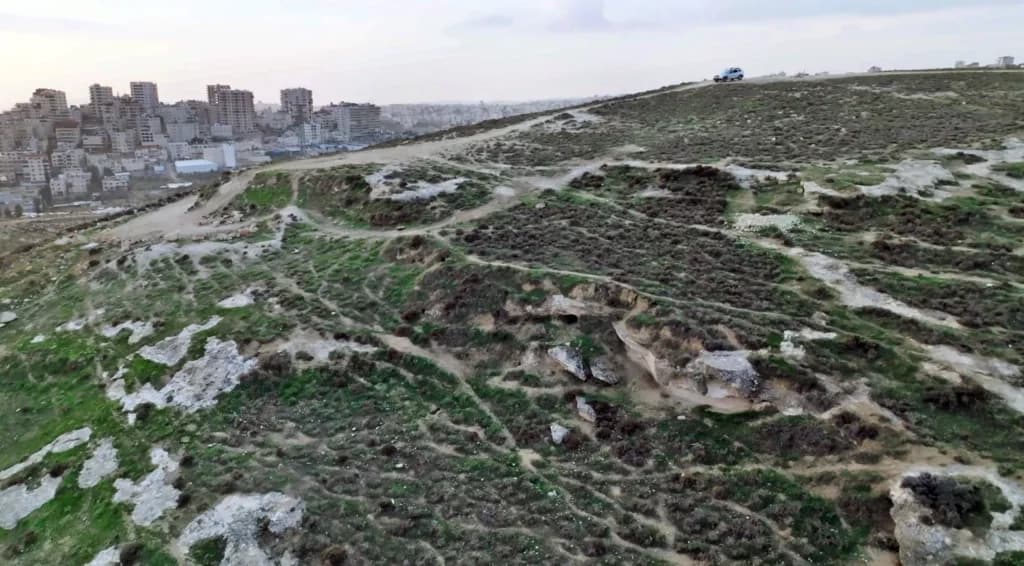
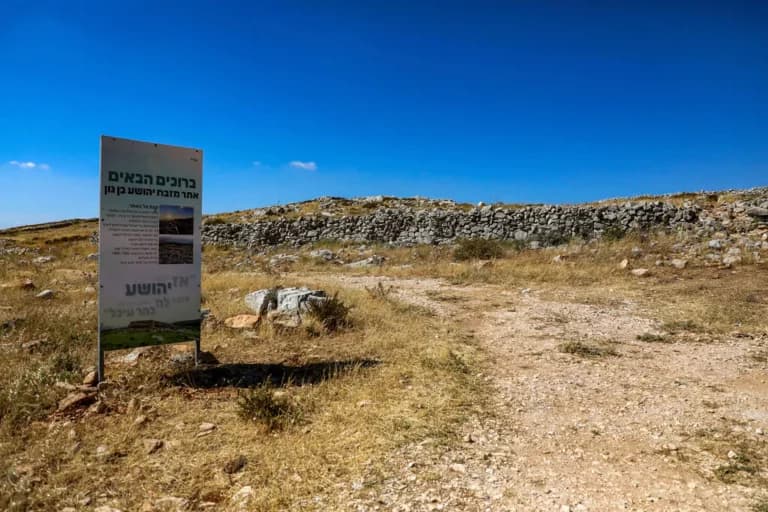
Committee Chair MK Zvi Sukkot described the bill as transformative. “This is one of the bills that is most important to me,” he said during deliberations. “We will revolutionize Judea and Samaria. Jewish history is to be found less in Dizengoff and more in Shiloh.” He pointed to repeated incidents of antiquities theft and vandalism, citing as emblematic of a broader failure of oversight Joshua’s Altar on Mount Ebal, where graffiti and neglect have marred this site of profound biblical significance.
MK Amit Halevi, who sponsored the bill, framed the legislation as an overdue assumption of responsibility. “The time has come to prevent the ongoing theft of our cultural treasures and the destruction of the Jewish people’s heritage sites,” he said, emphasizing that authority would move from military administration to a statutory body within the Ministry of Heritage.
The legislative momentum comes amid what Minister of Heritage Amichay Eliyahu has called a broader diplomatic fight and “battle of consciousness”. In a recent letter to Prime Minister Benjamin Netanyahu, he warned of the Palestinian Authority‘s outrageous efforts to seek UNESCO recognition for 14 sites as “Palestinian heritage,” including Herodium, ancient Samaria (Sebastia), Wadi Qelt, the Hasmonean palaces near Jericho, and other sites throughout the Judean Desert.
“This is not a cultural move,” Eliyahu wrote. “It is a strategic diplomatic, legal, and narrative campaign.” He urged the formation of an inter-ministerial task force to ensure that Israel responds decisively – diplomatically, legally, and on the ground.
The government has already allocated 40 million shekels to expand a rescue, preservation, and development plan for archaeological sites across Judea, Samaria, the Jordan Valley, and the Judean Desert. Projects include Sebastia – one-time capital of the Kingdom of Israel, the Hasmonean palaces in Jericho, the desert fortresses of Sartaba and Hyrcania, and Tel Hebron. Funding also covers salvage excavations, restoration work, infrastructure development, tourism accessibility, signage, security systems, and strengthened enforcement against antiquities theft.
Following the bill’s preliminary approval, Eliyahu articulated the broader vision behind the legislation in unmistakable terms:
“We are acting like any nation in the world that tends to its heritage sites. That is how a nation says: This is my homeland.
When France invests in the Louvre, it says: This is our culture.
When Italy invests in the Colosseum, it says: This is our identity.
And when Israel invests in Joshua’s Altar, it proudly declares: This is our ancestral land.
All we are doing now is caring for this inheritance as it should be cared for – not quietly, not apologetically, but with great pride.”

In that spirit, the bill represents far more than administrative reform. It is the natural continuation of Zionism’s founding mission: the return of the Jewish people to its land and the restoration of its historical inheritance. To preserve Shiloh, Sebastia, Herodium, and Mount Ebal is not an act of politics; it is an act of memory, responsibility, and covenant.
As the prophet Ezekiel declared in speaking of Israel’s return from exile: “For I will take you from among the nations and gather you from all the countries, and I will bring you to your land” (Ezekiel 36:24). The flourishing of that land, its stones, its ancient altars, its royal cities, is part of that promise, being fulfilled before our eyes.
In reclaiming stewardship over the cradle of biblical history, Israel is not rewriting the past. It is honoring it. And in doing so openly, lawfully, and with conviction, the Jewish state affirms what the long generations who prayed in the direction of Jerusalem believed: that exile would end, the land would be restored, and its heritage would once again be guarded by its own people.
Discussion0
No comments yet — be the first to share your thoughts.