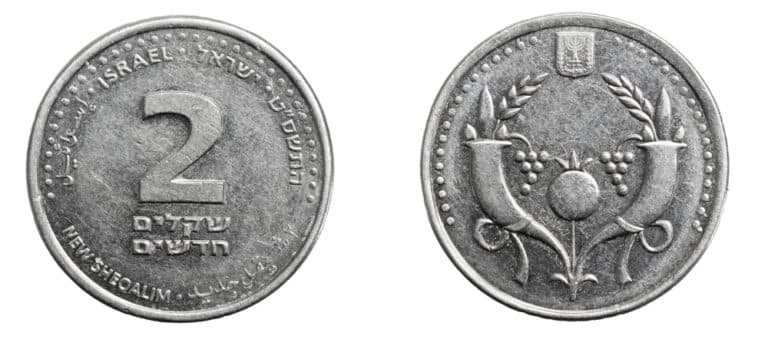

Front and back view of the Two New Israeli Shekel | Shutterstock
Takeaways
- Jewish rebels stamped biblical symbols over Caesar’s face while Rome was at the gates.
- Israeli coins have never shown a human ruler. Only palm branches, pomegranates, and lilies.
- The shekel is mentioned throughout Hebrew scripture. It’s also what you use to buy coffee in Tel Aviv.
The symbols on modern shekels are taken from ancient Jewish coins.
Israeli coins are small enough to lose in a couch cushion, but they carry 3,000 years of history on their face. Every symbol stamped into the shekel traces back to a Temple, a revolt, or a prayer that refused to die.
-
The Word Shekel Tells a Story
For nearly two thousand years, no Jewish state issued a national shekel. The name shekel appeared in scripture, in texts, in prayers, but not on legal tender.
Israel first called its modern currency the shekel in 1980 (replacing the previous Israeli Lira or Pound).
When Israel revived the name it made the everyday act of buying groceries or paying a bus fare into something quietly extraordinary.
The shekel is mentioned throughout the Hebrew scriptures. It was the currency of the Temple. It funded the tabernacle in the wilderness. And now it’s what you use to pay for coffee in Tel Aviv! In Israel, every transaction echoes an ancient hope that became a tangible reality.
-
Israel’s Philosophy When Minting Modern Coins
When the State of Israel began minting its own coins, the government enacted an instruction to use archeological findings from ancient Jewish coins as the exact blueprints for modern currency.
Officials from the Bank of Israel explicitly said that the process of copying motifs from the First Temple, Second Temple, and Bar Kokhba periods was done directly in the spirit of renew our days as of old from Lamentations.
A government that builds its currency from the ruins of a destroyed Temple, revolts, and Biblical symbols isn’t just minting money, it’s minting the story of Jewish resilience, hope, and survival.
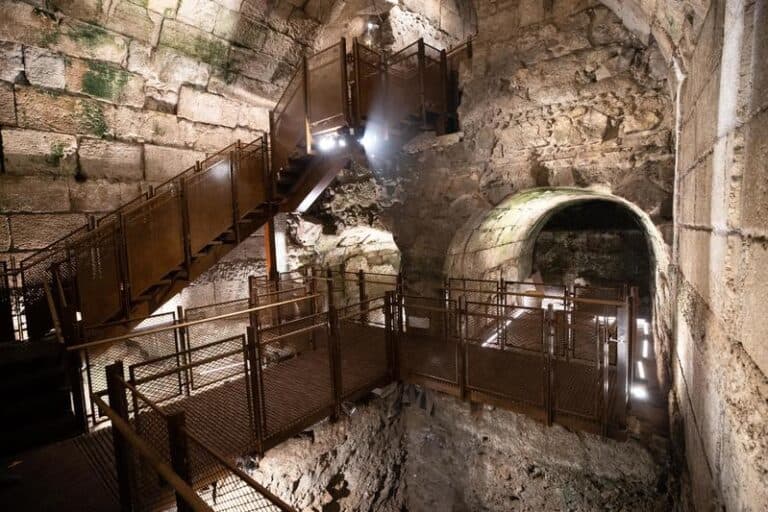
📖 For a deeper look at archaeology of the Old City, read here about this remarkable discovery from the Hasmonean period.
-
No Emperors Allowed
Pick up an American quarter. You get George Washington. A British pound? King Charles. Even ancient Roman coins were essentially imperial propaganda with faces.
Israeli coins have never worked that way. Not ancient ones, not modern ones.
Here’s the part that doesn’t get told enough. During the Jewish revolts against Rome, the rebels couldn’t mine fresh silver. So they did something remarkable: they took existing Roman coins, the ones stamped with the faces of emperors, and physically hammered Jewish symbols directly over them.
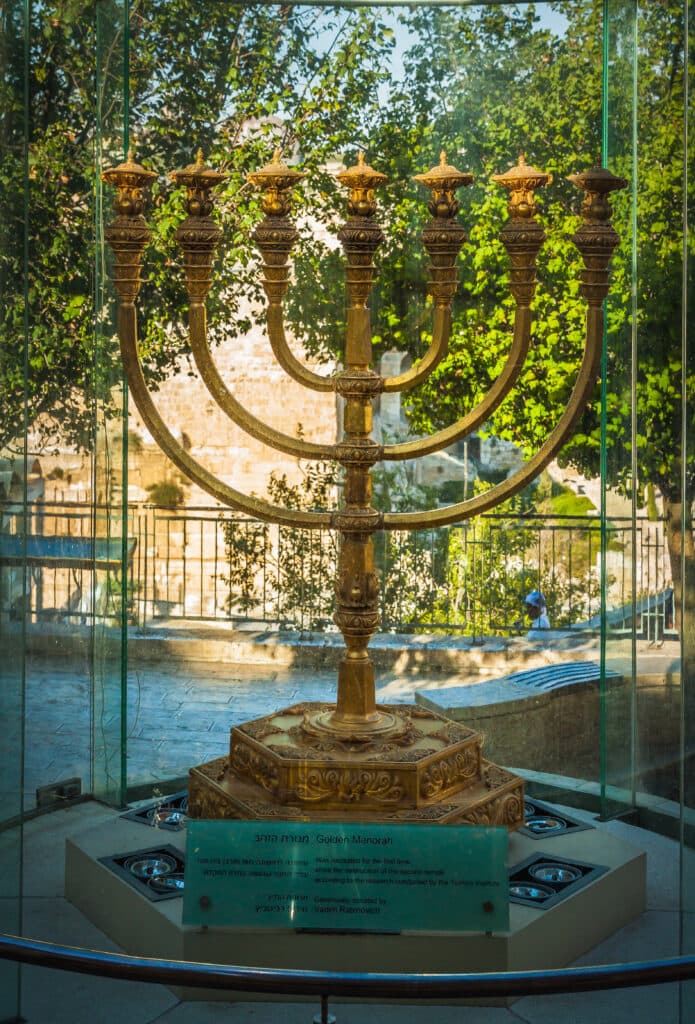
This act also reflects the biblical prohibition on carved images of people, and the coin designers reached elsewhere: palm fronds, pomegranates, lilies, a lyre, a menorah. The symbols come from the Temple, from the agricultural festivals, from the poetry of scripture.
The Israeli coin teaches us that true authority doesn’t belong to any human ruler.

-
Four Species on Currency During a Famine
The modern Ten Agorot coin faithfully reproduces an ancient design featuring the “Four Species” used during Sukkot, the Feast of Tabernacles: the lulav (palm branch) and etrog (citron fruit). In scripture, Sukkot celebrates God’s provision in the wilderness and looks ahead to a future age when all nations will gather in worship.
The rebels who minted coins with harvest symbols during active warfare were forcing themselves to remember something. God provided in the wilderness. God would provide again.
-
The Harp That Went Silent
Lamentations captures the moment when music stops. The elders stop playing their instruments. The tradition says the musicians hung their harps on the willow trees and wept for Jerusalem.
And yet ancient coins, and today’s (modern) half-shekel, feature the biblical lyre (or harp) associated with King David.
This engraved imagery inspires believers to realize that even when our “strings are broken” by grief, our praise is preserved for a day of ultimate restoration. Israeli coins symbolize hope for the future.
-
A Flower That Survived 2,600 Years
The lily appears in biblical poetry as a symbol of beauty and flourishing. The modern one-shekel coin features a lily design copied from a Judean coin that dates to the First Temple period. That’s the era before Jerusalem fell the first time and before the Babylonian exile.
That a flower from the era before Jerusalem’s destruction now appears on modern currency creates a powerful image: beauty remembered through exile and carried into restoration.

Small Change, Long Memory
The coins in Israel’s pocket aren’t just currency. They’re 3,000 years of survival, rebellion, and restoration…and they’re also what you use to split the bill of fresh hummus and pita.
Want to keep reading? Read here about what this ancient ritual bath reveals about Temple life. Explore more on faith, values, and the Land of Israel at Sinai Project.
Discussion0
No comments yet — be the first to share your thoughts.