
Wikipedia Commons
Takeaways
- The Menorah was one gold block with seven branches, one source of light flowing to all nations
- The Western Lamp burned miraculously, proving God’s love for Israel can’t be extinguished
- “Light unto the nations” isn’t just poetic, it’s Israel’s literal God-given mission
- The seven branches map directly to the sevenfold Spirit of God in Isaiah 11:2
- Genesis 12:3 still stands: “I will bless those who bless you”
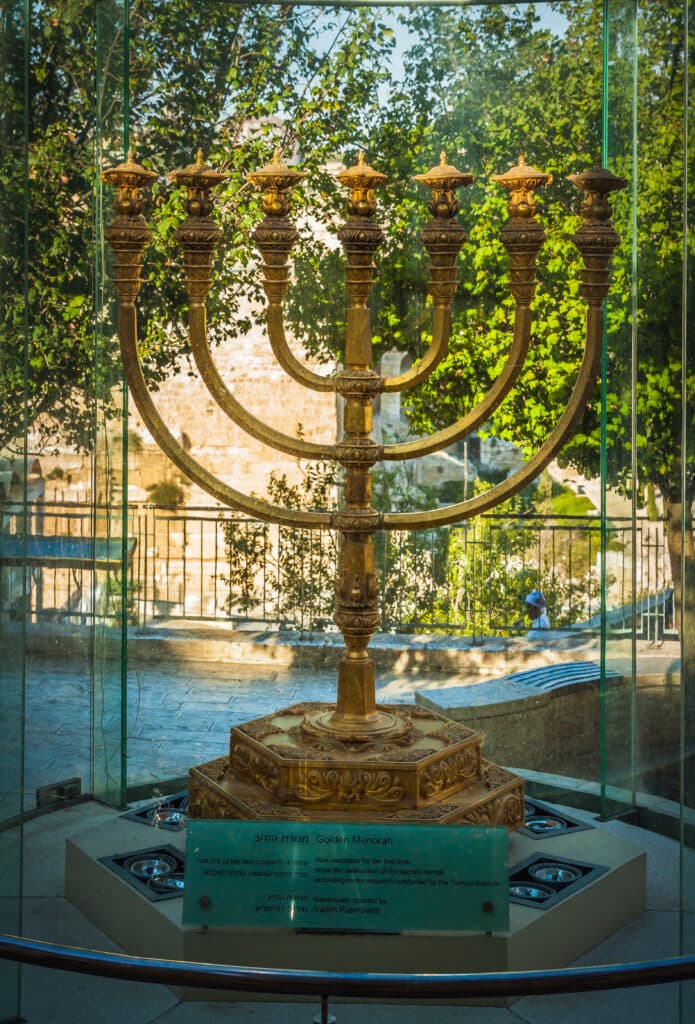
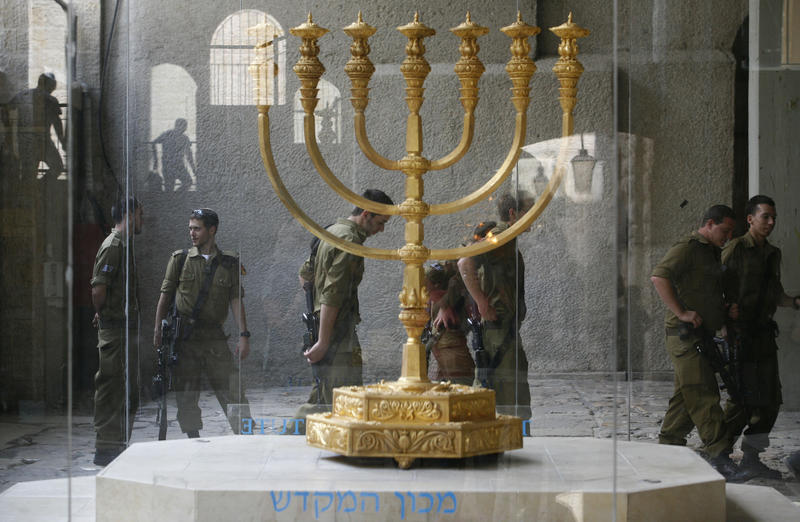
The seven-branched golden Menorah that stood in Jerusalem’s Holy Temple wasn’t just a lamp. It was God’s blueprint for how His chosen people would carry His light to every nation on earth. Every detail, from the hammered gold to the placement of each branch, tells the story of Israel’s divine calling.
What the Menorah Actually Looked Like (and Why It Matters)
God gave Moses precise instructions in Exodus 25:31-40, and they were unusually specific. One solid block of pure gold, hammered (not cast, not assembled) into seven branches with no seams and no joints. The entire lamp came from a single source.
It stood in the Heichal, the sanctuary, positioned so its light was always visible to every priest serving in God’s house.
While most sacred objects in the ancient world were oriented inward, toward the holy, the Menorah actually faced outward, toward the people. That architectural choice was deliberate, and it tells us everything about what God intended it to communicate.
The 42 sacred adornments, 22 goblets, 9 flowers, and 11 bulbs, weren’t decorative afterthoughts. Every number in Exodus carries weight. In a text where God specifies the exact dimensions of curtain rings, nothing gets included by accident.
The Seven Branches and What They Mean Prophetically
Zechariah was a prophet watching his people try to rebuild Jerusalem with almost nothing. No army, no resources, no political power. The city was in ruins and the people were losing hope. That’s the moment God chose to show him a vision of the Menorah, burning bright and fully lit.
The message wasn’t a battle plan. It was a reminder that Israel’s light was never supposed to come from human strength in the first place. Israel’s light and survival is only from God.
And indeed, Jewish survival throughout history, through exile, persecution, and every attempt to destroy them, is itself the fulfillment of this message. Jewish survival has always been miraculous.
The shape of the lamp itself reveals its essential purpose. The central stem is Israel. The six branches surrounding it represent the nations. The lamp wasn’t built with Israel at the top looking down, or at the bottom being overlooked. Israel is the trunk, same level as branches, from which each branch receives its light. Every nation, every people, every corner of the earth was always meant to receive something that flows first through the Jewish people.
The Miracle of the Westernmost Lamp
The westernmost lamp, the Ner HaMaaravi, received the exact same amount of oil as every other branch. Yet while the other six burned out by morning, this one kept burning straight through the day. For the entire 40 years that Shimon the Righteous served as High Priest, it never went out.
Jewish sources record that this lamp served as testimony to the nations that God’s presence, the Shekhinah, genuinely rested in Israel. The miracle of the eternal light reminds us that God’s purposes for Israel cannot be stopped; His covenant love endures forever.
📖Read what archaeological finds in the Old City of Jerusalem reveal about Temple life
“A Light Unto the Nations” Isn’t Just Poetic
In Isaiah 49:6 God speaks directly to the Jews: “I will also make you a light for the Nations, that my salvation may reach to the ends of the earth.”
This is a job description and a mission. Abraham received the original decree in Genesis 12:3: all peoples on earth would be blessed through his line. The Torah confirms it in Proverbs 6:23: “the commandment is a lamp and the teaching is a light.” Israel’s role has always been to carry God’s revealed truth into the world’s darkest places.
Why Believers Who Support Israel Are Part of This Story
The Temple’s windows were designed wide on the outside, narrow on the inside, because God’s house was built to radiate light outward, not hoard it within.
Genesis 12:3 still stands: “I will bless those who bless you.” Those who stand with Israel aren’t just taking a political position, they’re aligning themselves with a covenant God made and has never revoked.
Supporting Israel today means participating in something God set in motion at Sinai, confirmed through the prophets, and is still going on. The Menorah’s light wasn’t meant to stay in Jerusalem. It was always meant to reach the ends of the earth. Support Israel, pray for Jerusalem, and let the light of God’s truth shine through His chosen people until the whole world knows Him.
Want to keep reading? Learn about the mystery of what happened to the Ark of the Covenant. Explore more on faith, values, and the Land of Israel at Sinai Project.
Discussion0
No comments yet — be the first to share your thoughts.