Temple-Era Workshop, Safeguarded by the Earth, Discovered in Dramatic Antiquities Theft Sting
A large stone vessel workshop from the days of the Second Temple, which produced ritual vessels for Jews some 2,000 years ago, has been uncovered in Jerusalem during an operation to apprehend antiquities looters. “The workshop revealed in Jerusalem is not merely an archaeological site,” officials said, “but a window into a world preserved deep

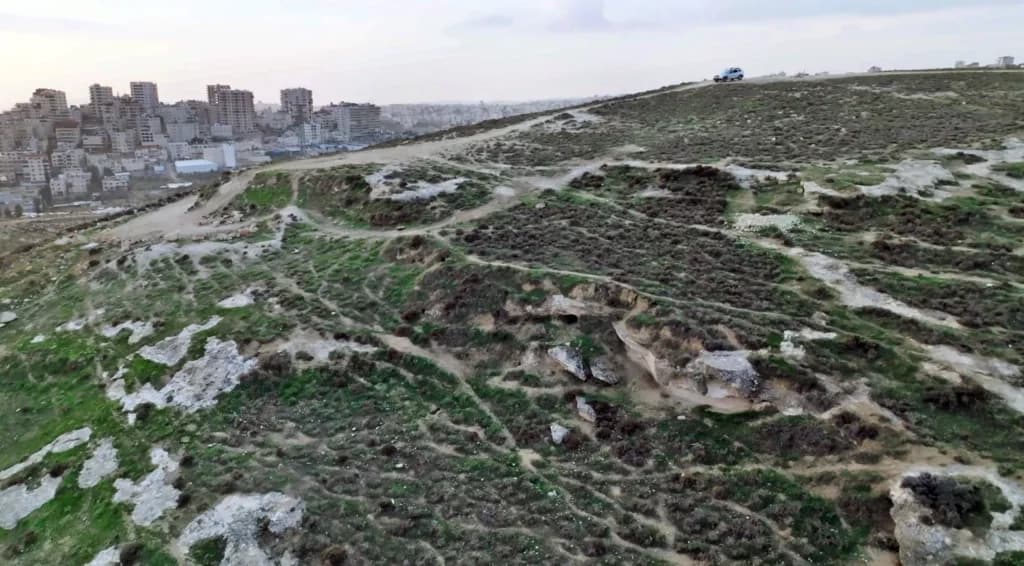
A large stone vessel workshop from the days of the Second Temple, which produced ritual vessels for Jews some 2,000 years ago, has been uncovered in Jerusalem during an operation to apprehend antiquities looters. “The workshop revealed in Jerusalem is not merely an archaeological site,” officials said, “but a window into a world preserved deep within the earth, waiting for us.”
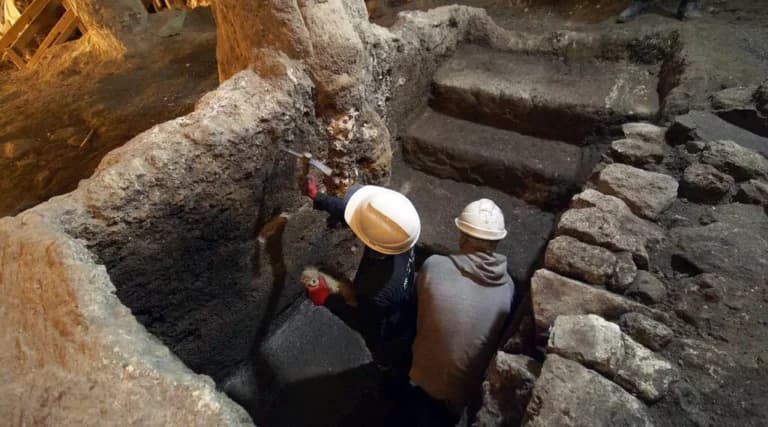
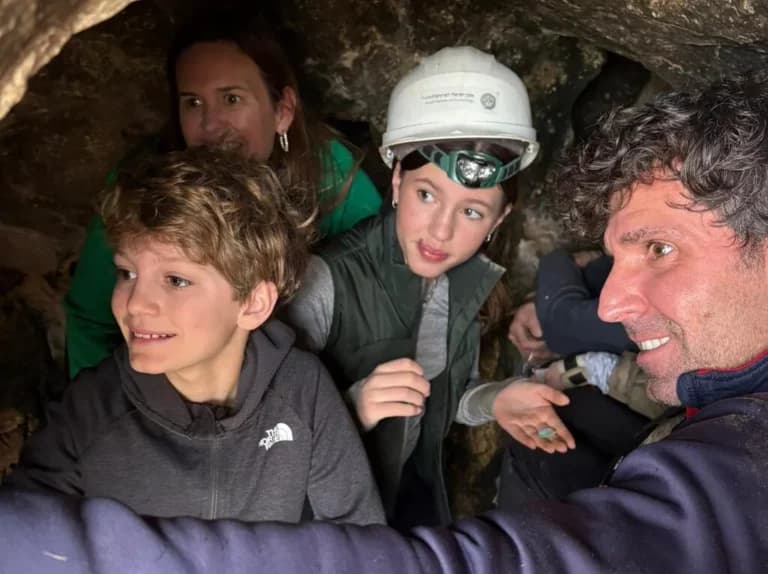
The large workshop, dating to the Second Temple era, was discovered inside a cave on the eastern slopes of Mount Scopus in Jerusalem. The find came during a surveillance and enforcement operation carried out by the Theft Prevention Unit of the Israel Antiquities Authority. Inside the subterranean cave where the workshop once operated, hundreds of stone vessel fragments, production waste, and unfinished vessels were uncovered.
The exposure of the workshop became possible after inspectors from the Theft Prevention Unit identified suspicious activity at the Ras Tamim antiquities site. Upon noticing fresh excavation marks and attempts to breach the underground system, inspectors set up ambushes and surveillance in order to identify and catch the looting ring in the act.
After careful monitoring and documentation, five suspects were apprehended late at night at the site. They were found equipped with extensive digging tools, a generator, quarrying implements, and metal detectors. Some of the suspects were captured below ground, while others, who served as lookouts and guards, were apprehended above.
The suspects were arrested and interrogated, and they confessed to the charges against them. An indictment will be filed for damaging an antiquities site and conducting illegal excavations, offenses punishable under Israeli law by up to five years in prison.
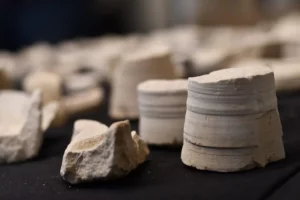
After the arrests, Israel Antiquities Authority inspectors surveyed the cave. To their astonishment, they discovered hundreds of distinctive stone vessel fragments.
“A Significant and Central Site on the Ancient Route”
Dr. Eitan Klein, Deputy Director of the Theft Prevention Unit at the Israel Antiquities Authority, explained that stone vessel production workshops from the Second Temple period are well known in archaeological research in Judea. A workshop in the Mount Scopus area was previously discovered during the construction of the Naomi Shemer Tunnel situated between Jerusalem and Ma’ale Adumim, and another was uncovered in the village of Hizma.
However, he emphasized that the current discovery is especially significant, because it grants a broader picture of the region. In addition to the workshops, numerous other finds dating to the Second Temple period have been uncovered in the area, including tombs, large water reservoirs, a ritual bath, and a limestone quarry.
“The discovery of this workshop strengthens the assessment that this was an important and central site situated along the ancient road used by pilgrims ascending to Jerusalem from the east, from the region of Jericho, Transjordan, and the Dead Sea,” Klein said. “It appears that the vessels produced here were marketed in the streets of Jerusalem to the city’s residents and to pilgrims during the days of the Second Temple.”
The production and use of stone vessels were unique to the Jewish population in the Jerusalem and Judea region during the Second Temple period. Ancient sources describe a sweeping transformation in the realm of ritual purity during this era, when meticulous observance of the laws of purity and impurity extended to every individual, unlike earlier periods when such concerns primarily applied to priests and those serving in the Temple.
Rabbinic sources described this phenomenon with the phrase “Purity burst forth in Israel” (Tosefta, Shabbat 1:7). During this period, ritual baths were installed in private homes, villages, and rural towns, alongside large ritual baths in Jerusalem near the Temple and along the roads leading up to the Holy City.
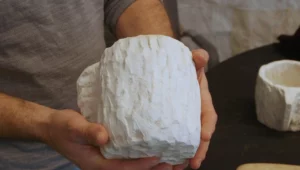
The stone vessels from the workshop are now on display in the new exhibition “Criminal Past” at the National Campus for the Archaeology of the Land of Israel in Jerusalem. In this exhibition, the Israel Antiquities Authority reveals to the public, for the first time, the hidden world of antiquities looting in Israel and the ongoing battle against it.
The guided tour takes visitors behind the scenes of the fight against antiquities theft. Through remarkable artifacts that were torn from their historical context in Israel and around the world, the exhibition presents the entire chain of looting, from illegal excavation to the marketplace, collectors, and smuggling networks.
The exhibition also highlights the work of the “Antiquities Police,” the Israel Antiquities Authority’s Theft Prevention Unit, which operates day and night, both in the field and in interrogation rooms, to break this chain and to safeguard the heritage sites and the shared historical story of us all.
“A Window into a World Preserved Deep Within the Earth”
Israel’s Minister of Heritage, Rabbi Amichai Eliyahu, stated: “The workshop revealed in Jerusalem is not merely an archaeological site, but a window into a world preserved deep within the earth, waiting for us. Two thousand years ago, Jews made the pilgrimage to Jerusalem from Jericho, from beyond the Jordan, and from the Dead Sea, and the stone vessels produced here accompanied them on their journey to the Temple.”

“Now, as the earth returns to us what it safeguarded, we must give back to it, to protect every root, every vessel, every layer. For our enemies’ attempts to carry out antiquities theft are not merely financial crimes, but efforts to steal our identity. We will not allow this. We are waging a determined battle to preserve and commemorate what has always been ours, and always will be.”
The Minister’s resolve echoes Isaiah’s words of prophecy regarding the land of Israel, when her sons and daughters return from exile :”No longer shall “forsaken” be said of you, and “desolate” shall no longer be said of your land” (Isaiah 62:4).
Discussion0
No comments yet — be the first to share your thoughts.