Strait of Hormuz Traffic Remains Near Standstill
Strait of Hormuz traffic remains far below normal as oil flows shift toward the Red Sea and alternative routes amid the continuing Iran war

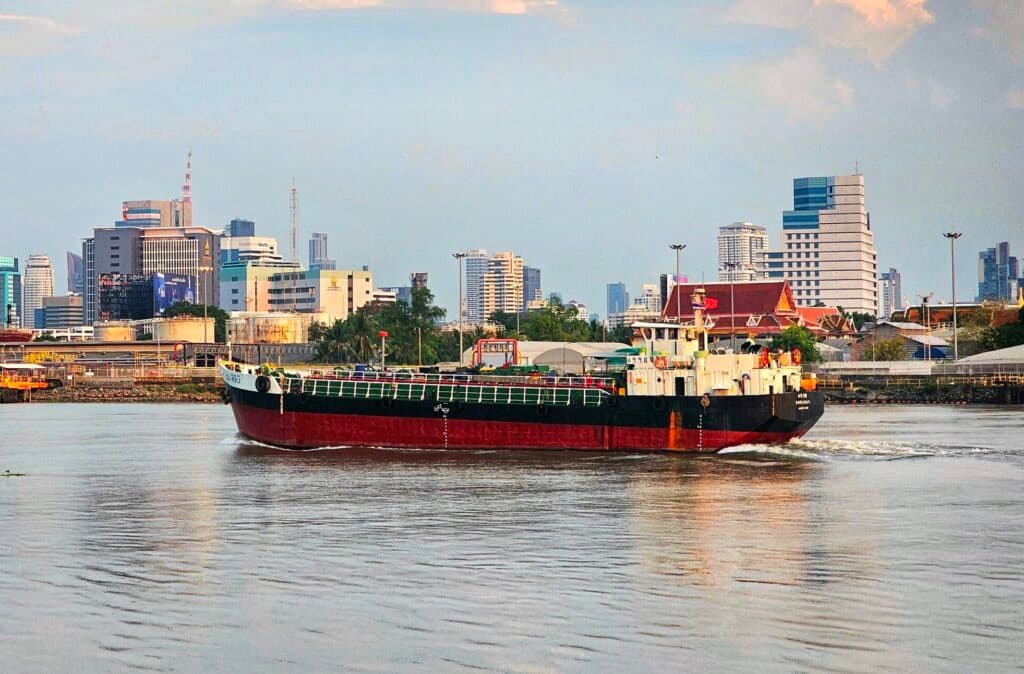
Strait of Hormuz traffic remained near a standstill Monday, with only five vessels recorded passing through the critical waterway. That was far below the recent 10-day average of about 14, according to preliminary Kpler ship-tracking data. Meanwhile, traffic through the Bab al-Mandab reached a three-day high as regional trade continues adapting to the Iran war.
The disruption gives unusual relevance to Isaiah 43:16, which describes God as the One “who makes a way in the sea and a path in the mighty waters.” Six months of war have shown how much modern nations still depend on those paths remaining open. When a narrow maritime corridor becomes a battlefield, the effects reach fuel pumps, ports, factories, and families thousands of miles away.
Strait of Hormuz Traffic Stays Far Below Normal
Kpler recorded four vessels entering Hormuz on Monday and only one leaving. No liquid tankers passed through with active transponders. The incoming ships included an empty handy-sized gas tanker using the Iranian route and three loaded dry bulk carriers. Ships traveling with their tracking systems switched off are not included in the figures.
The picture was markedly different at Bab al-Mandab, the southern entrance to the Red Sea. Twenty-seven vessels crossed the strait, including 14 entering and 13 departing. Five were Aframax or Suezmax crude tankers, although no very large crude carriers or LNG tankers were recorded.

That shift matters because the Iran war has already transformed regional energy routes. Before the conflict, roughly one-fifth of global oil supplies passed through Hormuz. With the strait heavily disrupted, Saudi Arabia has redirected much of its crude westward through pipelines to the Red Sea port of Yanbu. Those shipments can then move through Bab al-Mandab toward Asia or north toward the Suez Canal and Europe.
The war has therefore not simply reduced shipping. It has begun redrawing the map of how Gulf energy reaches the world.
The Search for Routes Around Iran
It is accurate to say the conflict has pushed the United States and regional energy producers toward alternatives, although the picture is more complex for Iran itself.
Washington has increasingly looked outside the Persian Gulf for energy security. In “Trump Venezuela Oil Deal Secures 65 Billion Barrels,” President Donald Trump announced an agreement giving the United States access to production tied to roughly 65 billion barrels of proven Venezuelan reserves. U.S. officials have presented the deal as a way to increase stable Western Hemisphere supply and reduce exposure to disruptions in the Middle East.
That strategy is already part of a larger shift. Oil exports from across the Americas have climbed as Asian buyers seek alternatives to vulnerable Middle Eastern supplies. Reuters reported that producers from Canada to Argentina are benefiting as importers prioritize reliability over shorter shipping distances.
Iran also possesses a limited route designed to bypass Hormuz. Its Goreh-Jask pipeline can move crude to the Gulf of Oman without sending it through the strait. However, that system has never matched the capacity of Iran’s traditional export network through Kharg Island and Hormuz. The current vessel data also does not prove Tehran has suddenly shifted most of its trade to alternative routes.
Other Gulf states are moving more aggressively. Saudi Arabia is relying heavily on its East-West pipeline, while the UAE can send crude through Fujairah outside Hormuz. Governments are now discussing billions of dollars in additional pipelines, ports, and transport infrastructure to ensure one narrow waterway cannot again paralyze regional exports.
Two Chokepoints, One Strategic Warning
The consequences matter directly to both America and Israel. Washington must protect global commerce while limiting the economic damage of a conflict with Iran. Higher energy prices affect American consumers, military logistics, inflation, and the political cost of sustaining pressure on Tehran.
Israel faces the same maritime problem from a different geography. Hormuz shapes global energy prices, while Bab al-Mandab governs access between the Indian Ocean and the Red Sea. Disruption there can threaten shipping routes connected to Israel, regional trade, and the wider economic stability that Israeli security depends upon.
The American and Israeli covenantal traditions meet in a shared understanding that freedom requires preparation. Both nations place value on sovereignty, open commerce, responsible stewardship, and the ability to withstand coercion from hostile powers. A free nation cannot allow an adversary to decide whether its people may trade, travel, or receive essential resources.
That is why the shipping numbers matter beyond maritime statistics. Five vessels through Hormuz and 27 through Bab al-Mandab show a region actively adjusting around war. Pipelines are replacing tankers, new ports are gaining importance, and the United States is looking increasingly toward the Western Hemisphere for oil.
The longer Hormuz remains unreliable, the more permanent those changes may become.
For more stories on Israel, faith, and the values behind the headlines, follow Sinai on Facebook and Instagram.
Discussion0
No comments yet — be the first to share your thoughts.