Netanyahu Rejects Vance Claim Against Israel
Netanyahu rejected J.D. Vance’s claim that Israel is trying to sabotage an end to the Iran war, saying that is not official Israeli policy

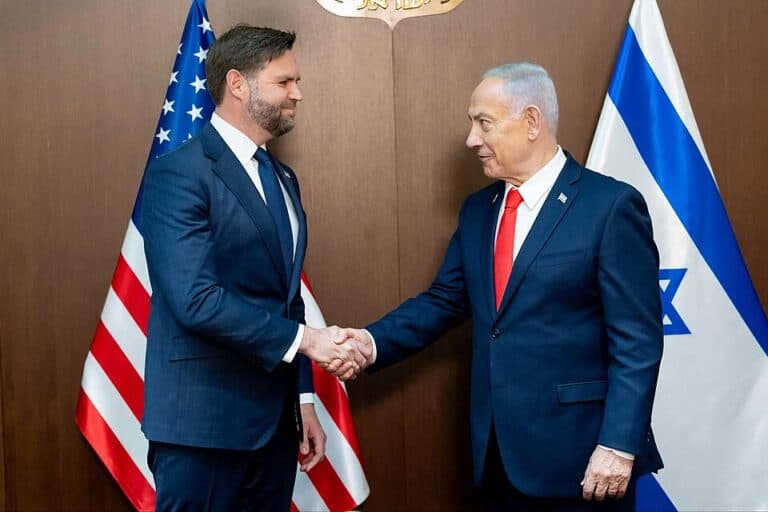
Netanyahu’s Vance response pushed back directly against claims that Israel is trying to sabotage efforts to end the war with Iran.
During an interview, Prime Minister Benjamin Netanyahu was asked about recent comments by Vice President J.D. Vance on Joe Rogan’s podcast. The interviewer said Vance claimed Israel was trying to sabotage an end to the war with Iran. He also said elements inside Netanyahu’s administration were trying to influence American public opinion so the war would continue.
Netanyahu rejected the accusation. “That is simply not true,” Netanyahu said. “I had a very good conversation with the Vice President this morning, and I think we clarified the matter, because that is not our policy.”
Netanyahu added that individuals inside the administration may hold their own views. However, he stressed that he sets the government’s policy. “Individuals in our administration may have their own opinions, but I set the government’s policy, and that is not our policy,” Netanyahu said.
The Tanakh says, “Truthful lips endure forever.” That verse gives this exchange its core frame. Alliances cannot survive on suspicion, leaks, and political noise. They require direct communication and clear truth.
Netanyahu Vance Response
For Israel, Netanyahu’s answer aimed to prevent a public rift with one of the most important figures in the Trump administration.
Vance has become a major voice in the American debate over Iran, war powers, and the limits of U.S. involvement abroad. Therefore, his comments about Israel carried real diplomatic weight. Netanyahu’s response tried to separate two things. He acknowledged that individuals may have their own opinions, but he insisted that Israel’s official policy does not seek to sabotage an end to the war.
That distinction matters. Israel wants Iran’s nuclear threat removed, but Netanyahu framed that goal as policy, not manipulation.
Iran, Trump, And The Alliance Test
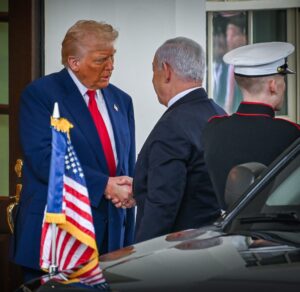
This exchange connects directly to “Netanyahu Lists Trump’s Three Options On Iran.” Netanyahu said Trump has three options on Iran: agreement, blockade, or military action, while stressing that eliminating Iran’s nuclear program is the shared goal.
Netanyahu is not saying Israel wants war for war’s sake. He is saying Israel wants the outcome that protects its people: the elimination of Iran’s nuclear program.
His relationship with Trump has long rested on strategic alignment, especially on Iran and Israeli security. However, Netanyahu has also described the balance between the two leaders with unusual clarity: “Trump is the senior partner and I am the junior partner. But I am Israel’s prime minister, and when I need to stand up for my country’s interests, I do it.”
That line matters here. Netanyahu recognizes American leadership, but he also insists on Israeli sovereignty. Israel can support Trump’s strategy while still defending its own national interests.
With Vance, the relationship appears more delicate. Netanyahu’s morning call suggests both sides wanted to contain the dispute before it grew into a wider crisis inside the U.S.-Israel alliance.
Covenant Of Honest Alliance
The United States and Israel share a covenantal understanding before God rooted in truth, freedom, defense of life, and responsibility before history.
America’s covenantal tradition emphasizes liberty under God, constitutional government, and the moral use of power. Israel’s covenant is ancient and unique, rooted in the God of Israel, Torah, Jewish peoplehood, and the return to the land.
America must debate war and peace seriously. Israel must speak clearly about the Iranian threat without being accused of manipulating its closest ally. Both nations must protect the relationship from those who would benefit from division.
For Washington, the issue is credibility. If Iran believes the U.S.-Israel alliance is cracking, Tehran may grow bolder. For Jerusalem, the issue is survival. Israel cannot allow Iran’s nuclear program to become a protected threat behind diplomatic ambiguity.
Ultimately, Netanyahu’s response was measured but firm. He denied the charge, emphasized his authority over Israeli policy, and kept the focus on the central objective: stopping Iran’s nuclear threat while preserving the alliance with America.
For more stories on Israel, faith, and the values behind the headlines, follow Sinai on Facebook and Instagram.
Discussion0
No comments yet — be the first to share your thoughts.