Loay Al-Shareef Explains Bayt al-Maqdis And The Jewish Temple
Loay Al-Shareef explained how Bayt al-Maqdis points back to the Jewish Temple, challenging denial and strengthening historical truth about Jerusalem

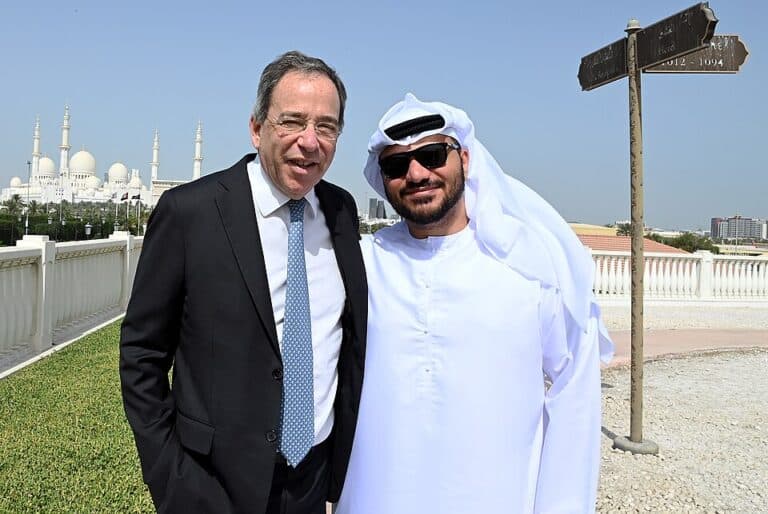
Loay Al-Shareef is bringing new attention to the meaning of “Bayt al-Maqdis”, an Arabic term often used for Jerusalem and its holy sanctuary.
Al-Shareef, a prominent social media activist from the United Arab Emirates, supports Israel, normalization, and honest historical education. In his latest explanation, he taught Arab and Muslim audiences that “Bayt al-Maqdis” points back to the Jewish Temple.
That matters because the fight over Jerusalem is not only political. It is also linguistic, historical, and spiritual. Names preserve memory. When a phrase still carries the memory of the Temple, it challenges the modern campaign to erase Jewish history from Jerusalem.
The Tanakh says, “My house shall be called a house of prayer for all peoples.” That verse gives the discussion its deeper frame. The Temple Mount is not a random hill, and Jerusalem is not an invented claim. Jewish memory, worship, and sovereignty are rooted there.
Bayt al-Maqdis And The Jewish Temple
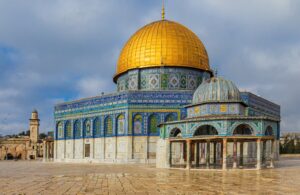
The phrase Bayt al-Maqdis is commonly understood as the Holy House or Sacred House. In the Jerusalem context, that language points directly to the Beit HaMikdash, the Holy Temple.
Al-Shareef’s message is powerful because it uses Arabic, history, and cultural memory to challenge denial from within the region’s own language. Instead of treating Jewish history as foreign to the Middle East, he shows that regional vocabulary still preserves traces of that truth.
For Israel, this kind of education matters. It affirms that the Jewish connection to Jerusalem did not begin in 1948, 1967, or any modern diplomatic process. It reaches back through Scripture, archaeology, liturgy, exile, return, and national memory. For the United States, the message also reflects a core American value: truth deserves protection, even when politics makes it uncomfortable.
Temple Mount And Jewish Prayer
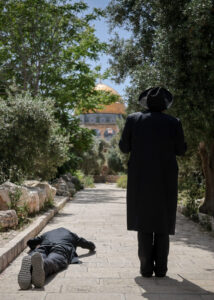
That issue connects directly to “It Is Time: Rabbi Shmuel Eliyahu Calls for a Synagogue on the Temple Mount.” Rabbi Shmuel Eliyahu said a synagogue on the Temple Mount is “a basic thing,” arguing that Jews should be able to pray there in a dignified place.
Al-Shareef’s explanation adds another layer to that debate. If Bayt al-Maqdis still points toward the Sacred House, then Jewish prayer on the Temple Mount should not shock the world. It belongs to the oldest spiritual identity of the place.
The question is not whether Jewish history exists there. It does. The real question is whether the world will speak honestly about it.
Truth, Worship, And The Abraham Accords
The United States and Israel share a covenantal understanding before God that honors truth, liberty, faith, and the dignity of worship.
America’s best tradition defends the right to remember, speak, pray, and live by conscience. Israel’s national mission restores the Jewish people to the land where their covenant, language, kings, prophets, and Temple shaped world history.
Al-Shareef’s message supports truth over propaganda. It also reflects the deeper promise of the Abraham Accords. Peace grows stronger when Arabs, Muslims, Jews, Israelis, and Americans can speak honestly about history.
For Israel, Bayt al-Maqdis is more than a phrase. It reminds the world that Jewish memory survived inside the languages of the region itself. For America, supporting that truth means standing with historical clarity, religious freedom, and peace built on recognition.
Ultimately, Al-Shareef’s educational work shows why normalization must go deeper than diplomacy. Real peace requires people to learn the truth about Jerusalem, the Temple, and the Jewish story still living inside the region’s own words.
For more stories on Israel, faith, and the values behind the headlines, follow Sinai on Facebook and Instagram.
Discussion0
No comments yet — be the first to share your thoughts.