Jerusalem Reveals a Secret from the Time of Chanukah
Just days before the celebration of Hanukkah, archaeologists in Jerusalem have uncovered a remarkable discovery from the Hasmonean period: one of the longest and most intact segments of an ancient defensive wall ever found from that era.
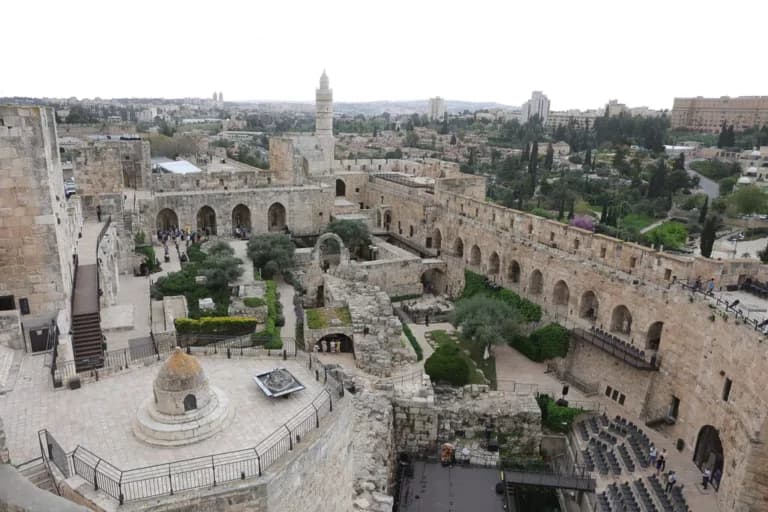
Tower of David Museum Jerusalem | Credit: Courtesy of the Tower of David Museum
A Wall from 2,200 Years Ago Emerges in Jerusalem
Just days before the celebration of Chanukah, archaeologists in Jerusalem have uncovered a remarkable discovery from the Hasmonean period: one of the longest and most intact segments of an ancient defensive wall ever found from that era.
The wall dates back 2,200 years, to the period when Jerusalem was strengthened under the Jewish Hasmonean dynasty—an era directly linked to the events commemorated during Hanukkah.
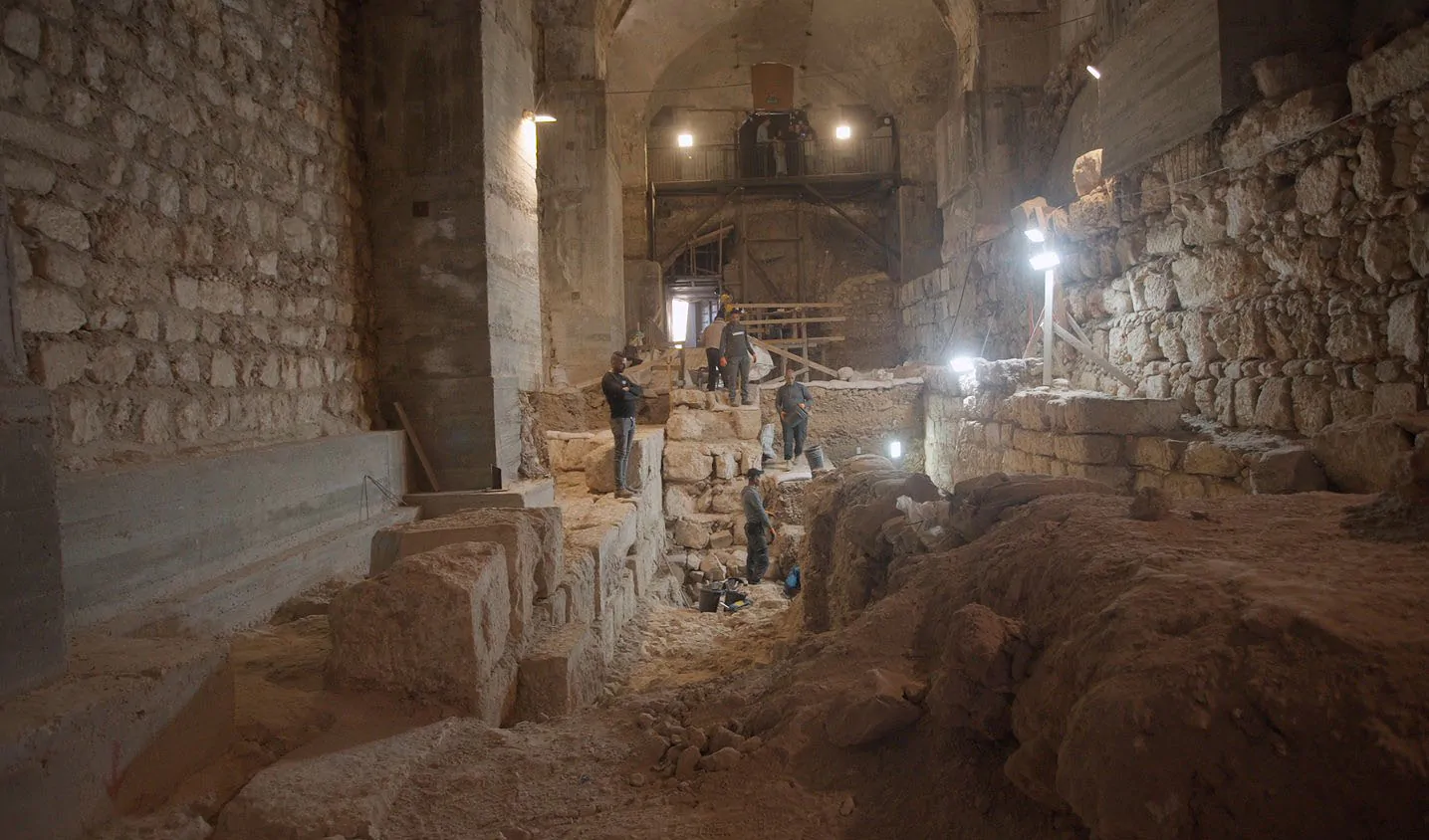
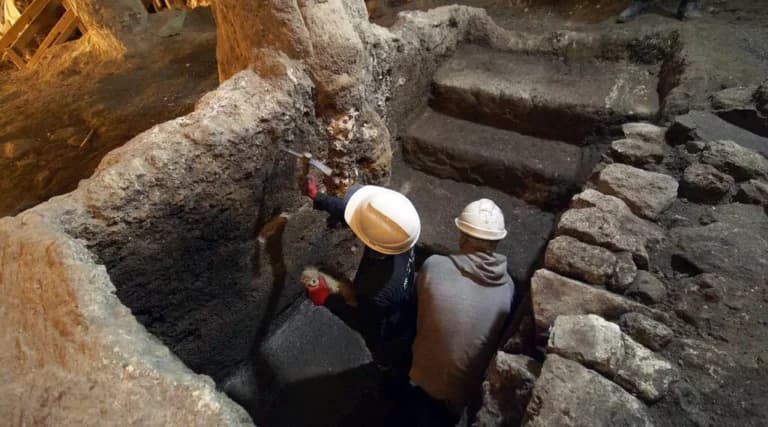
The finding was made during construction work for a new archaeology wing at the Kishle complex, an Ottoman-era detention facility adjoining the Tower of David Museum in Jerusalem’s Old City. To the archaeologists’ astonishment, the wall was preserved in exceptional condition.
A Massive Fortification
The exposed wall measures:
Over 40 meters (130 feet) long
Approximately 5 meters (16 feet) thick
Originally more than 10 meters high (over 30 feet)
It was constructed using huge dressed stone blocks, a testament to engineering skill and strategic planning in ancient Jerusalem.
Though only part of the structure survives today, the scale of the remains leaves no doubt as to its original power and presence.
Researchers have identified the fortification as part of what historical sources call “The First Wall,” which encircled Mount Zion and Jerusalem during the period of the Second Temple.
The newly exposed Hasmonean wall at the Kishle | Credit: Gabriel Volkovitz, Tower of David Museum
Two Historical Theories: Why Was the Wall Destroyed?
Archaeologists observed clear signs that the wall was deliberately dismantled, not destroyed by time.
Two main historical explanations are being considered:
1. The Antiochus Theory
The Hasmoneans themselves may have dismantled the wall as part of a peace agreement with Antiochus VII Sidetes, who besieged Jerusalem between 132–134 BCE.
According to the Jewish historian Josephus, the agreement involved treasures taken by John Hyrcanus from the Tomb of King David. One of the terms was the removal of Jerusalem’s fortifications.
2. The Herod Theory
Alternatively, the destruction may have occurred during the reign of Herod the Great, who likely sought to distance himself from the Hasmonean legacy. Destroying Hasmonean defenses would have symbolized the beginning of a new political era.
A New Visitor Experience: Walking Above History
The Tower of David Museum plans to preserve the wall and make it accessible to the public as part of a new exhibition wing focused on archaeology, art, and innovation.
Visitors will be able to walk on a glass floor suspended above the ancient stones, offering a literal and symbolic view into Jerusalem’s past.
Supported by Global Philanthropy
The new wing is funded by Canada’s Schulich Foundation, which has invested over $500 million in global philanthropic projects.
The exhibit blends archaeology with modern art and technology, allowing visitors to experience Jerusalem’s history with contemporary tools.
“A Powerful Testament to Jerusalem’s Strength”
Israel’s Minister of Heritage, Amichai Eliyahu, welcomed the discovery:
“This is a tangible and moving testimony to the strength of Jerusalem during the Hasmonean period,” he said. “Archaeology continues to connect the public to the story of Hanukkah and the events that took place right here—where modern Jerusalem now stands.”
Historical Context
This discovery brings the story of Hanukkah from history books into physical reality.
The Maccabean Revolt was not only a battle for religious freedom—it was the defense of God’s covenant in the very city He chose.
“I have chosen Jerusalem that My Name might be there.” — 2 Chronicles 6:6
The Hasmoneans fought not merely to survive—but to restore worship in the House of the Lord.
“The glory of this latter house shall be greater than the former.” — Haggai 2:9
These stones remind us that faith is not symbolic alone—it is built with courage, sacrifice, and truth.
Jerusalem is not a myth. It is not a slogan. It is a city of promise, rebuilt and revealed layer by layer.
“Jerusalem shall be inhabited again in her own place.” — Zechariah 12:6
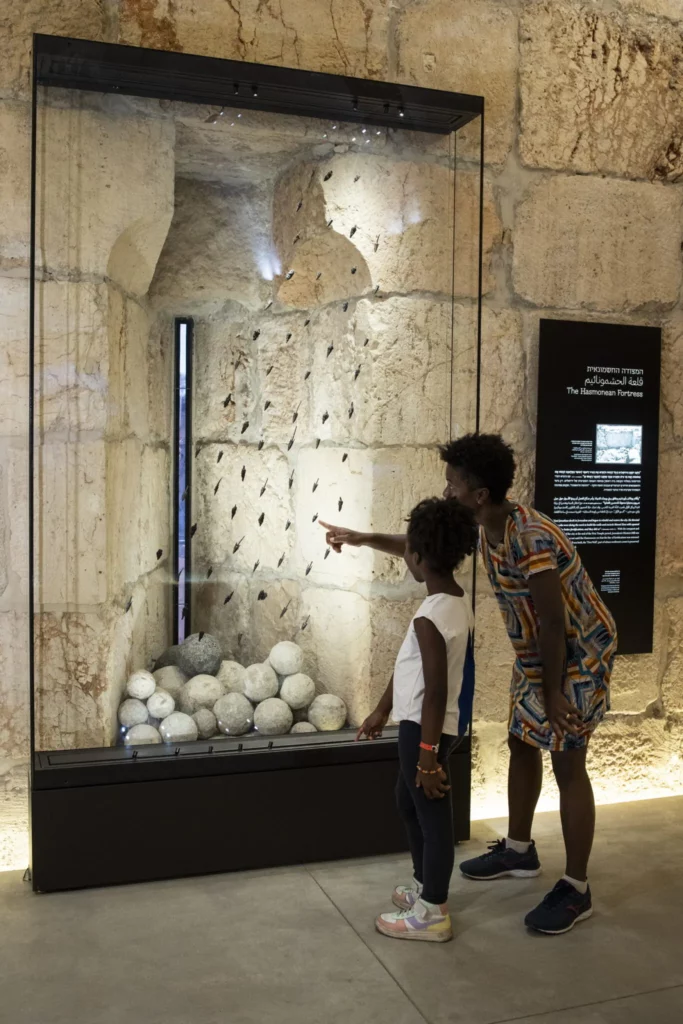
Arrowheads and catapult stones from the Hasmonean period on display | Credit: Oded Antman, Tower of David Museum