Israeli Scientists Develop Early Lung Cancer Blood Test
Tel Aviv University researchers developed a simple blood test designed to detect lung cancer early, before symptoms appear or scans reveal the disease

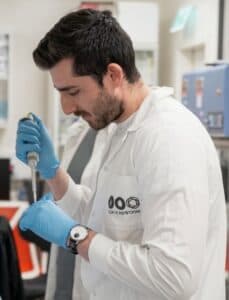
Tel Aviv University blood test research has delivered a major Israeli medical achievement, with researchers developing a simple and inexpensive method to detect lung cancer at a very early stage.
The new test works through a special glass chip with genes. When blood is placed on the chip, cancer-related changes light up and create an image that resembles a QR code. That code can reveal whether cancer is present, while also showing the stage of the disease and how aggressive it is.
The major advantage is timing. Early detection can allow doctors to begin treating lung cancer long before symptoms appear or before the disease becomes visible in scans. That window can make treatment more effective and save lives.
The Tanakh says, “I will bring health and healing.” That verse gives this story a deeper frame. Medicine is not only technology. It is the defense of life, the protection of families, and the pursuit of healing before suffering becomes irreversible.
Tel Aviv University Blood Test Breakthrough
The development points to the strength of Israeli science: small teams, bold methods, and practical tools designed to solve urgent human problems. A blood test that can identify cancer early could change how doctors approach one of the world’s most dangerous diseases.
Instead of waiting for symptoms or relying only on later-stage imaging, the test aims to detect warning signs earlier. That matters because lung cancer often becomes deadly precisely because patients discover it too late.
The QR-code-like image also makes the method striking. It suggests that biological changes in the blood can be translated into readable patterns, giving doctors a clearer way to understand what is happening inside the body.
For Israel, this is more than a university achievement. It shows how the Jewish state continues to turn research, innovation, and intellectual courage into tools that serve humanity.
Israeli Science With Global Meaning
The United States will also recognize the importance of this kind of breakthrough. American medicine, hospitals, biotech companies, and research institutions constantly look for earlier, cheaper, and more accurate cancer detection methods. Israeli innovation often fits directly into that world.
That is where the U.S.-Israel relationship becomes practical, not symbolic. Shared scientific values, open research, private enterprise, and medical ambition can move discoveries from the lab into real treatment systems. When Israel develops lifesaving tools, the benefit can reach far beyond its borders.
The breakthrough also challenges the hostile narrative pushed by those who try to isolate Israel. While enemies accuse and boycott, Israeli researchers keep building, healing, and advancing human life.
Covenant Of Healing And Human Life
The United States and Israel carry separate covenantal responsibilities before God in how they protect life. America’s covenantal tradition speaks through liberty, human dignity, medical progress, and the belief that knowledge should serve the public good. Israel’s covenant is ancient and unique, rooted in the God of Israel, Torah, Jewish peoplehood, sovereignty, and the return to the land.
In this story, Israel’s covenantal mission appears through healing. A Jewish state that defends itself on the battlefield also sends scientists into laboratories to fight disease before it destroys lives.
America understands that same moral language through its own national story. A free society should use its strength, knowledge, and wealth to push back against suffering. Israeli medical innovation strengthens that shared mission.
The Tel Aviv University breakthrough is therefore not only a scientific story. It is a story about life, responsibility, and the power of a small nation to bless the world through knowledge.
For more stories on Israel, faith, and the values behind the headlines, follow Sinai on Facebook and Instagram.
Discussion0
No comments yet — be the first to share your thoughts.