
Israel Unveils the Battlefield of Tomorrow: Drones, UAVs, and Robotic Combat Vehicles
At the DefenseTech Conference in Tel Aviv, participating companies unveiled operational capabilities already in use on the battlefield — from remotely operated vehicles to vertically launching UAVs. The question now arises: will false identification of drones soon become a thing of the past? Israel is doing as it says in Proverbs: “For the LORD gives wisdom; from His mouth come knowledge and understanding.” (Proverbs 2:6)

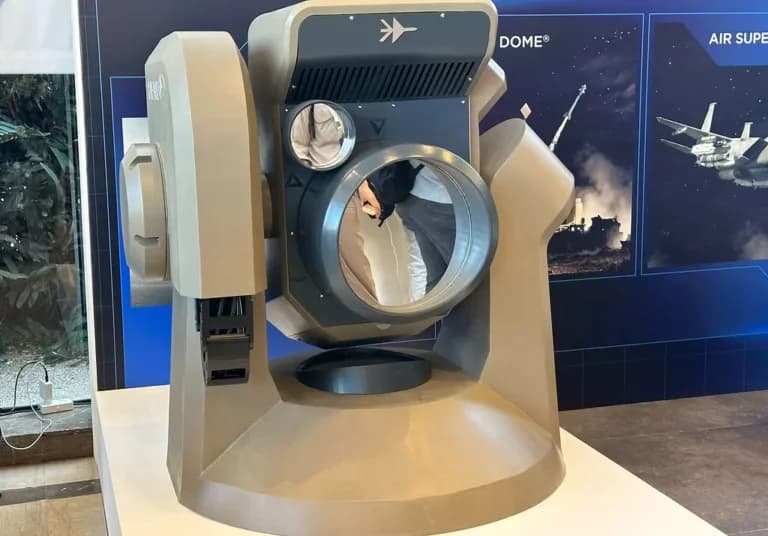
The DefenseTech 2025 Conference opened on Monday at Tel Aviv University. The Director-General of Israel’s Ministry of Defense, Amir Baram, declared that Israel has become a “Defense-Tech nation,” where technological innovation is translated into real-time operational solutions.
“What is being created here is not theory,” he said.
Following him, the Head of MAFAT (the Directorate of Defense Research & Development), Dr. Daniel Gold, presented an overview of the most recent campaign against Iran. According to him, in the years leading up to the confrontation, technology developed by both major defense companies and startups was integrated “across all dimensions” — underground, on land, at sea, in the air, in space, in electronic warfare, in AI, and in offensive and defensive systems.
Dr. Gold added that by the end of the year, the first operational system of “Or Eitan” will be delivered to the Israeli Air Force, and that Israel will become the first country in the world to deploy laser interception as an active defense capability.
The event hosted a wide range of Israeli defense and civilian technology companies whose products are already operating on today’s battlefield.
A Plane Inspired by a Car
One participating company was AIR, founded with a clear vision: to make flying as basic and accessible as using a car. The company developed the light aircraft AIR ONE, along with an unmanned version designed for logistics — AIR ONE Cargo. The flight time is approximately one hour, and the aircraft can carry up to 250 kilograms.
Gil, a company representative, told Rega NEWS that the company was founded to “change the approach to flight” — making it simpler, safer, and ensuring the aircraft manages itself within a protective envelope that prevents operators from entering dangerous situations.
“The engines,” he explained, “are very different from a traditional airplane and are much closer to drone architecture.” All movement is generated by changing motor speeds, without mechanical components that alter angles.
Regarding military cost, Gil explained that the aircraft is built “much more like a car” — both operationally and in manufacturing — and many of its partners come from the automotive industry, which significantly reduces costs. He emphasized the gap with helicopters:
“For the price of one Black Hawk helicopter, you could buy dozens of these.”
According to him, it is a simple, inexpensive logistical aircraft — and in its unmanned version, there is no risk to human life.
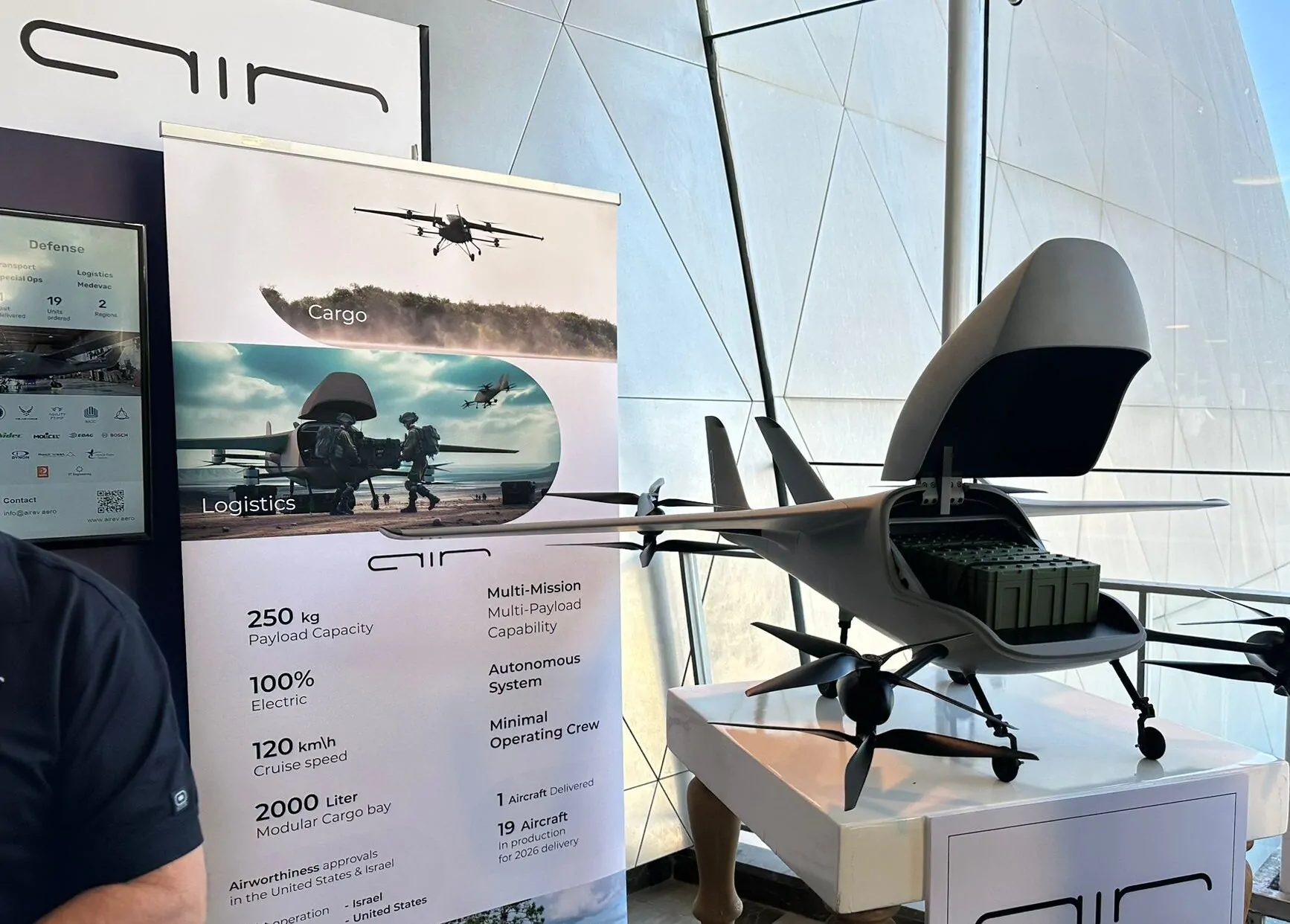
Drone Used to Deliver Equipment to Forces in the Field | DefenseTech 2025 | Photo: Adi Neiman, Rega NEWS
Vertical Takeoff UAV: “There Is Nothing Like This in the World”
Mark Colton, CEO and partner at Attis Aviation, presented the ROC VTOL — a UAV weighing 150 kg that can take off and land vertically, without a runway. The system can carry approximately 40 kilograms and remain airborne continuously for up to 20 hours.
It includes four external hard points and an additional nose mount, alongside a large internal cargo bay capable of carrying the full payload for logistical missions.
The ROC is designed for multiple operational missions: border security, facility protection, ISR (intelligence, surveillance, and reconnaissance), and tasks normally performed by much larger UAVs — but at a significantly lower cost.
One of its main advantages is true VTOL from anywhere, enabling rapid tactical deployment. The system fits inside a container, is transported to the field, assembled with wings and tail, and becomes flight-ready in under half an hour.
The four mounting stations allow the user to choose what to install: cameras, sensors, or weapons. Colton emphasized there is no other VTOL platform in the world with hard points in locations typically occupied by engines.
Alongside defense, Attis Aviation is advancing into HLS (Homeland Security). One early application is wildfire detection and mapping burned zones. In the future, the company plans to expand into additional civilian uses.

Mark Colton, CEO and Partner at Attis Aviation | DefenseTech 2025 | Photo: Adi Neiman, Rega NEWS
Logistics Missions — Without the Driver
The company Ottopia originally developed remote-control technologies for civilian vehicles.
Amit, a company representative, explained that the move into defense began “on the first day of the war,” after MAFAT contacted the firm asking them to adapt civilian technology for military needs.
“We already had hundreds of vehicles operating in civilian settings before the war,” he said. “The war just accelerated everything and moved us fully into defense.”
The system enables dangerous missions without exposing soldiers.
“Anything the army needs — logistics, special assignments, anything that reduces risk to soldiers.”
Asked where their systems operate, he declined to specify, saying only: “You can guess.”
He also addressed changes within the IDF following wartime lessons:
“The ground domain is where the most help is needed. If you look at the IDF investigations — a lot of budgets are now going into the ground forces.”
The End of False UAV Alerts?
Another company at the conference was Insignito, which specializes in drone acoustics. One of its developments is silent propellers, designed to significantly reduce drone noise. According to CTO Yarden, the product is currently used mainly in the military sector but is available to civilian customers as well.
He said that in the coming years, European and American regulation on drone delivery services is expected to increase demand for low-noise propellers.
In parallel, the company presented an acoustic drone detection system. The unit can be carried by soldiers, though it is primarily designed for stationary deployment. Once deployed, it alerts operators when a drone approaches from its listening direction.
Regarding false alerts, Yarden addressed issues observed during the recent war — such as birds mistakenly identified as UAVs.
According to him, the acoustic system does not detect birds because they do not generate sufficient noise, and it does not “see” clouds as radar does. Other sounds may be detected, but the classifier tags them as “not a drone.”
The system classifies targets through signal processing and integrates into multi-sensor defense systems — combining radar, optics, and acoustics — to reduce false alerts.
“False radar detections of UAVs don’t appear acoustically, and vice-versa, because of the fundamental differences between the systems.”
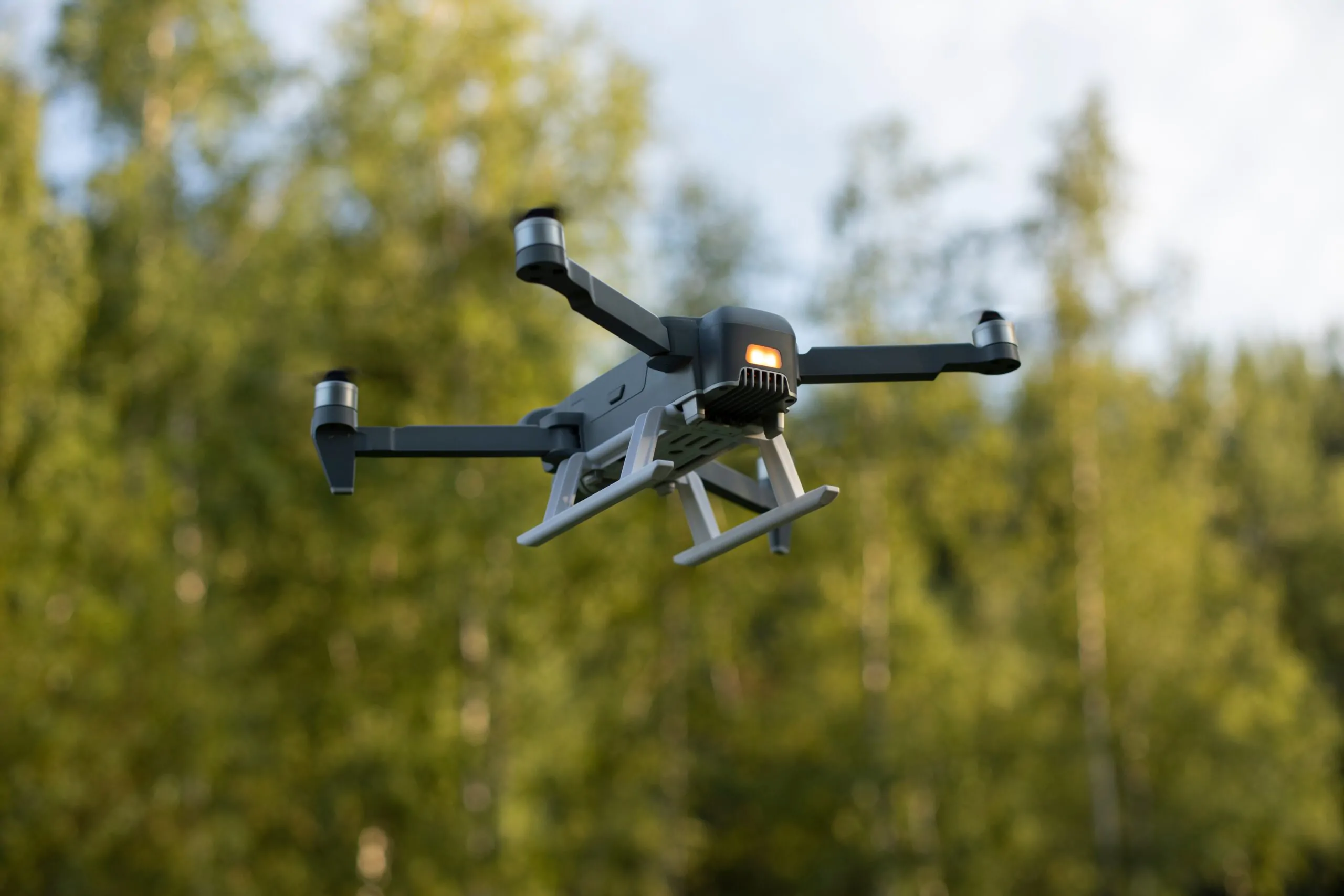
Drone (Illustration) | Photo: Shutterstock
Discussion0
No comments yet — be the first to share your thoughts.