Israel Expels British Support Team From Ramallah
Israel ordered the British Support Team in Ramallah to leave after UK settlement sanctions, widening the dispute into Palestinian security cooperation

Israel has ordered the British Support Team in Ramallah to end its activities and leave the country. The decision forms part of Jerusalem’s retaliation against new British sanctions targeting Israeli communities in Judea and Samaria. The small British military team works with Palestinian Authority security forces under the wider U.S.-led security coordination framework. Israeli officials say its activities must now stop immediately.
The British Support Team reportedly consists of about 10 military personnel. According to The Telegraph, the mission was preparing to expand substantially before Israel ordered it out. The newspaper reported that around 30 former military and police personnel were expected to join the existing team. Israel has given the British personnel seven days to depart, according to Israeli officials cited by JNS.
The team’s official role centers on helping the Palestinian Authority develop professional security institutions. A British government response to Parliament described that mission as support for capable and accountable Palestinian security forces. The Telegraph, however, reported that the team had increasingly provided London and Washington with information about developments in Judea and Samaria, including alleged attacks by Israeli settlers.
Proverbs 11:14 says, “Where there is no guidance, a people falls, but in an abundance of counselors there is safety.” Security cooperation depends on information, coordination, and trusted relationships. Israel’s decision shows what happens when diplomatic trust breaks down and security partnerships become part of a political confrontation.
British Support Team Mission Ends After UK Sanctions
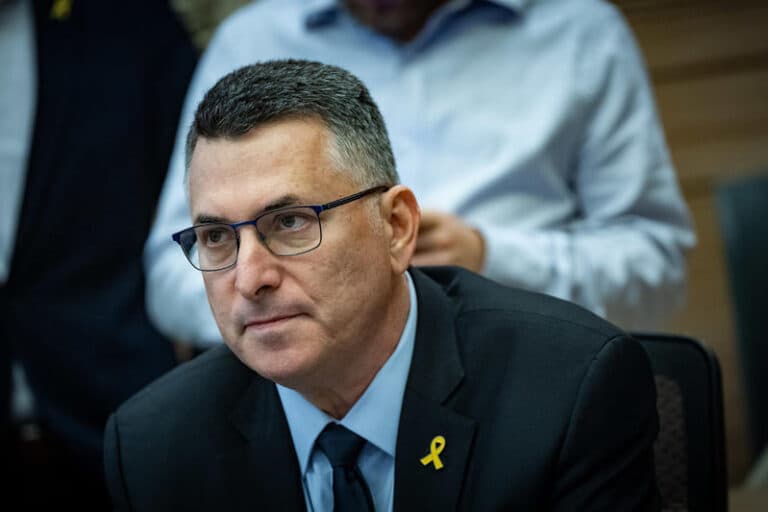
Foreign Minister Gideon Sa’ar announced the termination of the British Support Team on September 8. He said the move came in direct response to Britain’s sanctions against Israeli communities in Judea and Samaria. The government also ordered British representatives at the U.S.-backed International Gaza Support Center in Kiryat Gat to leave.
The same retaliatory package includes closing the British Consulate in Jerusalem and denying entry to 12 British politicians and other nationals. Sa’ar said the British government had pursued a hostile policy toward Israel. He argued that London had crossed from disagreement into direct political pressure against a sovereign ally.
That broader confrontation was detailed in “Israel Closes British Consulate After Settlement Sanctions.” Israel’s response now reaches beyond diplomacy and trade into practical security cooperation. The removal of British personnel from Ramallah and Kiryat Gat reduces London’s direct role in both Palestinian security development and postwar Gaza coordination.
Britain says its sanctions target settlement activity rather than Israel itself. London argues that Israeli construction in Judea and Samaria threatens a two-state solution. Israel rejects the sanctions and says foreign governments should not use economic pressure to determine questions of sovereignty, borders, and Jewish communities.
A Security Mission With Washington Connections
The British Support Team operates within a framework tied to the United States Security Coordinator. Britain has supported Palestinian Authority security forces for years through that system. The UK government says the objective is to develop security institutions that respect human rights and remain accountable to Palestinian civilians.
According to The Telegraph, the team had also become an important source of field reporting for British and American officials. The newspaper described the personnel as increasingly serving as Western “eyes and ears” in Judea and Samaria. That characterization goes beyond the British government’s formal description of the mission and comes from media reporting rather than an official mandate.
The report also cited British officials who alleged that Israeli authorities routinely intercepted the team’s communications. No public Israeli confirmation of that allegation has emerged. It should therefore be treated as a British claim rather than an established fact.
The team’s departure could still affect Washington indirectly. U.S. officials coordinate closely with Palestinian Authority security structures and with Israel. Losing a British unit embedded in that environment could reduce one channel of information available to the American-led framework, although the extent of that impact remains unclear.
The United States itself has declined to join Britain’s settlement sanctions. Secretary of State Marco Rubio said Washington would not adopt the British approach. That leaves the U.S. trying to preserve its own security coordination while one of its closest allies loses access to parts of the same system.
Sovereignty and Security Partnerships
Israel’s decision reflects a basic principle of sovereignty: foreign military and diplomatic activity inside territory under Israeli control depends on Israeli consent. Sa’ar emphasized that point when announcing the closure of the British Consulate. He said foreign governments cannot expect unrestricted influence while taking actions Jerusalem views as hostile.
The dispute also exposes a deeper difference between Israel and Britain over Judea and Samaria. London views Israeli settlements there as illegal under international law. Israel stresses Jewish historical ties to the land and rejects attempts to impose final political outcomes through sanctions.
That disagreement does not eliminate the need to address violence. Israeli authorities still have a responsibility to prosecute Israelis who attack Palestinians. Palestinian security forces likewise have a responsibility to prevent terrorism against Israelis. Effective security cooperation requires distinguishing individual criminal conduct from broad political judgments about entire communities.
Alliances Require Trust
Israel and the United States have distinct covenantal missions before God, but both place sovereignty and national defense at the center of responsible government. Israel’s covenantal mission includes protecting Jewish life and preserving the sovereignty restored in the Jewish ancestral homeland. America’s national tradition links liberty with secure institutions, dependable allies, and lawful cooperation.
The British mission sat at the intersection of those interests. It supported Palestinian security forces while operating through an American-led framework and under conditions ultimately dependent on Israel. Once political trust between London and Jerusalem collapsed, that arrangement became difficult to separate from the larger dispute.
Israel’s response sends a clear message that foreign influence carries consequences when governments impose economic pressure against Israeli communities. Britain, meanwhile, argues that its sanctions defend international law and the future of a Palestinian state. Both governments are now accepting practical costs as that disagreement moves from rhetoric into security policy.
The immediate result is clear. Britain will lose personnel and access in Ramallah, its role in the Kiryat Gat coordination mechanism, and its consular presence in Jerusalem. What began as a dispute over settlement trade has now reached some of the most sensitive areas of Israeli-British security cooperation.
For more stories on Israel, faith, and the values behind the headlines, follow Sinai on Facebook and Instagram.
Discussion0
No comments yet — be the first to share your thoughts.