Hussein al-Sheikh Backs Settlement Sanctions on Israel
Hussein al-Sheikh welcomed 12-country trade restrictions targeting Israeli communities and called for binding measures against settlement expansion and E1

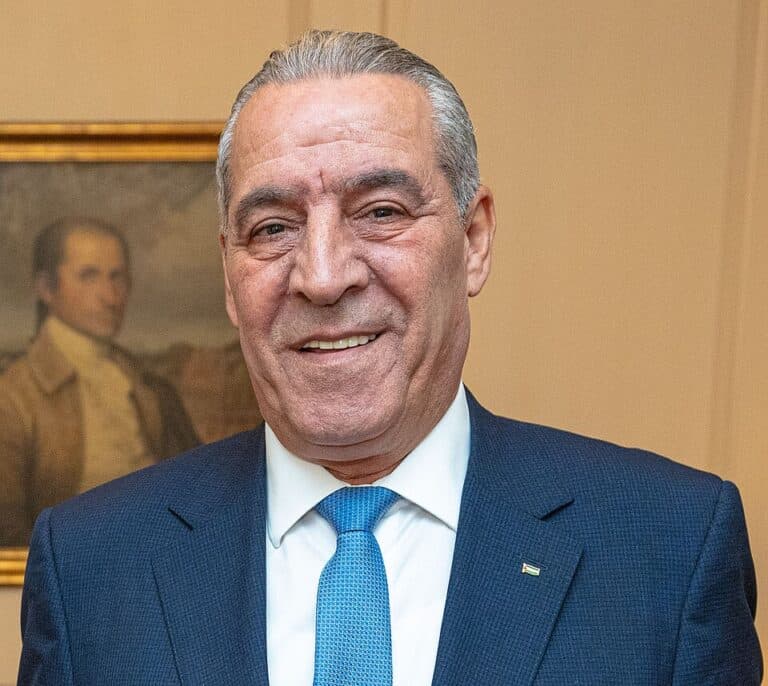
Hussein al-Sheikh backed settlement sanctions against Israel on Tuesday and called for governments to go further. The Palestinian vice president welcomed a joint statement from 12 countries supporting trade restrictions involving Israeli communities in Judea and Samaria. Al-Sheikh, a senior Fatah figure, is also Mahmoud Abbas’s designated interim successor if the Palestinian presidency becomes vacant.
“We welcome the declaration by the foreign ministers of 12 countries regarding the two-state solution,” al-Sheikh said. He specifically praised the statement’s steps toward restricting trade in what he called “illegal settlements.” He then urged those governments to move from condemnation toward “binding and decisive measures.”
Proverbs 18:17 says, “The first to plead his case seems right, until the other party comes and examines him.” That principle speaks directly to a territorial dispute shaped by competing legal, historical, and national claims. Al-Sheikh presented the measures as a defense of Palestinian statehood. Israel, by contrast, rejects efforts to use foreign economic pressure to determine the future of Judea and Samaria.
Hussein al-Sheikh Settlement Sanctions Call Goes Further
Al-Sheikh called for measures that would stop settlement expansion and what he described as the “de facto annexation” of areas in Judea and Samaria. He also demanded accountability for perpetrators of what he termed “settler terror and violence.” His official statement said governments should translate international law into concrete action rather than rely only on diplomatic condemnation.
The 12-country declaration includes Canada, Denmark, Finland, France, Iceland, Ireland, Norway, Poland, Portugal, Spain, Sweden, and the United Kingdom. Importantly, the statement does not say every country has already adopted an identical ban. Instead, they intend to introduce national restrictions, support European restrictions, or actively consider further measures.
The diplomatic front was detailed in “12 Countries Back Israeli Settlement Trade Restrictions.” Britain, France, and Canada have taken the clearest steps toward blocking settlement imports. Other governments have endorsed restrictions or indicated they are considering national action.
Britain has already announced an import ban targeting settlement goods. France and Canada have also moved toward restrictions, while other European governments remain divided over a broader EU-wide policy. The measures have largely symbolic economic weight because settlement exports form only a small share of Israel’s trade. Their political significance, however, is much greater.
E1 Becomes the Center of the Dispute
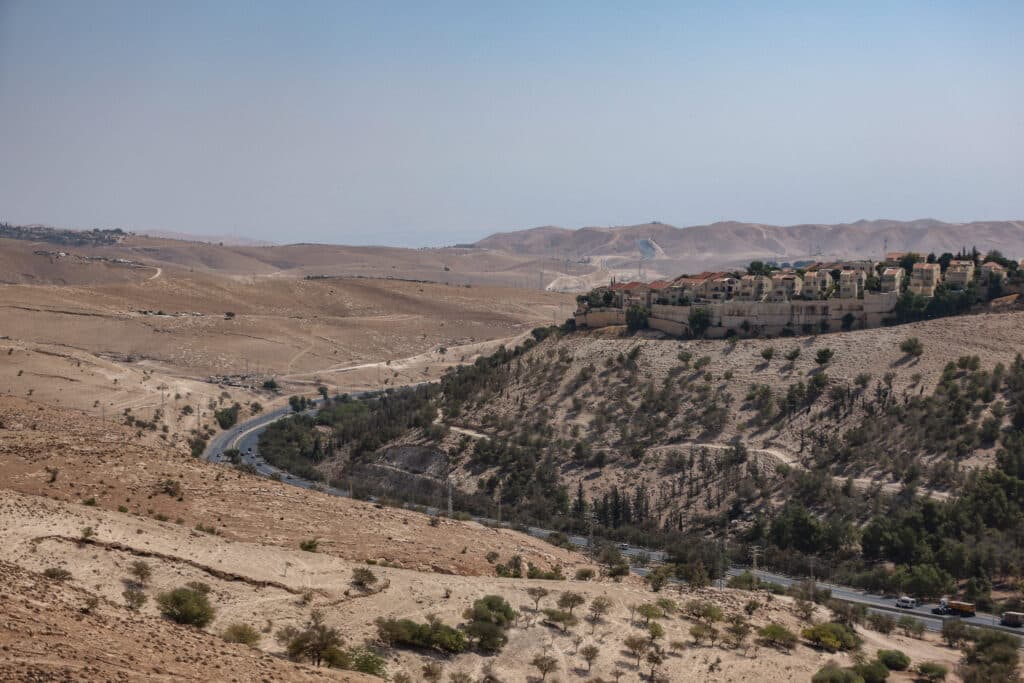
Al-Sheikh placed particular emphasis on Israel’s E1 development plan east of Jerusalem. He argued that construction there would fragment Palestinian-controlled territory and separate the northern and southern parts of Judea and Samaria. The 12 foreign ministers likewise identified E1 as a central threat to their vision of a contiguous Palestinian state.
That interpretation is central to the European sanctions campaign. Britain and its partners say settlement expansion threatens a negotiated two-state solution. The joint statement also calls for action against settler violence and opposes annexation and forced displacement.
Israel disputes the international framing of the territory. Judea and Samaria contain some of the most important places in Jewish history, including communities and landscapes deeply connected to the Tanakh. Many Israelis therefore reject language that treats Jewish presence there as inherently foreign or illegitimate.
The argument surrounding E1 consequently reaches far beyond construction permits. Palestinians and European governments view the project through the geography of a future Palestinian state. Many Israelis view the same area through security needs, Jerusalem’s strategic position, and the Jewish people’s historic relationship with the land.
Washington Rejects the European Approach
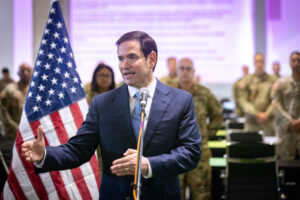
The United States has taken a substantially different position from the European governments. Secretary of State Marco Rubio said the new sanctions could destabilize Judea and Samaria. He also made clear that Washington would not impose its own ban on imports from Israeli communities there.
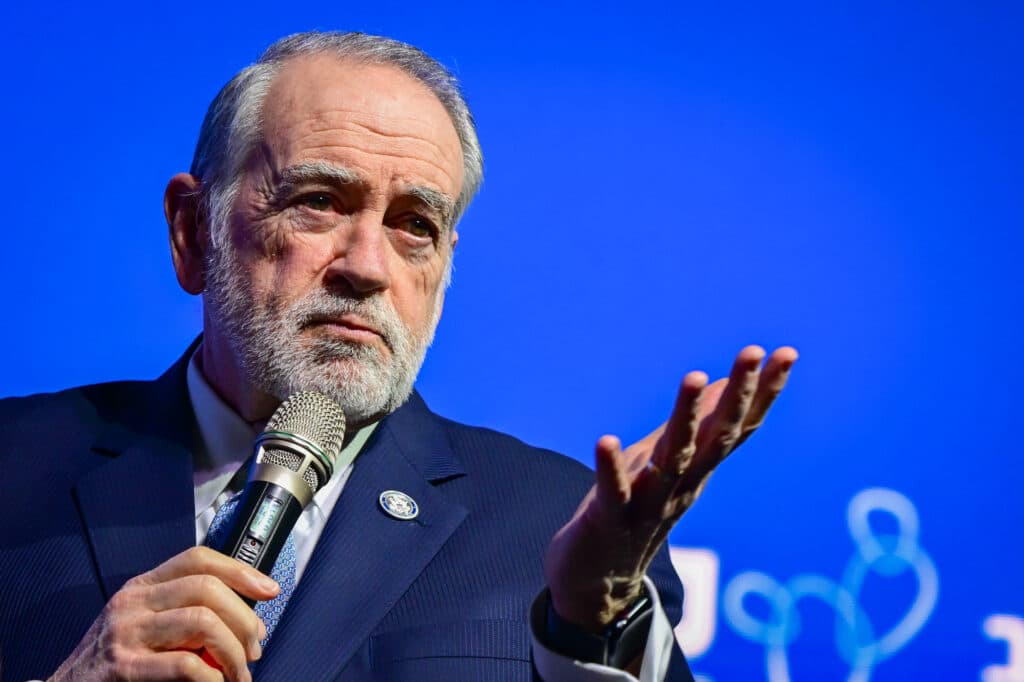
U.S. Ambassador Mike Huckabee has been even more outspoken. He questioned Britain’s decision to target Israel and accused London of applying unequal standards. At the same time, Huckabee has separately condemned violence by extremist Israelis against Palestinians, showing a distinction between individual criminal accountability and broad economic measures against communities.
Israel has also begun retaliating diplomatically. Foreign Minister Gideon Sa’ar announced the closure of the British consulate in East Jerusalem after Britain, France, and Canada announced their measures. Britain was also removed from a U.S.-led Gaza coordination mission, while several British figures were barred from entering Israel.
Al-Sheikh’s statement therefore enters an already widening dispute. Palestinian leaders see the sanctions as leverage that should be expanded. Israel sees them as foreign interference in contested questions of sovereignty and borders, while Washington has declined to follow Europe’s approach.
Justice, Sovereignty, and the Use of Economic Power
Israel and the United States have distinct national histories, but both place value on sovereignty, lawful government, and equal standards. Israel’s covenantal responsibility is rooted in the Jewish people’s return to their ancestral homeland and the defense of Jewish national life. America’s political tradition emphasizes liberty, accountable government, and resistance to discriminatory coercion.
Those principles meet in the question of how economic power should be used. Sanctions can pressure violent regimes, terrorist networks, or governments that violate international obligations. Applying them to civilian commerce in disputed territory raises a different set of moral and political questions.
Al-Sheikh argues that economic pressure is needed to preserve Palestinian territorial continuity. European governments increasingly share that view. Israel and its American defenders argue that such measures risk prejudging negotiations while placing collective pressure on Jewish communities.
The disagreement will not be settled by one sanctions package. It reflects fundamentally different understandings of history, sovereignty, security, and the future of the land. As Palestinian leaders push Western governments toward stronger action, Israel is making equally clear that outside economic pressure will not erase Jewish claims or determine its national decisions.
For more stories on Israel, faith, and the values behind the headlines, follow Sinai on Facebook and Instagram.
Discussion0
No comments yet — be the first to share your thoughts.