
Iran Says It Seized U.S. Dive-LD Underwater Drone
Iran says it seized a U.S. Dive-LD underwater drone near Hormuz, while CENTCOM says the malfunctioning vehicle carried no sensitive equipment

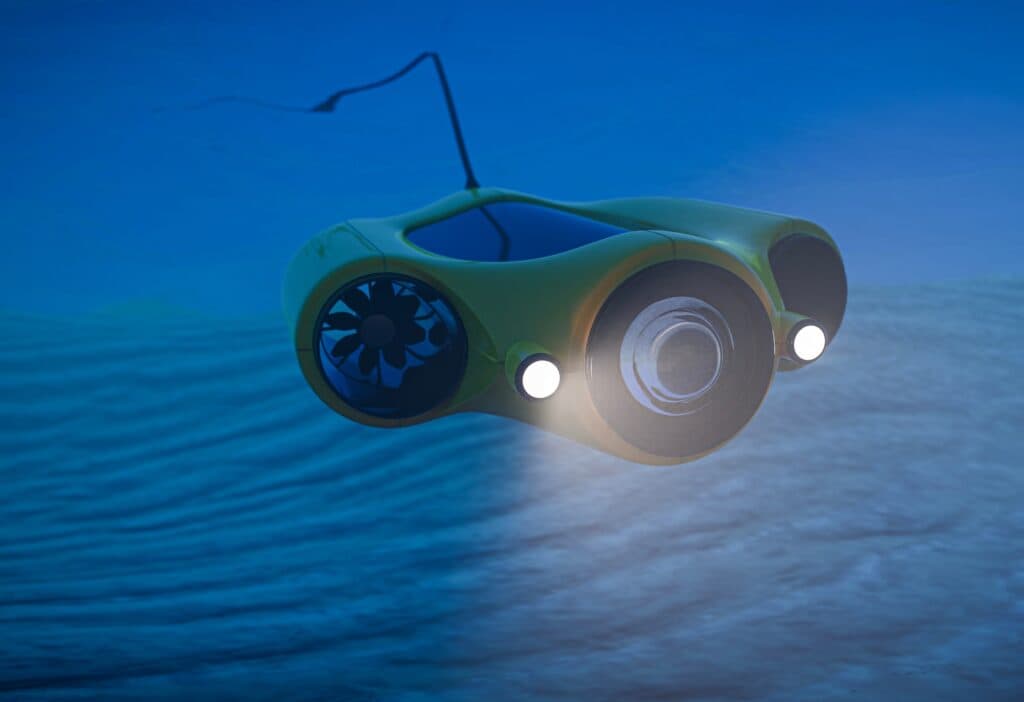
Iran’s Islamic Revolutionary Guard Corps said Tuesday that it seized a U.S. Dive-LD underwater drone near the entrance to the Strait of Hormuz. Iranian state television described the autonomous vehicle as an advanced American military asset and said it had been taken as a “prize.” U.S. Central Command confirmed that an Anduril Dive-LD had malfunctioned in the region more than a day earlier. However, Washington sharply disputed Iran’s portrayal of the vehicle’s intelligence value.
The incident comes during another intense round of confrontation between Washington and Tehran. U.S. forces struck Iranian oil tankers Tuesday after attempted Iranian missile attacks on an American warship. Iran also launched missiles toward U.S. positions in Jordan, further widening the confrontation beyond the Persian Gulf.
Psalm 20:8 declares, “Some trust in chariots and some in horses, but we trust in the name of the Lord our God.” Modern warfare has replaced ancient chariots with missiles, drones, satellites, and autonomous systems. Yet technology remains a tool rather than a guarantee of security, especially when sophisticated equipment operates in contested territory.
What Is the Dive-LD Underwater Drone?
The Dive-LD is a large-diameter autonomous underwater vehicle built by U.S. defense technology company Anduril Industries. It is approximately 19 feet long and four feet in diameter. Anduril says the vehicle can operate autonomously for about 10 days and descend to depths approaching 6,000 meters.
Its modular design allows operators to install different sensors and payloads depending on the mission. Anduril lists intelligence, surveillance, reconnaissance, mine warfare, and environmental preparation among its potential defense roles. The platform can also perform civilian missions such as hydrographic surveys and pipeline inspections.
Iranian authorities emphasized the vehicle’s advanced capabilities and said the model had entered U.S. military service in 2025. Iran International reported that Anduril delivered its first Dive-LD to the Navy’s Unmanned Undersea Vehicle Squadron 1 in April 2025. The IRGC used that background to portray the recovery as an important technological capture.
The U.S. military offered a substantially different assessment. CENTCOM spokesman Capt. Tim Hawkins said the recovered vehicle was an older, defective model that had malfunctioned while surveying regional waters. He said it carried neither classified sonar nor classified radar equipment.
“It was in a commercially available configuration so we aren’t concerned,” Hawkins said. That clarification is important because Iran initially presented the vehicle as a significant intelligence prize. The United States acknowledges losing possession of the drone but rejects the suggestion that Iran acquired sensitive American technology.
Strait of Hormuz Becomes an Underwater Battlefield
The location gives the incident greater strategic significance than the vehicle alone. The Strait of Hormuz is one of the world’s most important maritime passages and has become a central arena in the U.S.-Iran confrontation. Iranian restrictions, attacks on vessels, American strikes, and mine-clearing operations have all increased military activity in and around the narrow waterway.

Autonomous underwater systems have become especially valuable in that environment. They can survey the seabed, search for mines, monitor maritime activity, and operate without placing sailors directly inside dangerous waters. Anduril describes the Dive-LD as suitable for both surveillance and mine-warfare missions.
The U.S. has also been expanding autonomous undersea capabilities more broadly. In March, the Defense Innovation Unit and Navy selected Anduril for an extra-large autonomous underwater vehicle program aimed at developing longer-range unmanned maritime systems. Anduril says such platforms are intended to extend U.S. and allied reach in contested waters.
That shift matters because Iran has repeatedly tried to turn the Strait of Hormuz into leverage against Washington and its allies. Tehran has threatened shipping, imposed restrictions, and claimed authority over transit routes. U.S. officials maintain that Hormuz is an international waterway and have sought to preserve freedom of navigation despite Iranian pressure.
The underwater drone incident followed the escalation detailed in “Iran Missile Attack on Jordan: IRGC Claims U.S. Bases Hit.” Iran launched a major missile barrage toward American positions in Jordan after U.S. strikes on Iranian oil tankers. The recovery of an American autonomous vehicle near Hormuz shows that the confrontation is now unfolding beneath the surface as well as in the air and at sea.
Technology, Deterrence, and Allied Security
The incident has direct implications for American military planning. Autonomous vehicles allow the United States to conduct persistent missions while reducing risks to personnel. Losing one platform is far less serious than losing a crewed submarine, but repeated losses could expose operational patterns or force changes in how such systems are deployed.
For Israel, the broader significance lies in Iran’s effort to contest American freedom of action throughout the region. Tehran is simultaneously challenging U.S. forces in Jordan, American naval operations near Hormuz, and Western efforts to reopen secure commercial shipping lanes. These are separate fronts, but they form part of the same strategic struggle over Iranian power.
Israel and the United States have distinct covenantal missions before God, yet both place responsibility at the center of national defense. Israel’s covenantal duty includes preserving Jewish sovereignty and protecting Jewish life in a hostile region. America’s national tradition links military power with the defense of liberty, allies, and international navigation.
That shared commitment becomes concrete in places such as the Strait of Hormuz. Israel depends on a regional order in which Iran cannot freely dictate access to international waterways. The United States has an equally strong interest in preventing Tehran from turning maritime chokepoints into tools of coercion.
The Dive-LD incident should also be kept in proportion. Iran did gain physical possession of an American autonomous vehicle, according to both Iranian reporting and the U.S. acknowledgment that the malfunctioning drone was lost. But current evidence does not support Tehran’s implication that it captured a highly sensitive intelligence platform intact.
That difference matters in information warfare. Iran benefits from presenting every American loss as a major technological victory. Washington benefits from minimizing the value of equipment that falls into hostile hands. The most reliable picture at present lies between those narratives: Iran recovered a real U.S. military autonomous vehicle, but CENTCOM says the specific configuration contained no sensitive or classified sensor systems.
As the confrontation intensifies, the episode illustrates how rapidly modern warfare is changing. Missiles are crossing national borders, unmanned systems are operating beneath strategic waterways, and economic pressure is increasingly backed by military force. The struggle over the Strait of Hormuz is no longer only about ships passing through its surface. It is increasingly a contest for control of the air, sea, seabed, technology, and information surrounding one of the world’s most important waterways.
For more stories on Israel, faith, and the values behind the headlines, follow Sinai on Facebook and Instagram.
Discussion0
No comments yet — be the first to share your thoughts.