Four Crew Members Killed In Bab Al-Mandab Attack
Four crew members and two rescuers were killed after Ansarallah attacked a cargo vessel in the Bab al-Mandab Strait, according to Yemeni officials

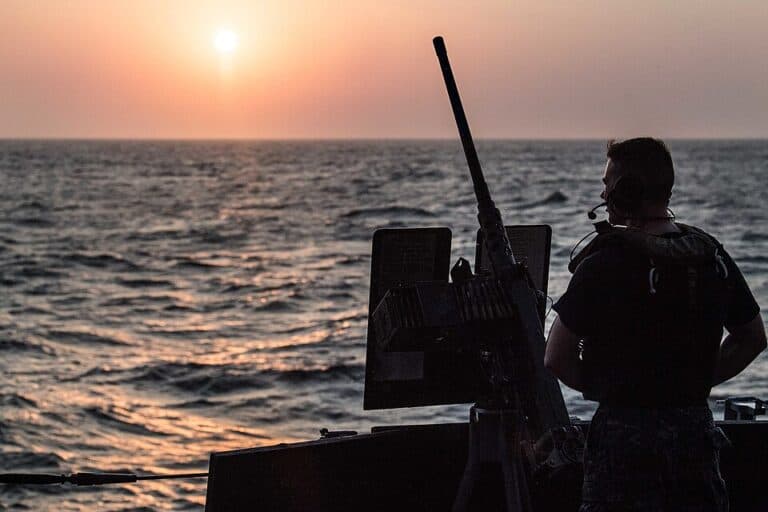
A Bab al-Mandab attack by Ansarallah killed four crew members on a cargo vessel Tuesday, Yemen’s Transport Ministry said, in another deadly escalation against commercial shipping near Yemen. Reuters also reported the fatalities, citing Yemen’s Transport Ministry and related maritime sources.
Pakistan’s foreign minister confirmed that three Pakistani nationals were killed in the attack. Yemen’s Transport Ministry said an Indonesian national was also among the dead. According to the ministry, the crew lost control of the vessel following the strike.
The Yemeni Coast Guard said the attack did not end when rescue teams arrived. Two rescuers from the National Resistance Forces were killed when Ansarallah launched a second attack after emergency personnel reached the scene. Ten people were wounded, including seven crew members, two Coast Guard personnel, and one NRF member, the Coast Guard said.
The Tanakh says, “Do not stand idly by the blood of your neighbor.” That command gives this story its moral center. Ansarallah did not only strike a cargo ship. According to the Coast Guard, it struck again after rescuers arrived.
Bab Al-Mandab Attack Turns Deadly
The Bab al-Mandab Strait remains one of the most sensitive maritime corridors in the region. An attack there does not affect only Yemen or the vessel involved. It threatens sailors, global trade, energy movement, and the security of countries that depend on open sea lanes.
This attack also shows the human cost behind maritime terrorism. The dead were not abstract names in a shipping report. They included Pakistani and Indonesian crew members working aboard a cargo vessel, and Yemeni rescuers who reportedly came to help after the first strike.
For Israel, the danger is part of a wider Iranian-backed pressure network. Ansarallah has repeatedly used the Red Sea and nearby waters to challenge international shipping, threaten regional stability, and pressure Israel and its allies through maritime disruption.
For the United States, the issue is deterrence. A hostile force that can attack ships, kill crew members, and strike rescue teams tests whether Washington and its partners can keep strategic waterways open without rewarding terror tactics.
Yemen Warning Adds Context

The latest attack adds weight to “Yemen Warns Saudi Arabia Over Airspace Violations.” Yemen warned Saudi Arabia over alleged airspace violations and drone interceptions, raising concerns for U.S. deterrence, Israel, and regional stability.
That earlier warning showed how quickly Yemen’s conflict can spill into the wider region. The Bab al-Mandab attack now brings that risk back to the sea. Ansarallah’s actions can affect Saudi Arabia, Egypt, Israel, the Gulf, the United States, and commercial vessels from countries far beyond the Middle East.
The second strike against rescuers makes the incident especially grave. Warfare against ships is already a threat to civilian life. Targeting the rescue response deepens the moral and strategic danger, because it punishes the very people trying to prevent further death.
Covenant Of Open Seas And Human Life
The United States and Israel carry separate covenantal responsibilities before God in moments like this. America’s covenantal tradition speaks through liberty, lawful order, free passage, and the defense of innocent life against violent coercion. Israel’s covenant is ancient and unique, rooted in the God of Israel, Torah, Jewish peoplehood, sovereignty, and the return to the land.
The Bab al-Mandab attack brings those responsibilities into a single strategic arena. Free seas are not merely an economic interest. They protect sailors, trade routes, regional stability, and the ability of nations to resist terrorist blackmail.
Israel cannot ignore a hostile force that uses maritime attacks to pressure the region. America cannot ignore a threat that kills foreign crew members and undermines the credibility of international navigation.
The deaths of Pakistani and Indonesian crew members, along with Yemeni rescuers, show the real face of Ansarallah’s campaign. It is not resistance. It is violence against workers, rescuers, and the fragile order that keeps the seas open.
For more stories on Israel, faith, and the values behind the headlines, follow Sinai on Facebook and Instagram.
Discussion0
No comments yet — be the first to share your thoughts.