Exclusive Report – Chanuka Discovery: 1,700-Year-Old Jewish Oil Lamp Found on the Mount of Olives
On the Mount of Olives, archaeologists uncovered a 1,700-year-old Jewish oil lamp beneath modern housing — powerful evidence of enduring Jewish life in Jerusalem long after the Temple’s destruction. Though publicly framed simply as a Mount of Olives find, the deeper truth is stronger: it was discovered beneath a newly renewed Jewish residence, in a place where detractors insist Jews do not belong. The lamp itself proves otherwise. Jewish life was here before. Jewish life is here again — and this is the real story of Chanukah. This is today’s flask of pure oil.

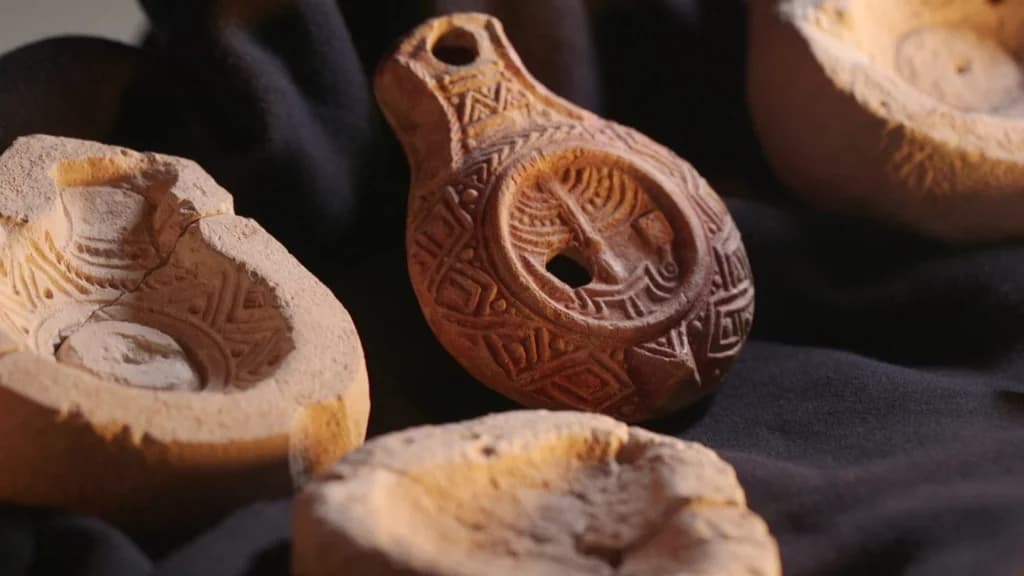
On the Mount of Olives, archaeologists uncovered a 1,700-year-old Jewish oil lamp beneath modern housing — powerful evidence of enduring Jewish life in Jerusalem long after the Temple’s destruction. Though publicly framed simply as a Mount of Olives find, the deeper truth is stronger: it was discovered beneath a newly renewed Jewish residence, in a place where detractors insist Jews do not belong. The ground itself proves otherwise. Jewish life was here before. Jewish life is here again — and this is the real story of Chanukah. This oil lamp is the “little jar of oil” of today.
In a conversation with Daniel Luria, executive director of Ateret Cohanim, the full significance of the discovery — and its timing — came into focus.
Why the First Night Matters — and Why It Was Always a Miracle
For generations, rabbis have asked a famous question:
If the oil found in the Temple was already enough to burn for one day, then the miracle was only the extra seven days. So why do we celebrate eight?
Many answers have been offered — but one speaks powerfully to our moment.
The first night itself was a miracle because the very discovery of a sealed, pure flask was miraculous. It symbolized something far deeper than fuel.
It meant that despite desecration, war, and ruin, something remained untouched.
Holiness survived. Identity survived. The connection between the Jewish people and the Temple — and through it, to God — remained unbroken.
Without finding the oil, there would have been no light at all. The miracle of the first night is the miracle of continuity. It is the miracle of still being here.
That is a reason why we celebrate eight nights — because the story of Chanukah does not begin with fire.
It begins with finding.
During the Chanukah season, an archaeological discovery in Jerusalem offered a striking parallel.
Just as the miracle of Chanukah begins not with burning oil, but with finding the last untouched vessel of holiness, so too this lamp tells a story of what endures. It is a reminder that Jewish presence, faith, and memory in Jerusalem were never extinguished — only sometimes hidden, waiting to be uncovered.
An Ancient Oil Lamp Emerges from the Mount of Olives
In late 2024, shortly before Chanukah, Israeli archaeologists announced the discovery of a 1,700-year-old olive oil lamp bearing unmistakably Jewish symbols: a seven-branched menorah, a lulav (palm branch), and an incense shovel — all objects directly associated with the ancient Jewish Temple in Jerusalem.
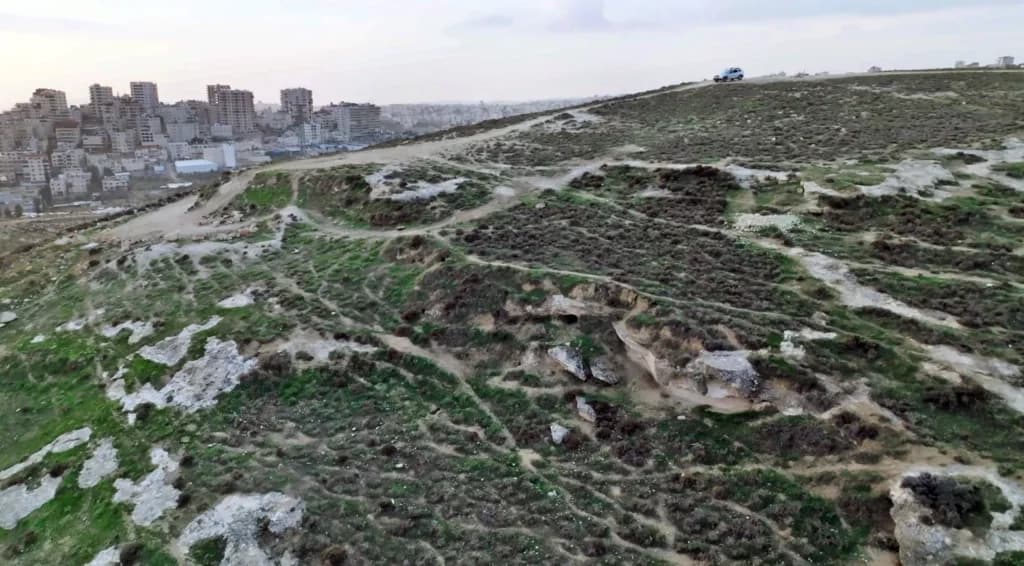
The lamp was found on Har HaZeitim, the Mount of Olives, one of the most historically and biblically significant sites in Judaism. Its remarkable condition and clear symbolism immediately captured attention. For many, it serves as tangible evidence of continued Jewish life in Jerusalem centuries after the Roman destruction of the Second Temple in 70 CE.
This period is often portrayed as one in which Jews were largely absent from Jerusalem. Yet archaeology continues to tell a more complex story — one of persistence, memory, and quiet continuity.
Where the Lamp Was Found — and Why It Matters
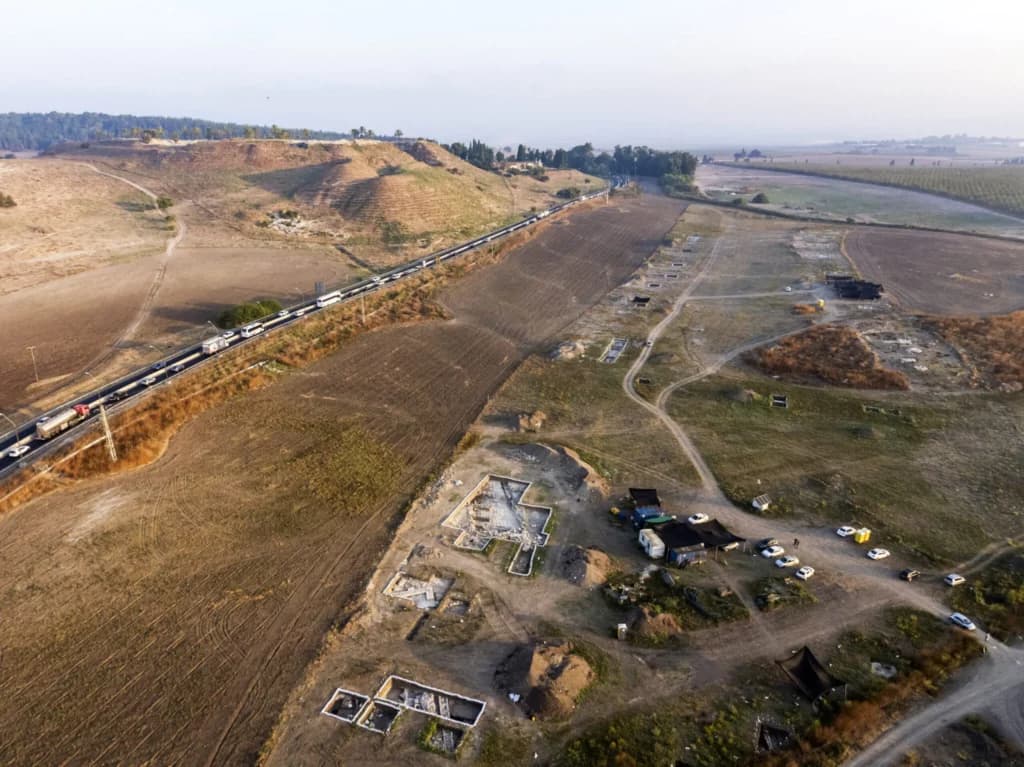
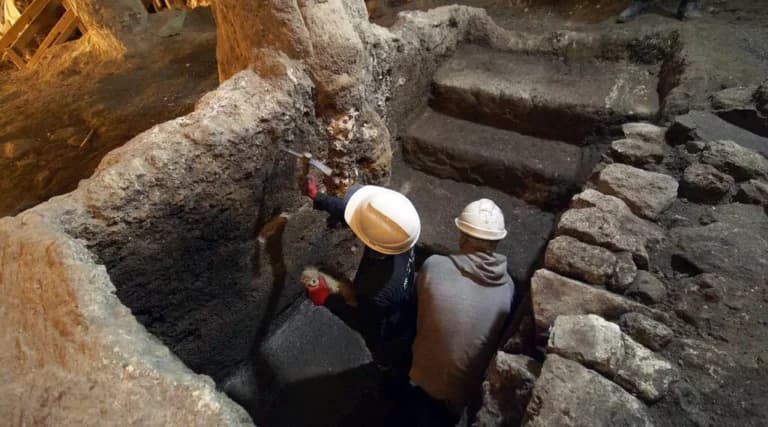
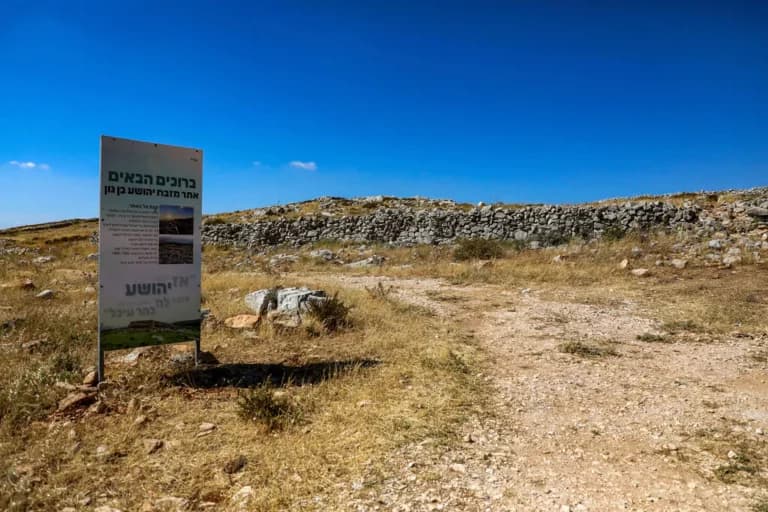
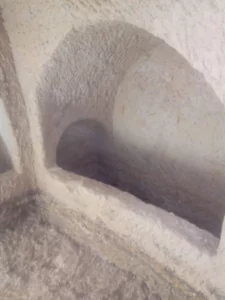
The lamp was uncovered during a salvage excavation conducted by the Israel Antiquities Authority beneath a modern residential complex on the Mount of Olives known as Shiloach Heights. The excavation revealed several ancient burial caves, one of which was clearly Jewish.
Alongside human remains — which were respectfully reburied according to Jewish law — archaeologists discovered debris dating back approximately 1,700 years and, most strikingly, this oil lamp.
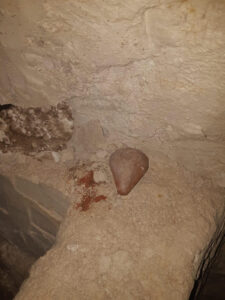
The discovery confirms that Jews were not only visiting Jerusalem during this era, but living, burying their dead, and maintaining religious identity centered on the Temple — even centuries after its destruction.
While authorities announced that the discovery took place on the Mount of Olives, a critical detail was not widely highlighted: the lamp emerged beneath a newly reacquired Jewish residential building in an area where voices often falsely claim that Jews “do not belong,” that Jewish presence is foreign, recent, or imposed.
The ground itself tells a different story.
This was not unearthed in a museum collection or far from population centers. It surfaced directly beneath living Jewish homes — beneath families who have returned to rebuild Jewish life in the very place where Jewish families once lived, prayed, and were later forced to leave. The lamp’s presence beneath their feet is not coincidence; it is continuity made literal.
In a region where political narratives are endlessly rewritten, archaeology provides testimony that cannot be intimidated, threatened, or erased. It silently declares:
Jews lived here. Jews prayed here. Jews lit light here. And they do so again. This is the story of Chanukah.
A Place Steeped in Biblical and Historical Memory
The Mount of Olives occupies a central place in Jewish scripture and history. The Bible recounts that King David fled Jerusalem via this very mountain during his son Absalom’s rebellion:
“David went up the Mount of Olives, weeping as he went; his head was covered and he walked barefoot” (2 Samuel 15:30).
Jewish tradition teaches that David paused on the Mount of Olives to look back toward the site where the Temple would one day stand — the dwelling place of the Divine Presence.
The name Shiloach itself recalls the ancient water system associated with King Hezekiah nearly 2,700 years ago, while the Arabic name Silwan also preserves this ancient geographic memory. Over centuries, Jewish, Christian, and Muslim histories have overlapped here, but the Jewish connection runs uninterrupted through text, tradition, and now archaeology.
From Antiquity to Modern Times
Jewish life on the Mount of Olives did not end in antiquity. In the late 19th and early 20th centuries, Yemenite and Sephardi Jewish families lived in this area until waves of violence forced them to flee. In 1938, under British rule, Jewish residents were evacuated for their own safety, with assurances they would return — a return that took decades to materialize.
In recent years, Jewish families have once again come back, restoring homes and renewing a community that had been repeatedly uprooted.
The discovery of the lamp beneath modern homes is a poignant reminder that today’s residents are not newcomers, but the latest chapter in a very old story.
A Living Voice Behind the Discovery
To better understand the significance of the find and its setting, I spoke with Daniel Luria, Executive Director of Ateret Cohanim, an organization dedicated to renewing Jewish life in Jerusalem, including on the Mount of Olives.
Luria explained that the discovery emerged not from a planned archaeological dig, but from a real-life question about continuity — how ancient Jewish history intersects with modern Jewish return.
“What moved me most,” Luria said, “was not just the age of the lamp, but what it represents. This wasn’t an abstract symbol. This was someone’s lamp. Someone who lived here as a Jew, who identified with the Temple, who lit oil in Jerusalem even after the Temple was destroyed.”
According to Luria, concerns arose after Jewish families moved into the Shiloach Heights buildings, when rumors surfaced about burial caves beneath the structures. Out of respect for the dead and adherence to Jewish law, the Israel Antiquities Authority was called in to conduct a professional excavation.
One of the burial caves was clearly Jewish — and within it, the oil lamp bearing Temple imagery.
For Luria, the timing of the discovery carries particular meaning.
“Chanukah begins with a search,” he noted. “Before the oil burned for eight days, it had to be found. This lamp reminds us that Jewish presence in Jerusalem was never extinguished. Sometimes it’s hidden — and then it’s uncovered.”
He emphasized that discoveries like this are not about reclaiming the past for nostalgia’s sake, but about understanding continuity.
“Jerusalem isn’t a story that stopped and restarted,” Luria said. “It’s one long story. Every generation leaves something behind, and sometimes the ground itself reveals it.”
Chanukah: The Miracle of Finding Light
Chanukah is often misunderstood as merely a celebration of a long-burning flame. In truth, it commemorates spiritual resilience — the refusal of a small people to surrender their identity, faith, or historical connection to their land.
The first night of Chanukah is often overlooked, yet it is the most profound: the miracle of finding what was thought to be lost.
In that sense, the discovery of this ancient oil lamp during Chanukah is deeply symbolic. Just as the Maccabees uncovered a single vessel of pure oil amid destruction, archaeologists today uncovered a lamp bearing Jewish sacred symbols beneath layers of time, conflict, and rebuilding.
Both tell the same story:
Light may be buried, obscured, or challenged — but it endures.
As Chanukah candles are lit this year, the ancient lamp from the Mount of Olives reminds us that history itself can shine, illuminating truths that no passage of time can extinguish.
Leah Bean-Bowman is a licensed guide in Israel and holds an MA in Religion and Politics in the Middle East from Bar-Ilan University. Leah can be reached at https://www.tourguideleah.com
Discussion0
No comments yet — be the first to share your thoughts.