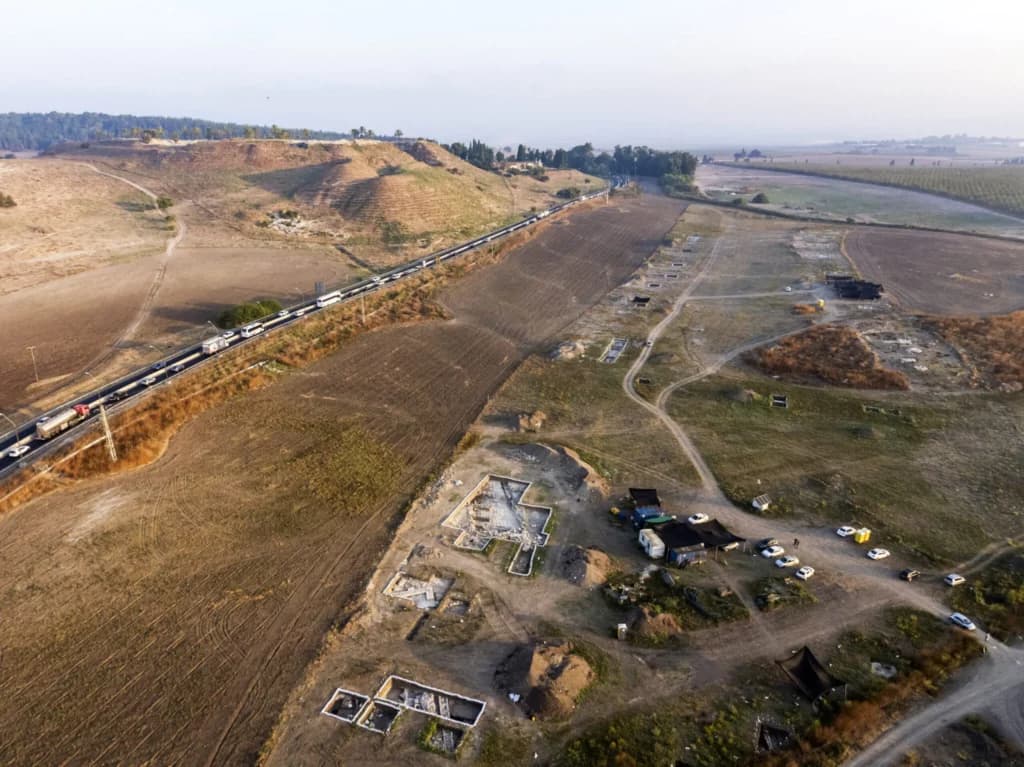
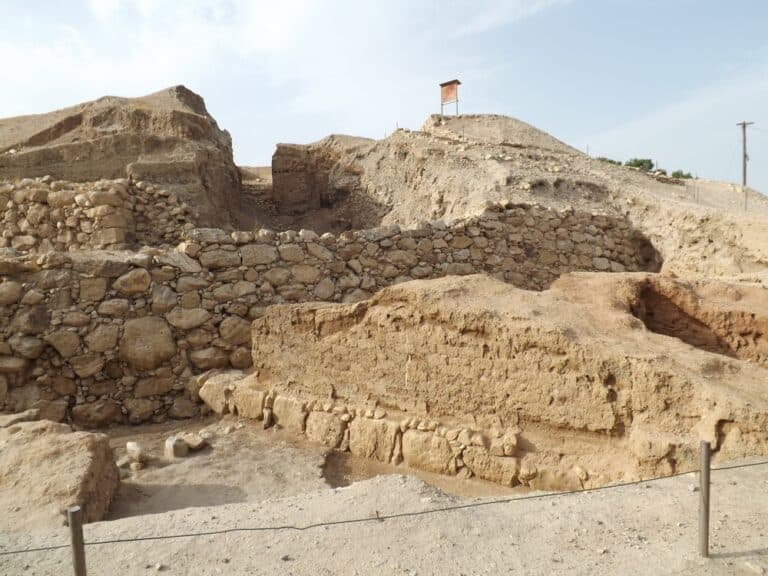

Ruins of Ancient Jericho. | Photo: Shutterstock
Moses does not enter the Promised Land, he closes the chapter, and the Torah, with his demise and a new leader takes the baton—Joshua.
(3) The king of Jericho thereupon sent orders to Rahab: “Produce the men who came to you and entered your house, for they have come to spy out the whole country.” (4) The woman, however, had taken the two men and hidden them. ‘It is true,’ she said, ‘the men did come to me, but I didn’t know where they were from.’ (6) Now she had taken them up to the roof and hidden them under some stalks of flax which she had lying on the roof.— (9) She said to the men, ‘I know that the LORD has given the country to you, because dread of you has fallen upon us, and all the inhabitants of the land are quaking before you. (10) For we have heard how the LORD dried up the waters of the Sea of Reeds for you when you left Egypt, and what you did to Sihon and Og, the two Amorite kings across the Jordan, whom you doomed. (11) When we heard about it, we lost heart, and no man had any more spirit left because of you; for the LORD your God is the only God in heaven above and on earth below. …, we will show you true loyalty when the LORD gives us the land.'” (Joshua 2:3-11)
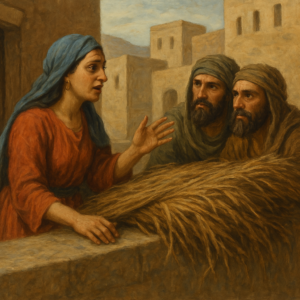
Just as Yitro heard of the greatness of God in Egypt, Rahab also hears. She hears of God’s promise to the Israelites to return them to their homeland (in which she lives); she hears of the overt miracles of the splitting of the sea and the battles with the enemies of Israel on their way to Canaan. She “knows” that the land is bequeathed to Israel and that the inhabitants of Canaan are quaking. From where does she know this? She heard it! In this case we can say that she literally heard it! It cannot be a coincidence that Rahab uses the exact same words as appear in the song of the sea:
“rain on them fear and dread” (Exodus 15:16)
“and how fear was rained on us” (Joshua 2:9)
“melted all the inhabitants of Canaan” (Exodus 15:15)
“And how all the inhabitants melted” (Joshua 2:9)
But the most important verse Rahab borrowed from the Torah concerns her understanding of the greatness of God. While she does not outright say “barukh Hashem” she does recognize the greatness of God, quoting the greatest prophet in this statement:
“For God is the Lord in heaven above and on the ground below” (Deuteronomy 4:39)
“For God your Lord He is the Lord in heaven above and on the ground below” (Joshua 2:11)
Rahab hears and knows, and she sacrifices her life in order to protect the messengers who are from the chosen nation of God. In return, she and her family are saved from the conquest of Jericho. In the final verse it is reported that Rahab lived “amidst Israel until this day” (Joshua 6:25). Commentators such as Radak conclude that she converted and even married Joshua, but the ‘peshuto shel mikrah’ (simple reading of the text) is that she remains a Canaanite woman who earned the right to live side by side with the Israelites due to her actions and her recognition of the God of Israel.

Discussion0
No comments yet — be the first to share your thoughts.