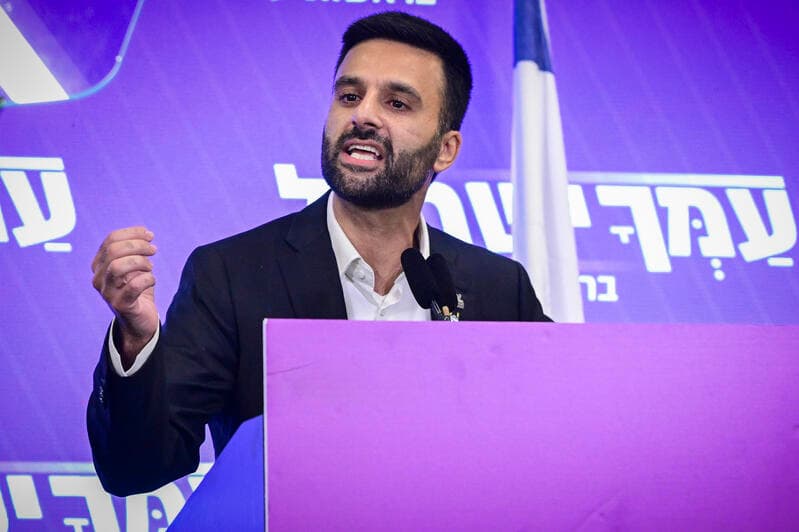


U.S. Ambassador Mike Huckabee | Photo: Chaim Goldberg/Flash90
Takeaways
- Four well-known faith leaders back Israel, and their reasons go deeper than politics.
- The eternal covenant ties their support straight back to Genesis.
- One leader serves as a U.S. ambassador and defends Israel on camera.
- Their message: standing with Israel is a moral and biblical commitment, not a trend.
Support for Israel among people of faith isn’t new, but the voices carrying that message today are louder and more public than ever.
Four names keep coming up: John Hagee, Mike Huckabee, Paula White, and Greg Laurie.
Each one frames the relationship differently, yet the thread connecting them traces back to the same source: the Hebrew Bible and the story of a covenant that never expired.
John Hagee and God’s Covenant Argument
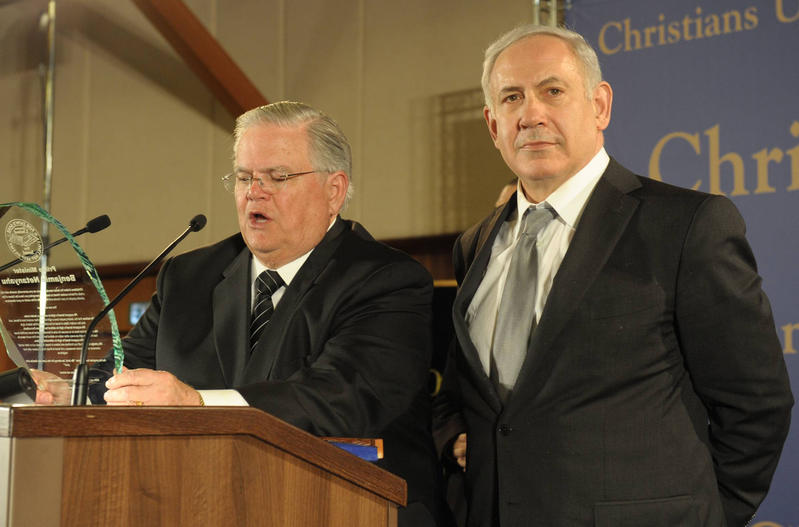
John Hagee founded Christians United for Israel and has spent decades preaching that support for the Jewish state isn’t optional for believers. His argument runs through Genesis 17, God’s covenant with Abraham, Isaac, and Jacob.
He put it plainly:
“Israel is not a political issue; it’s a Bible issue…The Jewish people were adopted by God as his own… They do not occupy the land of Israel, they own it…Evangelicals support Israel because Christianity owes a debt of eternal gratitude to the Jewish people for their contributions to us.”
Hagee also links anti-Israel sentiment directly to anti-Semitism, arguing the two can’t be separated. For him, walking away from Israel would mean walking away from scripture itself.
📖Read this article about 6 powerful ways you can stand with Israel today.
Mike Huckabee’s Public Defense
Huckabee, now serving as U.S. ambassador to Israel, has taken his support out of the pulpit and into the media spotlight.
Coverage of his work describes him as “ardent in his support of the Jewish state,” particularly during the Gaza war, when he pushed back against what he saw as misinformation flooding American headlines.
Here is a sampling of what he’s said in regard to Israel:
“I want to be on the blessing side, not the cursed side…Without Israel, without the Jewish foundation, there would not be America. We owe our very existence to what happened in this land…Israel has a right to the land because they moved here, they lived here, they established a country. They fought wars, they won the wars.”
In general, his role shows a different side of advocacy: less theology, more communication strategy, aimed at correcting the record in real time.

Paula White on Shared Roots
White has spoken often about the connection between the Hebrew Bible and later religious tradition, insisting the two can’t be pulled apart.
In separate speeches, she has said:
“Israel is OUR SPIRITUAL LEGACY—yours and mine!…You can be Jewish without being Christian, but you cannot be Christian without understanding Judaism…We’re not only to stand with Israel, because we stand with God and Israel is God’s place. The Jewish people are God’s people. And we know that is their sovereign land.”
She’s called Israel one of the matters believers shouldn’t compromise on. Her framing treats the bond as spiritual family, not foreign policy.

Greg Laurie and the Antisemitism Question
Laurie’s advocacy centers on a different angle: moral response. In conversations tied to the Israel-Hamas war, he’s addressed rising antisemitism directly, arguing that people of faith have a responsibility to confront hatred rather than stay quiet.
He has said this about Israel and the Jews:
“I think we’re past subtle anti-Semitism. It seems like people want to blame the Jews and the nation of Israel for everything that’s going wrong in our world today…Everything we have came to us through God’s chosen people, the Jews…They are a Jewish homeland, and I do believe their being in the land is a fulfillment of Bible prophecy…God loves the Jewish people. The Bible makes that very clear.”
Greg Laurie frames support for Israel as a matter of Christian conscience: he says believers should defend the Jewish people because God’s covenant with the Jewish people still stands.
A Commitment, Not a Trend
Four different messengers four different angles, one shared conclusion. Whether the argument comes from covenant theology, media advocacy, shared spiritual roots, moral urgency, or decades of firsthand experience, the outcome lands in the same place.
For these leaders, backing Israel isn’t a policy position that shifts with headlines. It’s tied to something older than any of them, and that’s exactly why it isn’t going anywhere.
Want to keep reading? Find out which 20 Pro-Israel Influencers you should follow today. Explore more on faith, values, and the Land of Israel at Sinai Project.
Discussion0
No comments yet — be the first to share your thoughts.