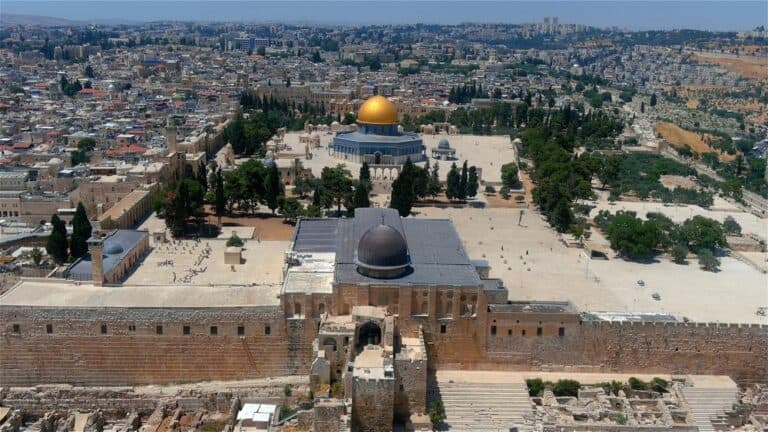

Aerial view of Temple Mount and Dome of the Rock, Old City, Jerusalem | Photo: Shutterstock
Takeaways
- The Temple Mount is the most sacred spot in Jewish memory.
- Many people won’t even walk on the mount out of reverence.
- The Western Wall exists because of what stood above it.
- Prayers face this spot every single day, everywhere on earth.
- Small events here can shake the whole world.
A tiny stone platform in Jerusalem’s Old City carries more weight than almost any piece of land on the planet. It’s called the Temple Mount, and it’s been the center of prayer, politics, and prophecy for thousands of years.
One king summed up its pull perfectly: “I was glad when they said unto me, Let us go into the house of God” (Psalm 122:1).
The Holiest Spot on Earth
This is where the First and Second Temples once stood. Tradition holds that the Foundation Stone sitting here marks the very center of creation, the place where the world itself began. That’s not a small claim.
For thousands of years, this spot organized an entire way of life. Festivals, sacrifices, pilgrimages, all of it revolved around this one location. The Temple is gone, but the pull of the place never left.
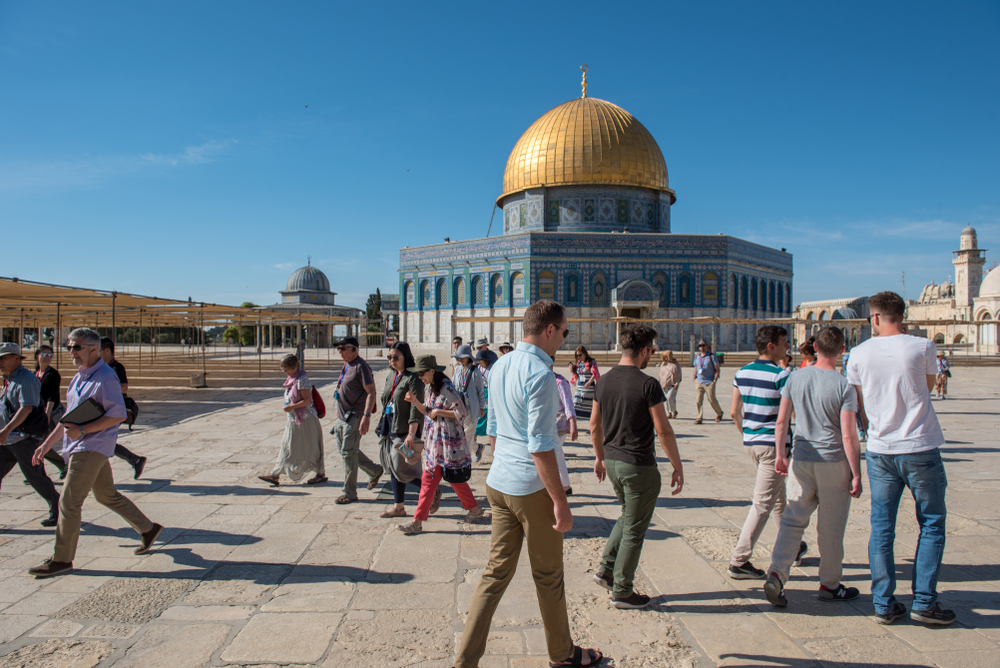
Why People Won’t Even Step Foot There
Here’s a fact that surprises a lot of visitors: many traditional Jews refuse to walk on the Temple Mount at all. It’s not fear of politics. It’s about ancient purity laws tied to the Holy of Holies, the innermost chamber where only one person could enter, and only once a year.
Since nobody today can meet those purity standards, plenty of Jewish religious authorities say stay off the mount entirely. Others allow careful, limited visits.
Either way, the caution itself is a form of respect. Few places on earth get treated with that level of care thousands of years after the building is gone.
The Western Wall’s Real Story
Most people have heard of the Western Wall. Fewer know it’s not a wall of the Temple itself. It’s a retaining wall that held up the massive platform the Temple sat on.
When access to the mount became restricted, this wall became the closest point people could reach. It’s been the beating heart of Jewish prayer ever since. Proximity became sacred by necessity, and it stuck.
A Flashpoint Nobody Can Ignore
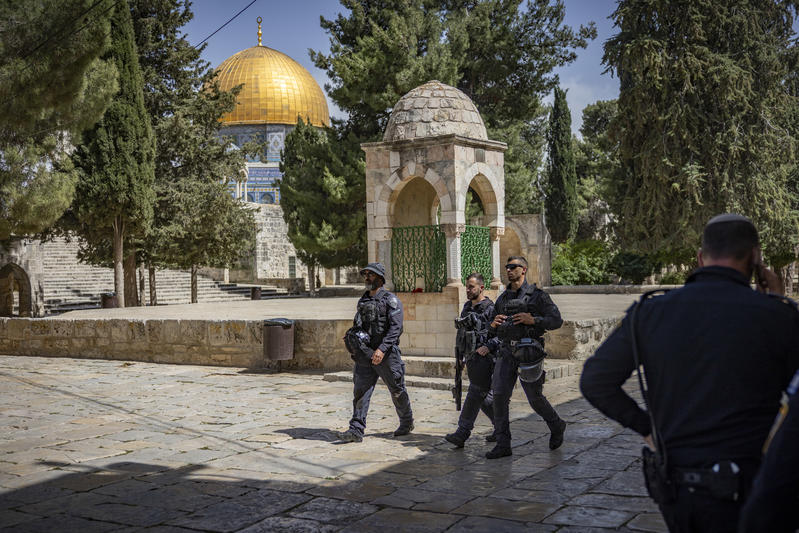
The Temple Mount sits inside one of the most contested pieces of real estate on earth. Different authorities have controlled it for centuries, and fragile arrangements govern who prays where and when.
That’s why a small gesture there, a protest, a renovation, a photo, can ripple into headlines within hours. Symbolic acts on this mount get read as much bigger statements. The stakes are never just local.
Trivia Worth Knowing
- The Foundation Stone is traditionally named as the exact spot of the binding of Isaac.
- Jewish prayer around the globe still faces Jerusalem, keeping this spot in view daily.
- The Temple’s rituals, though the building is gone, still shape the structure of daily prayer today.
- Traditional teaching holds that the Temple’s restoration is tied to a future age of peace on earth.
What This Teaches Beyond Jerusalem
The Temple itself is gone. The ground it stood on never stopped being the Holy of Holies. That’s what makes the mount different from every wall or ruin around it, the sacrifice, the priestly service, the Foundation Stone underneath it all still belong to that exact patch of ground.
The prophet Zechariah once described this same hill as the future “mountain of God… called the Holy Mountain” (Zechariah 8:3). Thousands of years later, people still turn toward it, still pray toward it, still wait on it.
The Temple Mount holds a promise still waiting to be kept, carried forward by every prayer whispered toward it and every generation that refuses to forget.
Discussion0
No comments yet — be the first to share your thoughts.