
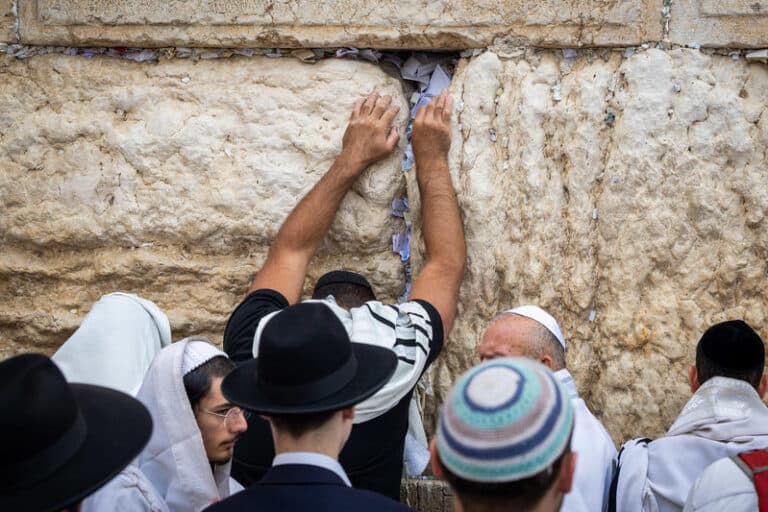

An array of different kippahs spotted as Jewish worshippers pray at the Western Wall, October 09, 2025 | Photo: Oren Ben Hakoon/Flash90
Takeaways
- A kippah reminds the wearer that God is always watching.
- It stands for humility, not fashion.
- Wearing one all day is a daily act of faith, not just a synagogue rule.
- The word yarmulke (Yiddish) may come from a phrase meaning “fear of the King.”
- Size, color, and fabric can quietly reveal a whole community’s story.
A Small Cap With a Big Message
Walk through Jerusalem and you’ll spot dozens of them in an hour. Black velvet, white knitted, plain cloth, some barely bigger than a coin.
The kippah, also called a yarmulke in Yiddish, is a dome-shaped head covering. Its message is almost shockingly simple: there is Someone above us, and life is lived in front of Him.
Jewish tradition calls this awareness Reverence (Fear) of Heaven (Yirat Shamayim in Hebrew). That’s not fear like being scared of a storm. It’s the kind of respect you feel standing somewhere holy, except the wearer carries that feeling to the grocery store, the office, the bus stop.
Why It’s Worn All Day, Not Just at Prayer
Here’s the part that surprises people. The kippah isn’t commanded directly in the Torah. It grew into custom, and over centuries that custom became so deeply rooted that many halakhic authorities treat it as binding practice today.
In traditional communities, men and boys often wear one from morning to night. Others put it on specifically for prayer, Torah study, blessings, or stepping into a sacred space.
Either way, this point stands out. This isn’t a costume for special occasions. It’s a daily rhythm, a small physical checkpoint that says: pause, remember who you’re standing before.
A Quiet Symbol of Identity
A kippah does something else too. It’s a visible marker of Jewish identity, right out in public, no hiding it.
Wearing one takes a kind of quiet confidence. It says “I belong to this people, and I’m not embarrassed about it.”
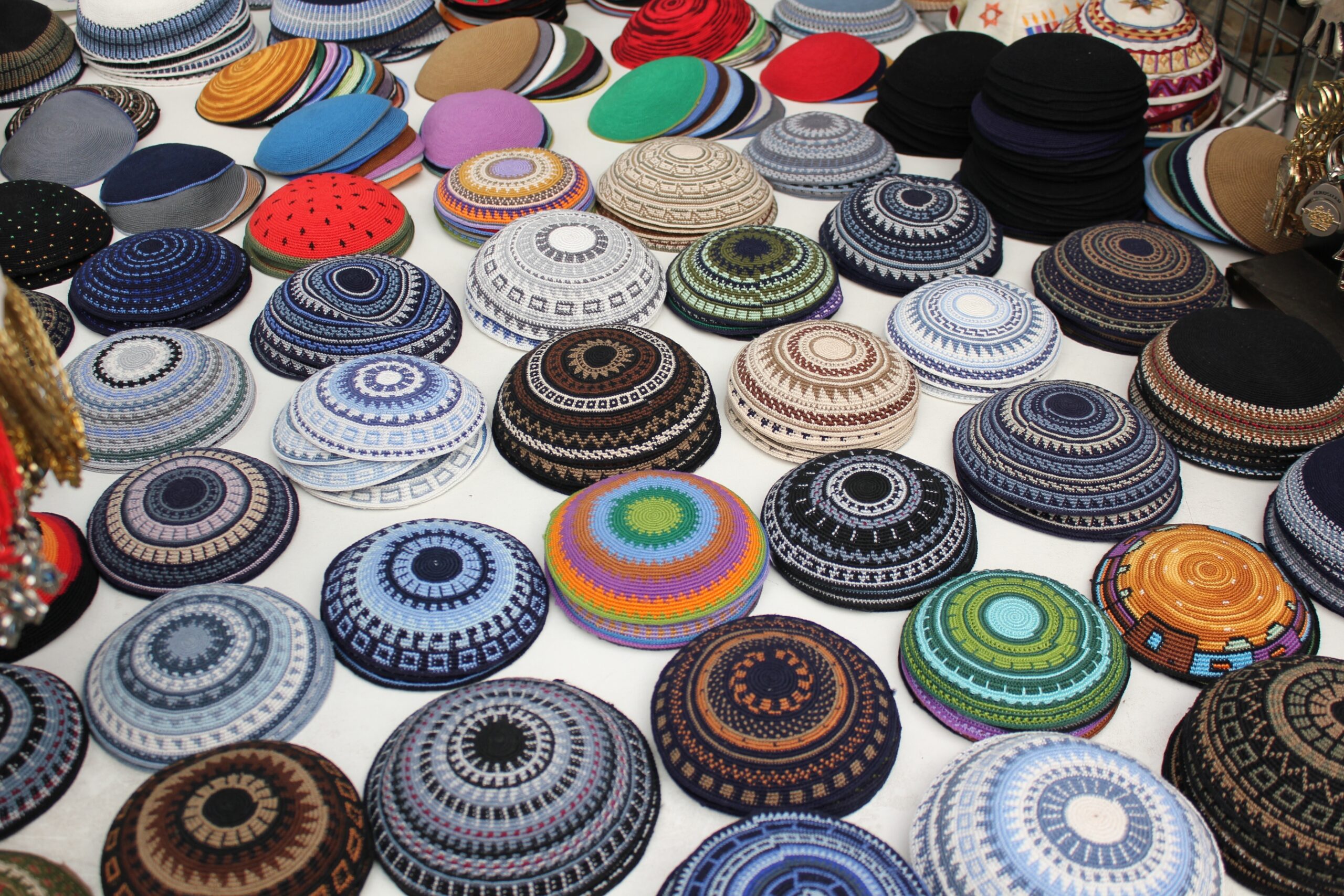
In Israel, the style itself becomes a signal. A large knitted kippah, a small velvet one, a colorful crocheted design, each hints at community background and religious outlook. Walk down a single street in Jerusalem and the variety on people’s heads could double as a map of Jewish life itself.
Facts That Make People Say “Wait, Really?”
A few details about the kippah rarely make it into casual conversation.
The Yiddish word yarmulke is sometimes linked to an Aramaic phrase meaning “fear of the King.” That single phrase captures the entire spiritual weight of the head covering better than a paragraph could.
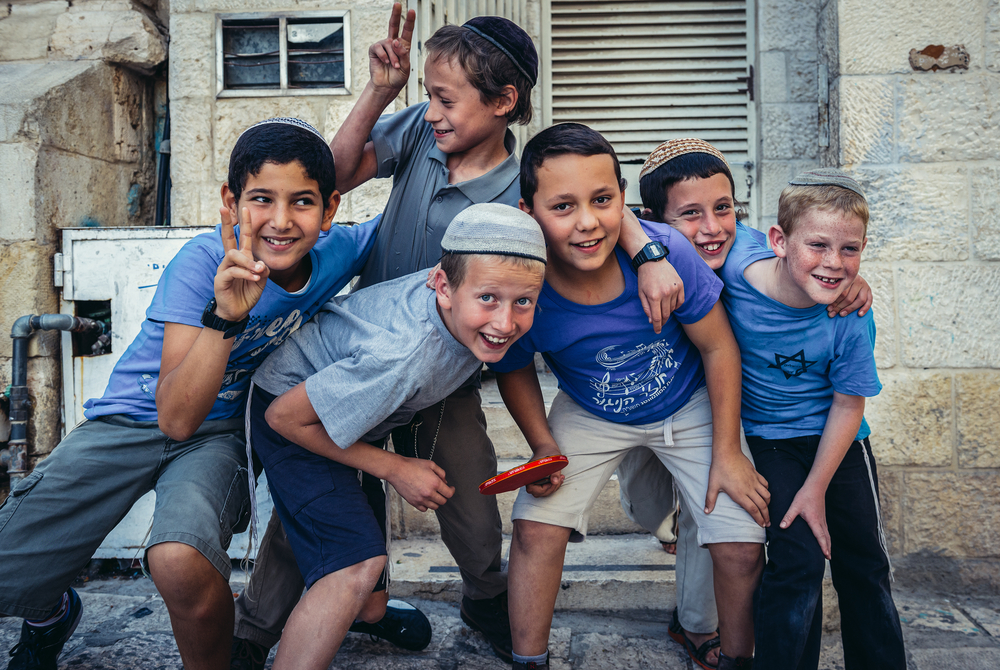
Boys are often taught to wear a kippah from a very young age, long before they fully grasp why. It becomes part of who they are, not just what they wear, shaped through habit rather than lecture.
What This Small Habit Can Teach Anyone
There’s something worth sitting with here, even for those outside Jewish tradition.
A physical reminder of God’s presence, worn on the body, every single day, is a powerful spiritual discipline. Faith often fades into the background of a busy week. A visible cue, something as small as a hat, can pull that awareness right back to the surface.
Reverence doesn’t have to be complicated. Sometimes it’s just a piece of cloth on your head, quietly saying: I know Who I’m standing before, and I’m not going to forget it today.
Discussion0
No comments yet — be the first to share your thoughts.