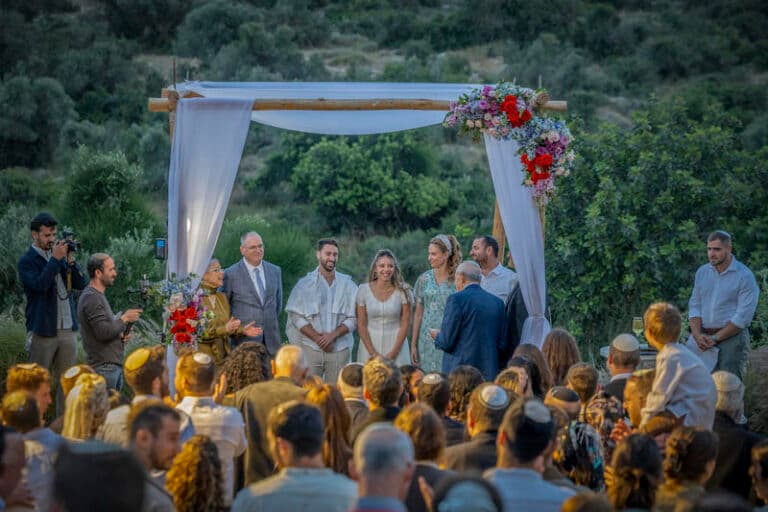

Jewish wedding in Israel, love after grief: Avia Slotki stands with her groom Micha Goldenberg during their wedding near Beit Shemesh, May 6, 2026. Avia is the widow of Yishai Slotki, who was killed alongside Micha’s brother Noam on October 7 in Kibbutz Alumim| Photo: Chaim Goldberg/Flash90
Takeaways:
- Deuteronomy 7:3-4 forbids intermarriage to protect Torah transmission across generations.
- Jewish identity passes through the mother, a law called matrilineal descent.
- Marriage in Jewish tradition is called kiddushin, meaning sanctified union.
- Intermarriage risks identity confusion for the next generation, not just personal choice.
- Conversion is open to sincere seekers, but it must be real, not cosmetic.
A Wedding, A Scroll, and One Missing Letter
A Torah scroll is disqualified by a single missing letter. Every letter has to be intact for the scroll to be read in synagogue, no exceptions, no partial credit.
Jewish tradition often compares each Jewish soul to one of those letters, an ancient teaching that assigns every member of the nation a specific place in an unbroken text. Marriage is the moment that letter either gets copied forward into the next generation or risks disappearing from the page entirely. When a Jew marries within the faith, the household becomes the scribe’s hand, carrying that letter into the next scroll. When intermarriage happens, tradition holds that the chain of transmission is put at risk, because a home built on two different faiths struggles to pass down the specific practices, laws, and identity that make a Jewish letter legible at all. That image sits behind a question people of faith ask often: why do Jews marry only other Jews?
The Deuteronomy Command
The instruction begins in the text itself. Deuteronomy 7:3-4 states: “You shall not intermarry with them; you shall not give your daughter to his son or take his daughter for your son. For he will turn your child away from following Me.”
Jewish legal tradition reads the grammar of this verse closely. A Jewish daughter marrying outside the faith risks steering future generations from Torah observance. A Jewish son marrying outside the faith produces children who are not halachically Jewish at all. Either direction, the risk is the same: a break in the line that was never supposed to break.
📖 For a deeper look at the the meaning behind the famous slogan you hear at rallies, “Am Yisrael Chai,” read here.
Marriage as Sanctified Union, Not Just Romance
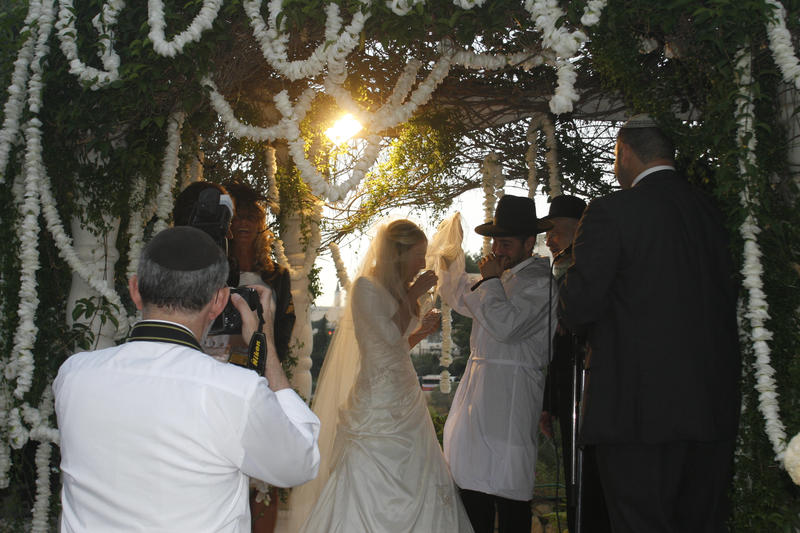
Jewish law does not treat marriage as a private romantic arrangement. It calls it kiddushin, a word built from the root for holiness.
Jewish sources describe marriage as reuniting two halves of a single soul, but only within boundaries set by halacha. A union between a Jew and a non-Jew cannot become kiddushin, in the same way certain other unions are barred regardless of the feelings involved. The boundary reflects what the institution itself is built to carry.
Why the Mother’s Line Decides, and Why That Prevents Confusion
Jewish law follows matrilineal descent. A child born to a Jewish mother is Jewish. A child born to a Jewish father and a non-Jewish mother is not halachically Jewish, unless that child later converts. This rule comes from the same Deuteronomy passage and has been codified in Jewish law for millennia.
For friends of Israel, this detail explains something important about the urgency Jewish families feel. It was never about rejecting a beloved spouse. It is about making sure grandchildren can inherit the covenant clearly, without wondering which identity actually belongs to them.
Jewish sources point out what happens when that clarity is missing. Mixed-faith homes can produce what’s often called a “half-Jewish” confusion, where a child grows up celebrating both Chanukah and Christmas, uncertain whether a bris or a christening awaits them, and unsure which spiritual home is truly theirs. That kind of confusion is not neutral. It leaves children without solid ground to stand on, spiritually adrift between two traditions instead of rooted in one.
Continuity Runs Through the Dining Table
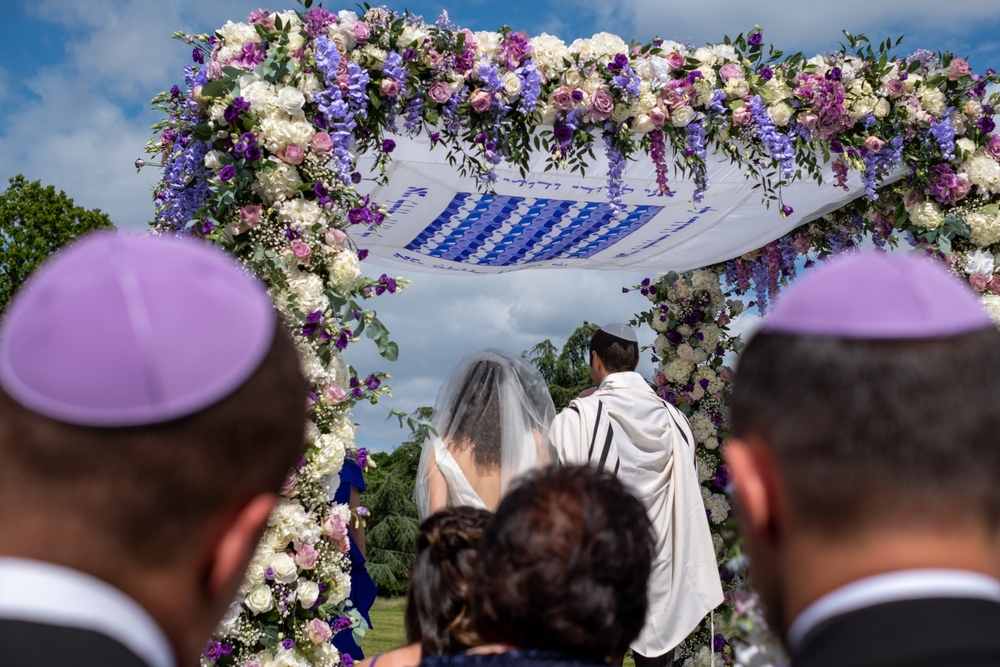
Jewish survival has depended less on armies and more on the dining table. The candles, the blessings, the rhythm of the week: these are the mechanism that carried Torah through exile, expulsion, and attempted destruction.
Jewish tradition frames intermarriage plainly. When a household runs on two different blueprints, the transmission mechanism weakens, and the next generation grows up without a single clear answer to who they are. This is why communities invest so heavily in Jewish education starting young, and why clarity, not confusion, is treated as the whole point of the household.
Conversion Is Real, When It’s Real
Even though Judaism is not a religion that missionizes, it’s never closed its doors to sincere converts. Orthodox conversion requires sustained study, a beit din (rabbinical court), acceptance of the commandments, and mikvah immersion.
What it does not allow is conversion as a shortcut to marriage. Jewish legal sources are direct about this: motive is examined closely, because a cosmetic conversion does not create the soul transformation the law requires, and it does not resolve the confusion the law is trying to prevent in the first place.
A Few Trivia Anchors
- Yisrael (the nation of Israel-Jewish people) is sometimes taught as an acronym for “Yesh Shishim Ribo Otiot LeTorah,” there are 600,000 letters in a Torah scroll, one for each Jewish soul born into the covenant. Intermarriage, in this framework, is the point where a letter can go missing from the next copy of the scroll, which is exactly why the boundary exists.
- The Talmudic phrase Kol Yisrael Chaverim means “All Israel are friends,” framing the nation as one extended family bound by shared law and shared descent.
- Despite the Greeks, the Romans, the Crusades, and the Holocaust, the chain of Jewish practice never broke.
The Flame Still Burning
Jewish marital boundaries were never about looking down on outsiders. They were built to protect a mission handed down at Sinai, and to keep the next generation from growing up confused about who they are.
For people of faith who treasure the Hebrew Bible, this is a living picture of covenant loyalty, the same fidelity that preserved the feasts, the prayers, and the promises across thousands of years of scattering. Every Jewish home built on Torah keeps one more letter of that ancient scroll intact, and one more generation clear on exactly where they belong.
Want to keep reading? Read here about the promises given by God to Abraham and how they look in today’s modern world. Explore more on faith, values, and the Land of Israel at Sinai Project.
Discussion0
No comments yet — be the first to share your thoughts.