Archaeologists Unearth a 2,000-Year-Old Aqueduct That Carried Water to Jerusalem's Temple Mount
Sinai Desk
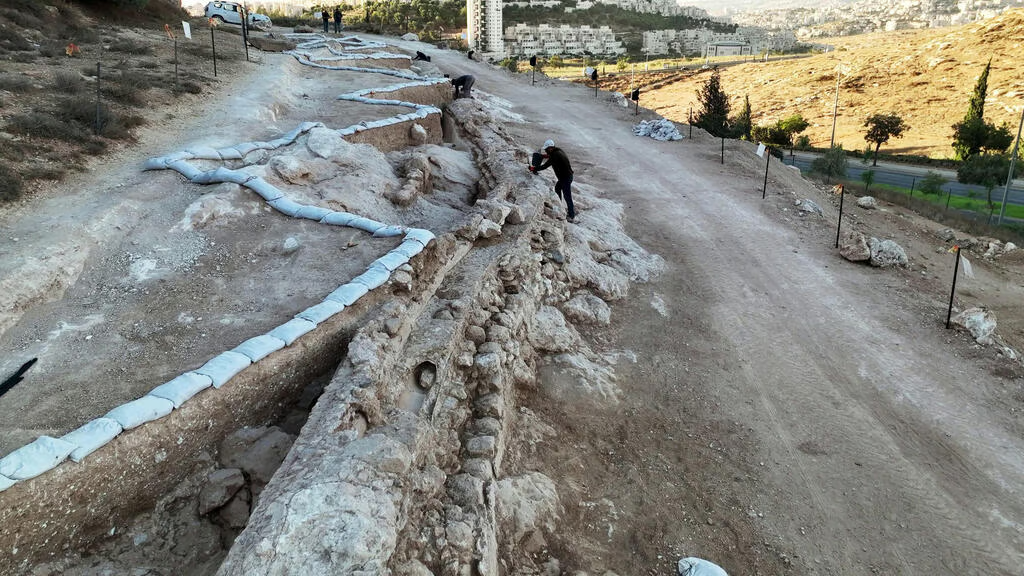
An uncovered section of the ancient aqueduct | Photo: Emil Aladjem, Israel Antiquities Authority
Takeaways
Archaeologists uncovered 300 meters of Jerusalem's Lower Aqueduct near Ramat Rachel.
The channel is 2,000 years old and carried spring water toward the Temple Mount.
Gravity alone moved the water across the Judean hills.
Residents repaired and upgraded the system for centuries, until about 100 years ago.
Planners hope visitors will walk beside it in a future park.
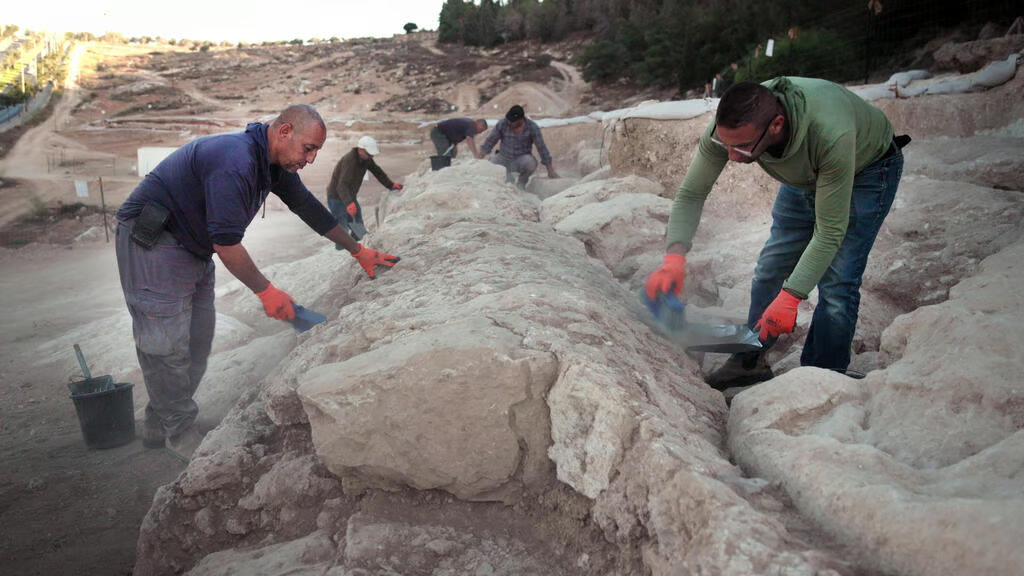
Archaeologists from the Israel Antiquities Authority have exposed a 300-meter (985-foot) section of Jerusalem's Lower Aqueduct just south of Kibbutz Ramat Rachel. The channel is roughly 2,000 years old and once carried spring water to the Temple Mount.
If you're planning a trip to Jerusalem, this ancient aqueduct near Ramat Rachel gives you a fresh way to picture the city the Bible describes.
What Archaeologists Found at Ramat Rachel
Archaeologists uncovered the section ahead of construction for a new Jerusalem neighborhood, which the Israel Land Authority is developing. The Israel Antiquities Authority dates the channel to the Hasmonean period, around 100 BCE.
The full Hasmonean aqueduct ran about 21 kilometers (13 miles), starting at Solomon's Pools in the Gush Etzion area, south of Bethlehem. Its destination was the Temple Mount, the sacred heart of ancient Jewish worship.
I've hiked the hills in this region, and they climb and fall more sharply than most photographs suggest. Keep that in mind for the next section.
How Ancient Engineers Moved Water Without Pumps
The builders designed the system to flow entirely by gravity. Pumps and mechanical devices had no role. Across steep terrain, the water descended only about one meter for every kilometer.
That works out to a slope of roughly 0.1 percent, which demands patient surveying and careful planning. The Israel Antiquities Authority describes the aqueduct as a massive and sophisticated engineering project. Ancient engineers solved a problem that still impresses modern surveyors.
Why the Temple Mount Needed a Steady Water Supply
The Temple Mount was a working sacred complex. It required water for purification, sacrifice, and daily service, along with the crowds who came up for the biblical pilgrimage festivals.
During Passover and Sukkot, pilgrims from across the Jewish world filled Jerusalem. A dependable aqueduct helps explain how the city sustained such enormous gatherings.
The name Solomon's Pools echoes the memory of Israel's ancient kings. The aqueduct tied together Bethlehem's surroundings, Jerusalem, and the Temple in one ancient line of water.
Centuries of Care for Jerusalem's Water System
The Israel Antiquities Authority reports that people used the system intermittently until roughly 100 years ago.
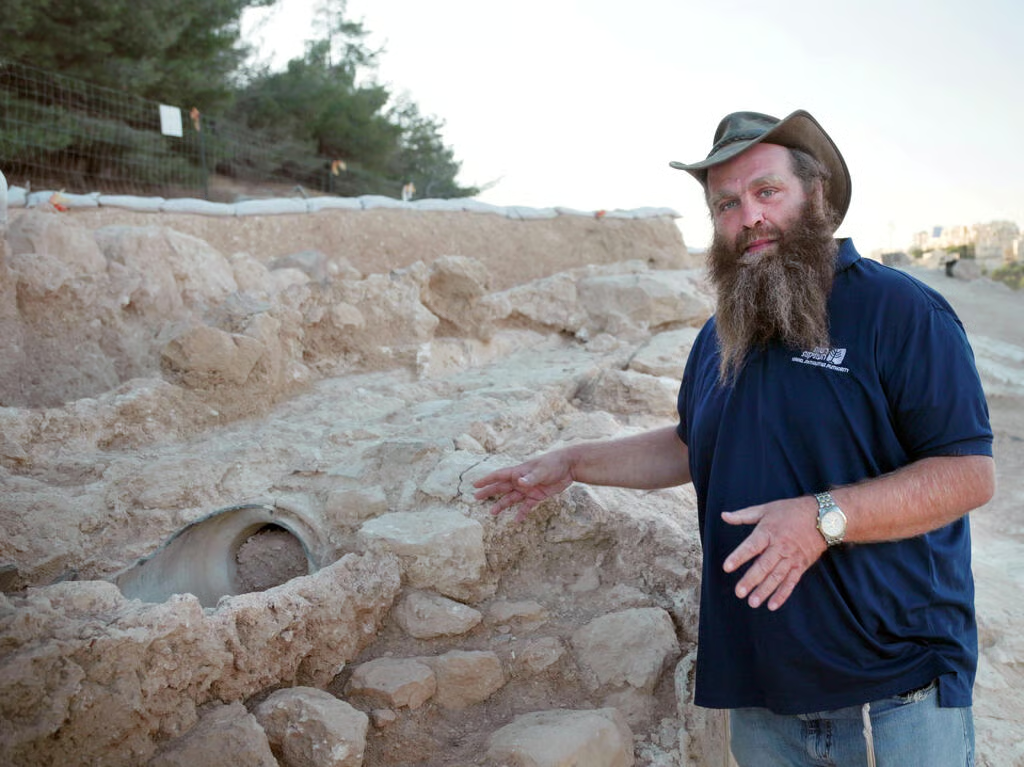
Archaeologists found plaster lining in the original channel, along with a distinctive stone-pressed plaster finish on the exterior. About 500 years ago, during the Ottoman period, workers installed ceramic pipes inside it.
Each repair tells me the same story. Jerusalem has been inhabited, defended, rebuilt, and cared for by the Jewish people across empires, wars, and centuries.
Visiting the Aqueduct: What Travelers Can Expect
Planners intend to incorporate the aqueduct into the entrance of the new neighborhood, so residents and visitors can see it. The Israel Antiquities Authority also hopes to develop a continuous park that lets visitors walk beside the channel from southern Jerusalem toward the Old City.
Standing beside a channel that once sustained worship at the Temple Mount, with the same Judean hills that witnessed biblical history in view, is a powerful way to read the Bible story with your own eyes. The roots of Jewish civilization in this land run deep, and they keep surfacing. The stones of Jerusalem still speak, and a visit lets you listen.
Discussion0
No comments yet — be the first to share your thoughts.