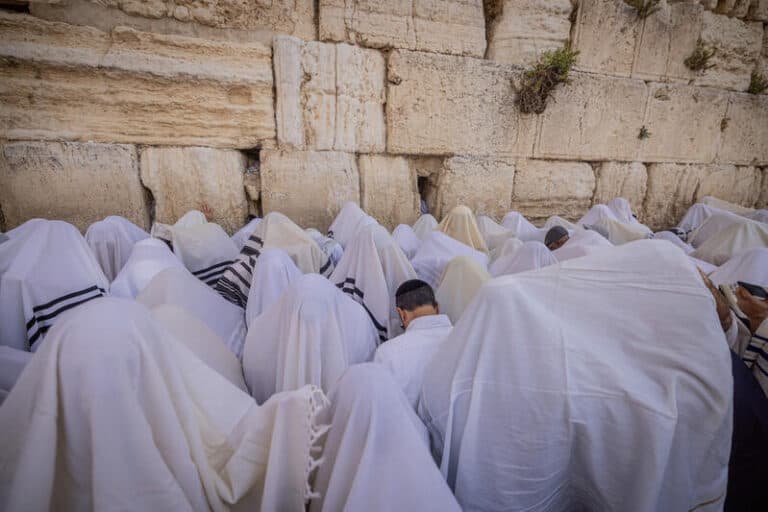

Priestly Blessing is performed at the Western Wall twice a year, at Sukkot and at Passover. Here, thousands of Jewish worshippers attend the Priestly Blessing during Passover, April 25, 2024 | Photo: Chaim Goldberg/Flash90
Takeaways
- The Priestly Blessing is just 15 Hebrew words straight from Numbers 6:24-26.
- Kohanim, the descendants of Aaron, recite it as a channel for God’s blessing.
- The three lines grow from three words, to five, to seven.
- One short prayer covers protection, favor, and peace.
- Thousands are receiving it at the Western Wall this week during Sukkot.
This week in Jerusalem, hundreds of kohanim are lifting their hands over thousands of worshippers at the Western Wall. It happens during the intermediate days of Sukkot, and it’s one of the most stirring sights in Jewish life. Let me walk you through what’s going on.
What Is the Priestly Blessing?
The Priestly Blessing, called Birkat Kohanim in Hebrew, is one of the oldest prayers in Jewish tradition. It comes straight from the Torah, and people have been saying it for more than three thousand years.
Kohanim once spoke it at the ancient Temple in Jerusalem, and they still speak it in synagogues today. I find it wonderfully efficient, a lifetime of hopes packed into a single breath. Think of it as the Torah’s original greeting card, minus the glitter.
Jewish tradition calls it a threefold blessing, and every word earns its place. This week it takes center stage at the Western Wall, which makes now a perfect moment to meet it.
The Words Straight From the Torah
The source is Numbers 6:24-26. God tells Moses to instruct Aaron and his sons on how to bless the people of Israel, and then hands over the text itself:
6:24: May God bless you and keep you.
6:25: May God make His face shine upon you and be gracious to you.
6:26: May God lift up His face to you and grant you peace.
Count the Hebrew and you get fifteen words. The lines run three words, then five, then seven, like a wave that keeps rising toward the shore.
Jewish sages have admired that shape for centuries.
Who Gives the Blessing?
The blessing is given by kohanim (singular: kohen), men who trace their family line back to Aaron, the brother of Moses and the first High Priest. The job comes with a very long family tree.
Here’s the part I love most. In Jewish tradition, the kohen composes nothing himself. He serves as a channel through which God’s blessing flows to the people.
In many Israeli synagogues, kohanim bless the congregation every morning. In communities around the world, it happens on holidays, which brings us right back to this week.
Three Lines, Three Kinds of Blessing
Each line carries its own gift. “Bless you and keep you” asks for material wellbeing: health, livelihood, and protection from harm.
“Make His face shine upon you and be gracious to you” asks for spiritual favor, meaning wisdom, understanding, and divine kindness. The final line, “lift up His face to you and grant you peace,” asks for shalom, which means wholeness, harmony, and inner calm.
Put together, they cover the body, the mind, and the heart. In Jewish thought, saying a blessing is a way of seeing the world, a habit of recognizing God as the source of all good.
Why the Western Wall This Sukkot
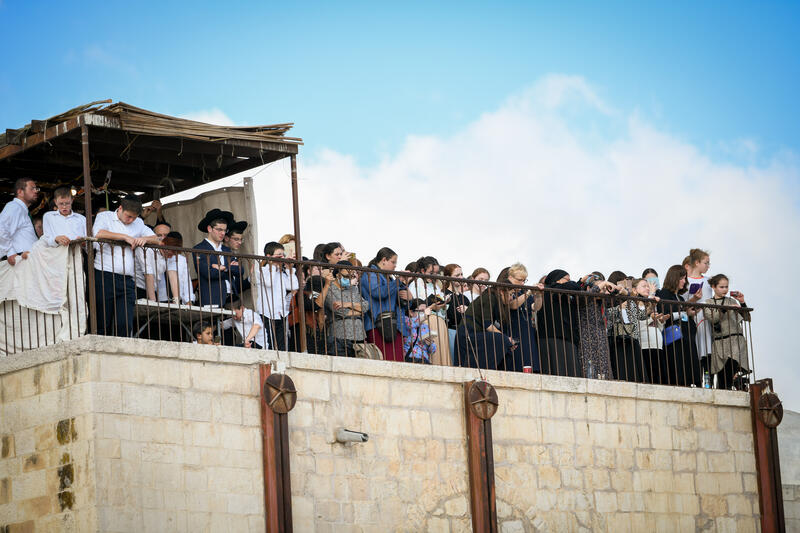
Sukkot is the Torah’s harvest festival, when families spend seven days eating in temporary booths under the sky. On the intermediate days of the holiday, hundreds of kohanim gather at the Western Wall to bless tens of thousands of worshippers, and this is one of those weeks.
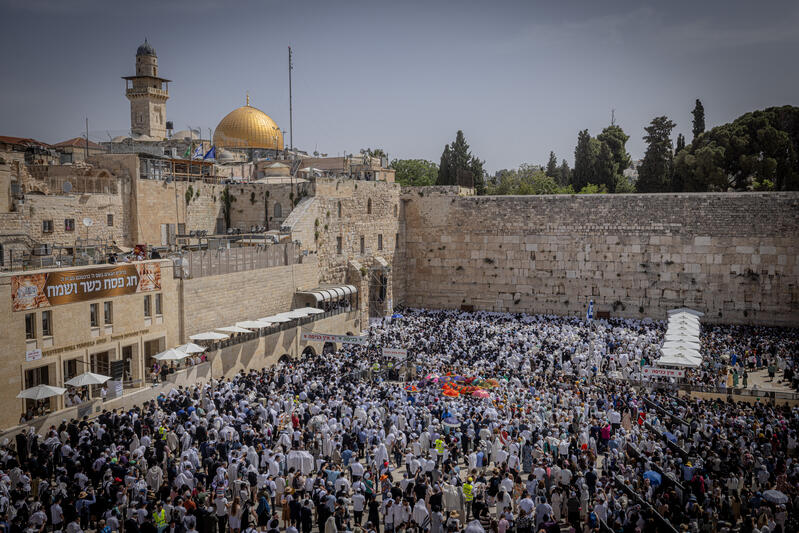
The kohanim stand with hands raised and fingers spread, often draped in prayer shawls. Tradition says the gaps between the fingers become windows for divine blessing, and the people lower their eyes in reverence.
The Wall is a surviving retaining wall of the ancient Temple Mount, so the blessing rings out where it first echoed long ago. Those fifteen words have rung out for three thousand years, and each Sukkot they remind Israel that God is the source of every good thing.
Discussion0
No comments yet — be the first to share your thoughts.