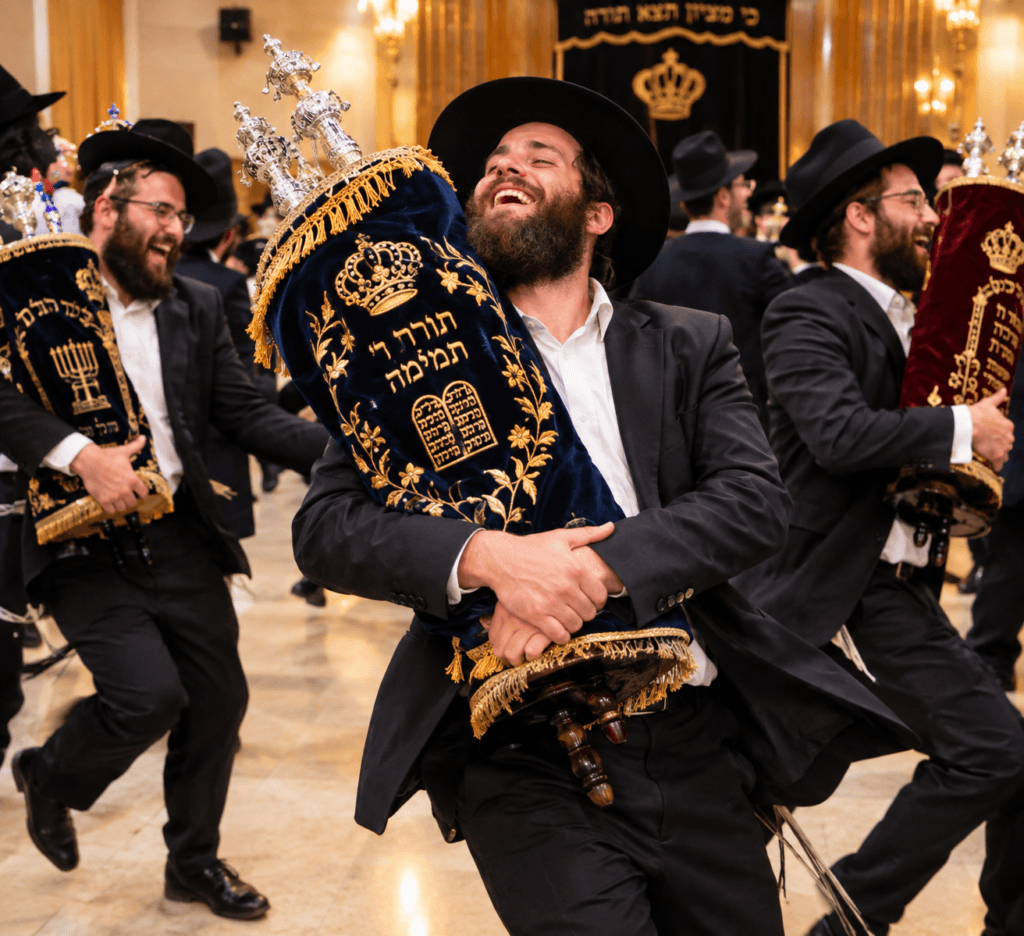
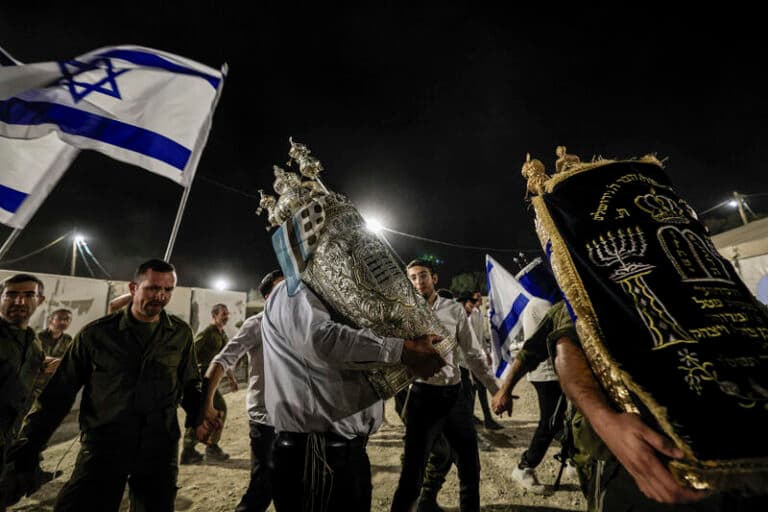

Israeli soldiers and Jewish men carry Torah scrolls as they dance during Simchat Torah celebrations at a military base on Israel’s border with the Gaza Strip, October 14, 2025. The holiday marks the end of the annual cycle of Torah readings and the beginning of the new cycle | Photo: Tsafrir Abayov/Flash90
Takeaways
- Simchat Torah means “Rejoicing of the Torah.”
- The yearly reading ends in Deuteronomy and restarts in Genesis the same day.
- Seven circuits of singing and dancing fill the synagogue.
- Children and adults alike receive an honor at the Torah.
- Finishing is the start of reading all over again.
Picture a synagogue packed wall to wall. An elderly man hugs a Torah scroll to his chest, swaying, while a toddler on his father’s shoulders reaches for the velvet cover. The last verse of Deuteronomy has just been read, and the whole room bursts into song.
What Is Simchat Torah?
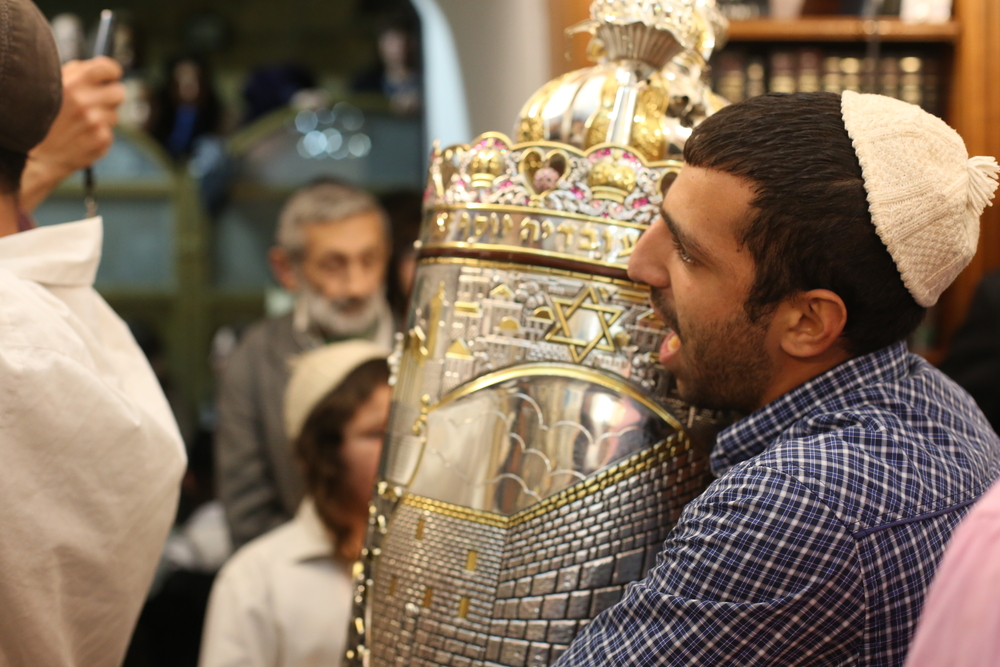
Simchat Torah means “Rejoicing of the Torah.” It marks the completion of the yearly public reading of the Torah, the five books from Genesis through Deuteronomy. Each week, a portion is read aloud in the synagogue.
On this day the cycle ends with Vezot Haberachah, the last portion of Deuteronomy. Then the congregation opens Genesis and reads “In the beginning” right away. Jewish tradition treats the Torah as a book with no final page, since every year of study uncovers deeper meaning.
When Is It Celebrated?
The festival follows Sukkot and connects to Shemini Atzeret, “the eighth day.” The Torah describes it as its own sacred occasion after the seven days of Sukkot.
In Israel, both names share one day. Outside Israel the festival runs two days, and the second is Simchat Torah. Like other major festivals, it brings candle lighting, festive meals, Kiddush, special prayers, and rest from ordinary work.
Dancing With the Torah
The signature custom is hakafot, meaning “circuits.” Scrolls come out of the ark and travel around the central reading platform seven times, in the evening and again in the morning. Everyone sings, claps, and dances as they pass, and children often join in with small flags.
Jewish teaching gives a beautiful image here. The Torah longs to dance, but a scroll can’t move on its own, so the Jewish people become its dancing feet. The joy resembles a groom celebrating with his bride, a picture of the bond between Israel and the Torah.
Honors for Everyone
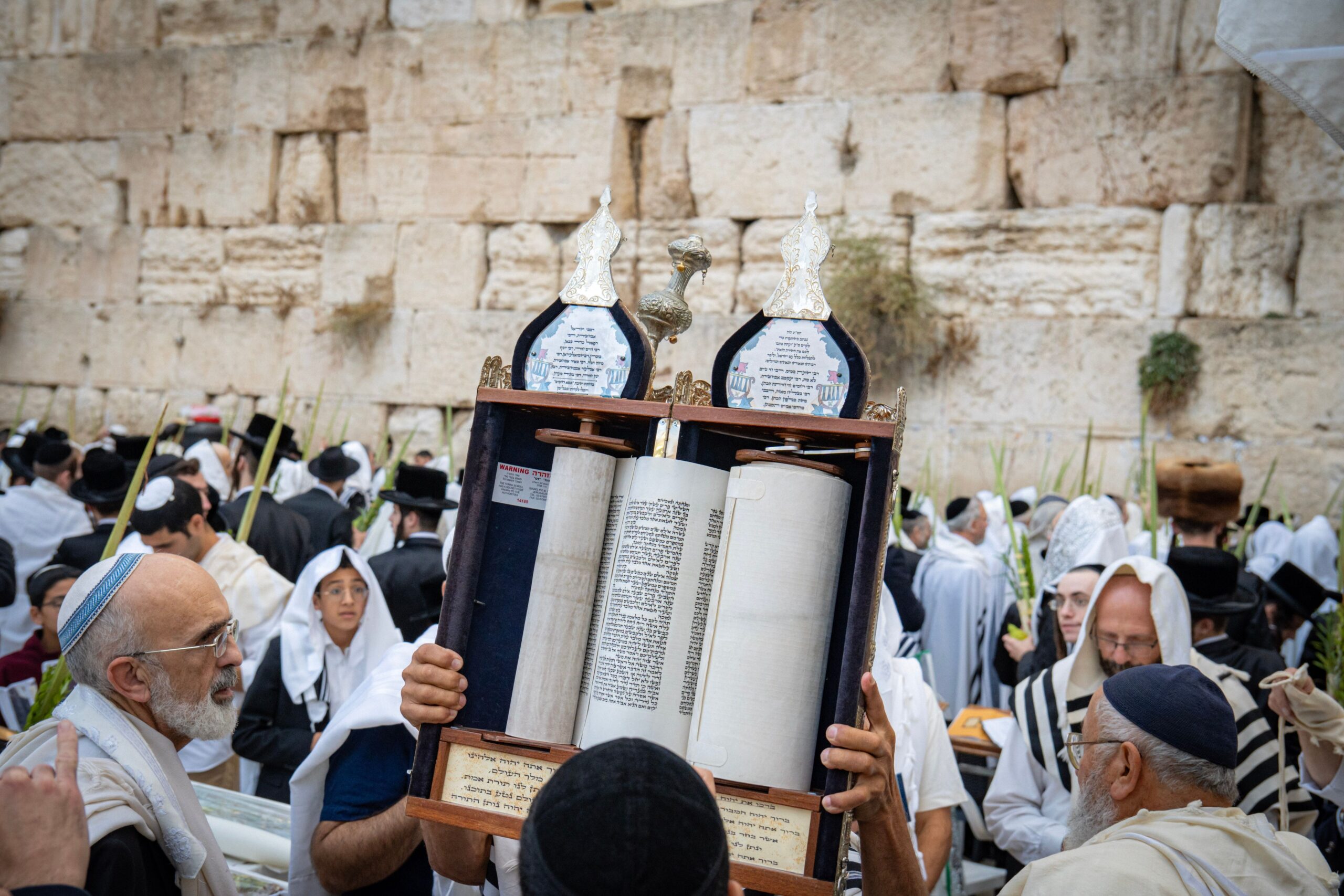
Morning services feature one of the longest Torah readings of the year. With three scrolls, one holds the end of Deuteronomy, one holds the start of Genesis, and one holds the festival reading from Numbers.
The person finishing the cycle is the Chatan Torah, “Bridegroom of the Torah,” and the one beginning Genesis is the Chatan Bereishit. Congregations try to call up as many people as possible for an aliyah, children included, because the Torah belongs to the whole community. When the final words of Deuteronomy are read, everyone answers with “Chazak, chazak, v’nitchazek,” meaning “Be strong, be strong, and let us strengthen one another.”
Why the Joy Never Ends
Torah study has no finish line. Completion opens the door to a fresh start, so the community returns to “In the beginning” within minutes. Every cycle brings new insight and a closer bond with the text.
The same words land differently each year, because the reader has changed. A well-loved Jewish teaching says it is a great mitzvah to be happy always, and Simchat Torah puts that into motion with feet, voices, and open scrolls.
Back in that crowded synagogue, the old man passes the scroll to the toddler’s father, and the reading opens with Genesis. The little boy claps along to a tune he doesn’t know yet. That’s how a love for God’s Word gets handed down, one dance at a time.
Discussion0
No comments yet — be the first to share your thoughts.