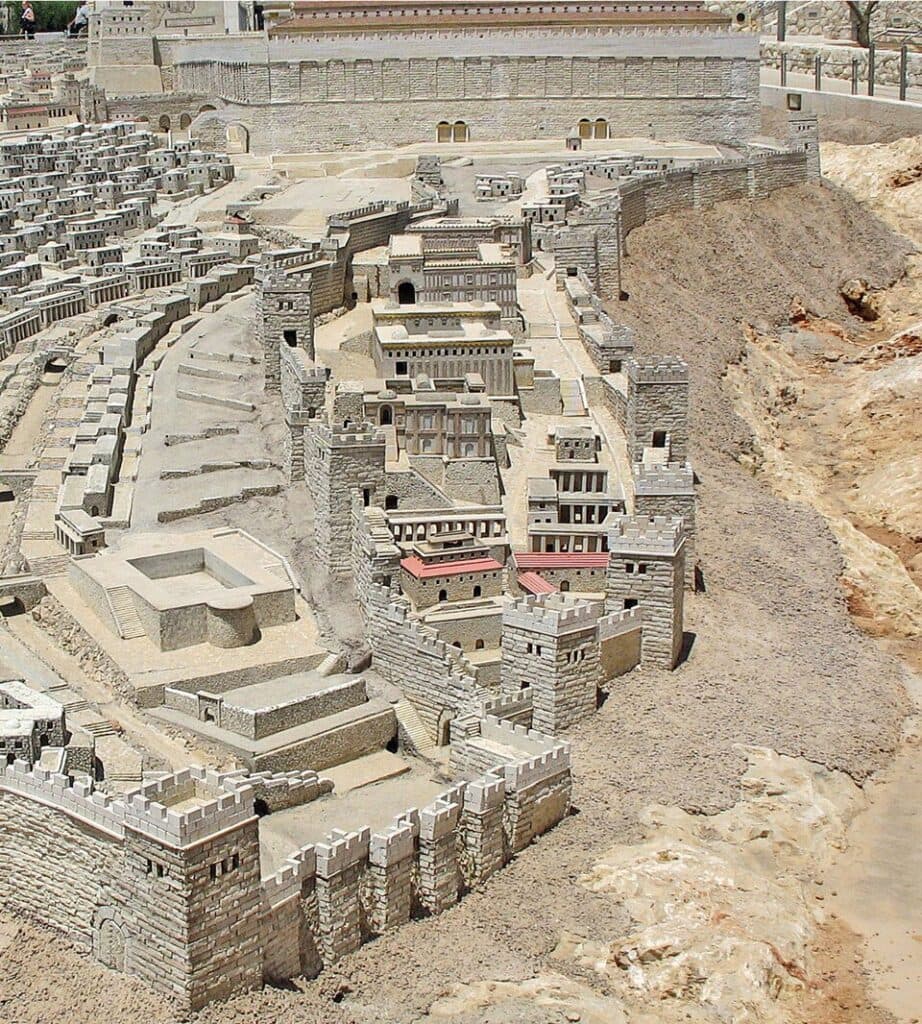

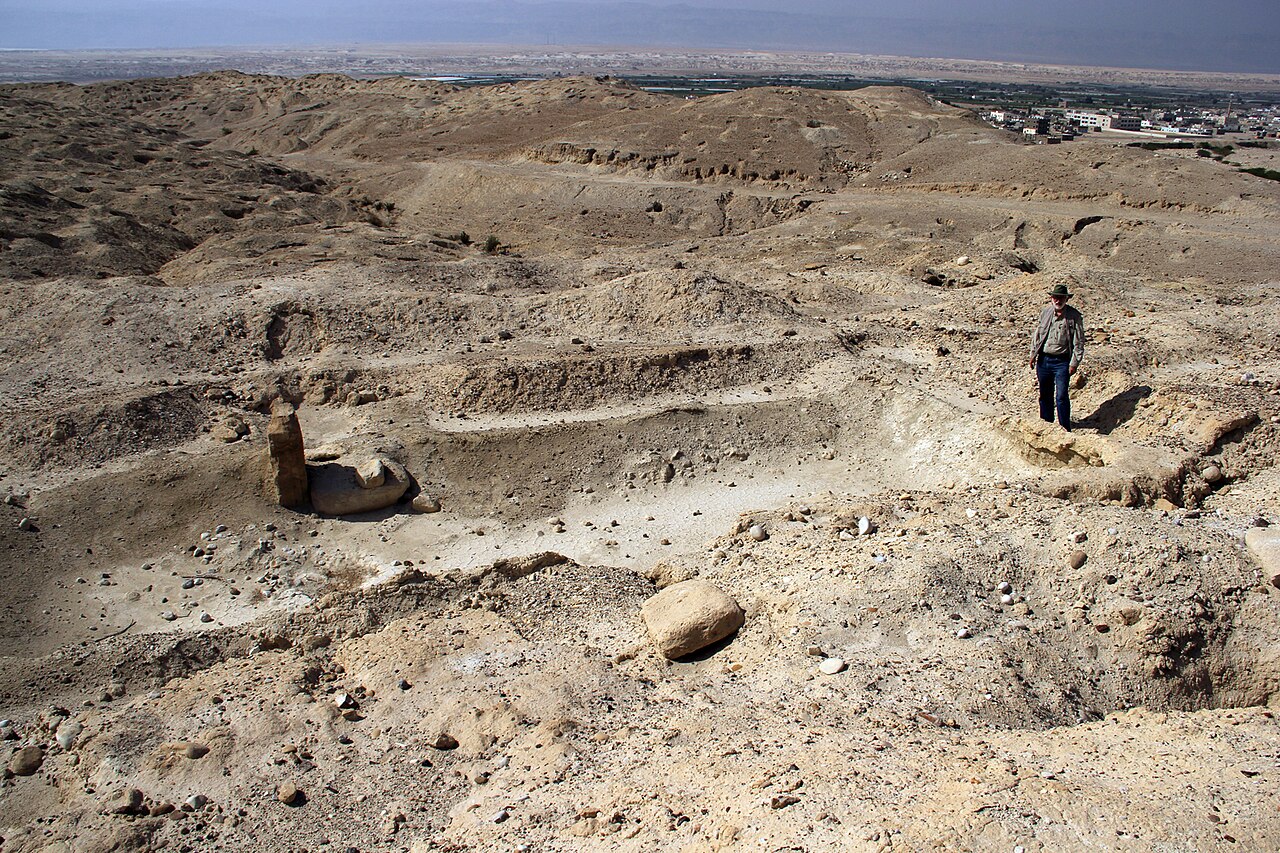
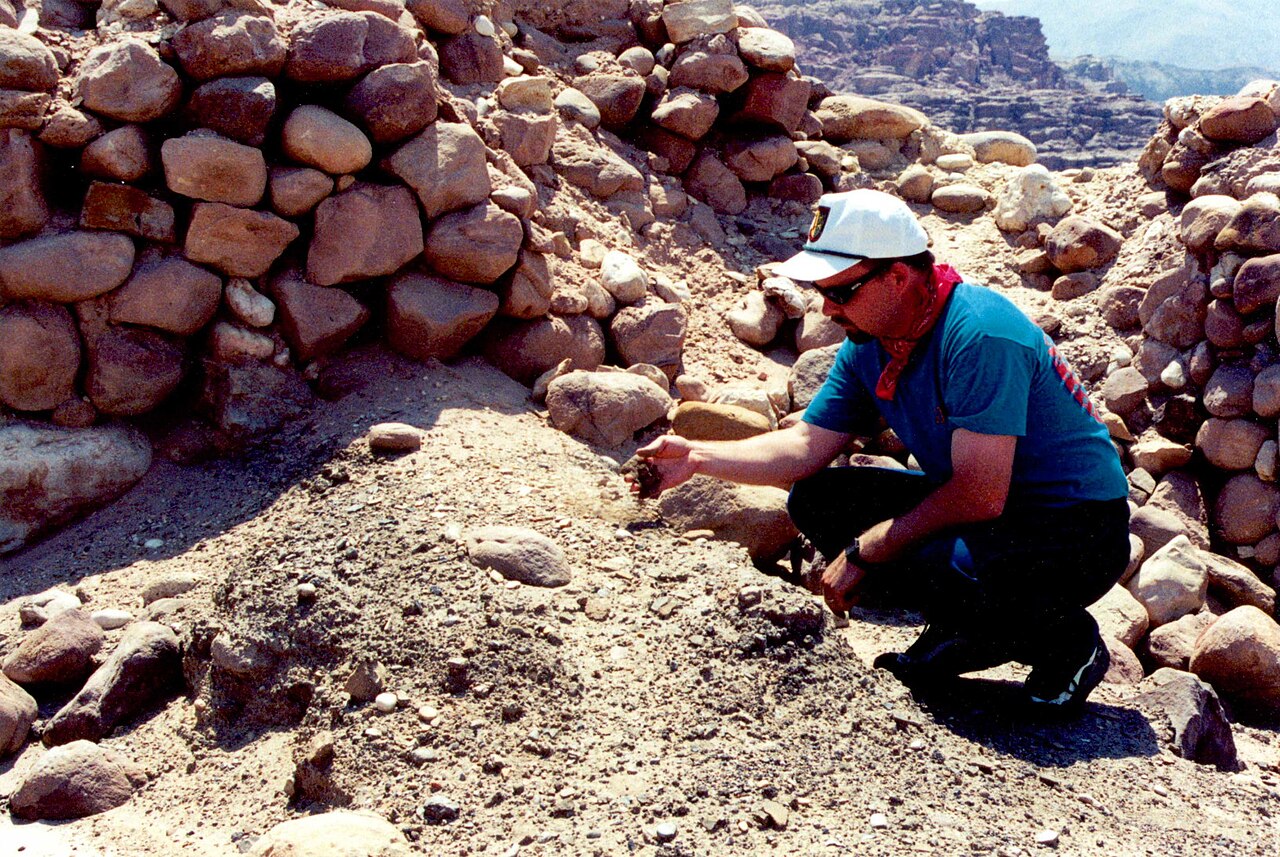
Biblical Archaeology found at Bab Edh Dhra, on Southeastern Shore of the Dead Sea | Photo: Wikimedia
Takeaways
- Five Bronze Age towns line the Dead Sea shore, as Genesis describes.
- Spongy ash up to 20 inches deep still covers the ruins.
- Genesis mentions tar pits before the fire falls.
- The Talmud’s 52 years for Sodom fits Numeira’s short life.
- Ezekiel ties Sodom’s fall to comfort without compassion.
Picture floating on your back in the Dead Sea with a newspaper, held up by water nearly ten times saltier than the ocean. That sea borders the lowest dry land on Earth, roughly 430 meters below sea level.
Few of the Dea Sea’s floating visitors realize that the eastern shore holds the ruins of five Bronze Age towns.
A Green Valley Beside the Salt Sea
Genesis 13:10 describes the plain as “well watered everywhere”, like the Garden of God, which sounds odd for a region now known for salt. Yet the soil agrees with the text, since excavators recovered traces of wheat, barley, grapes, figs, olives and dates.
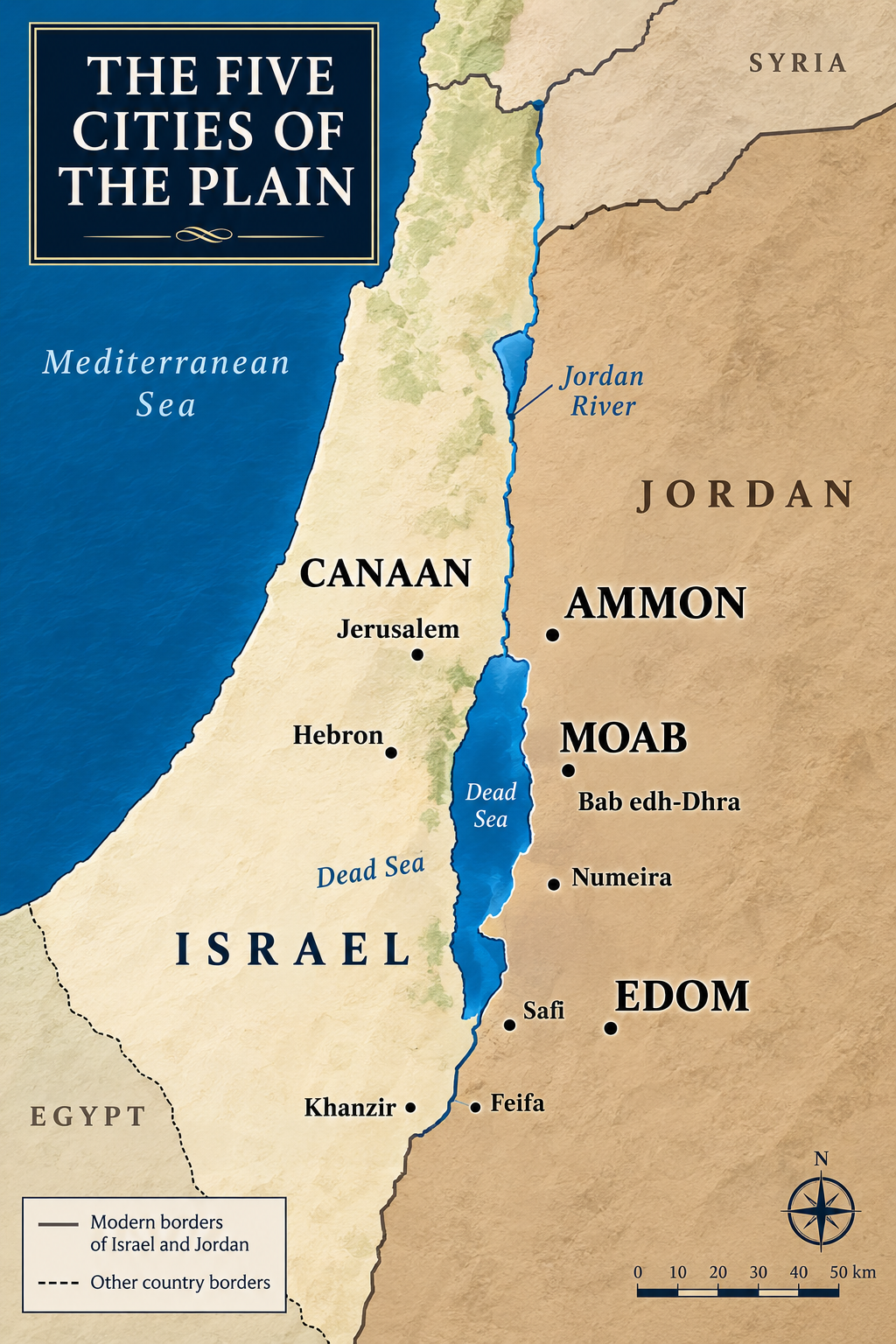
Five towns line the southeastern shore from north to south, and many scholars match them to the Torah’s five cities of the plain: Bab edh-Dhra (Sodom), Numeira (Gomorrah), Safi (Zoar), Feifa (Admah) and Khanazir (Zeboiim). These matches are theories, and some scholars swap the first two.
What the Ground Remembers
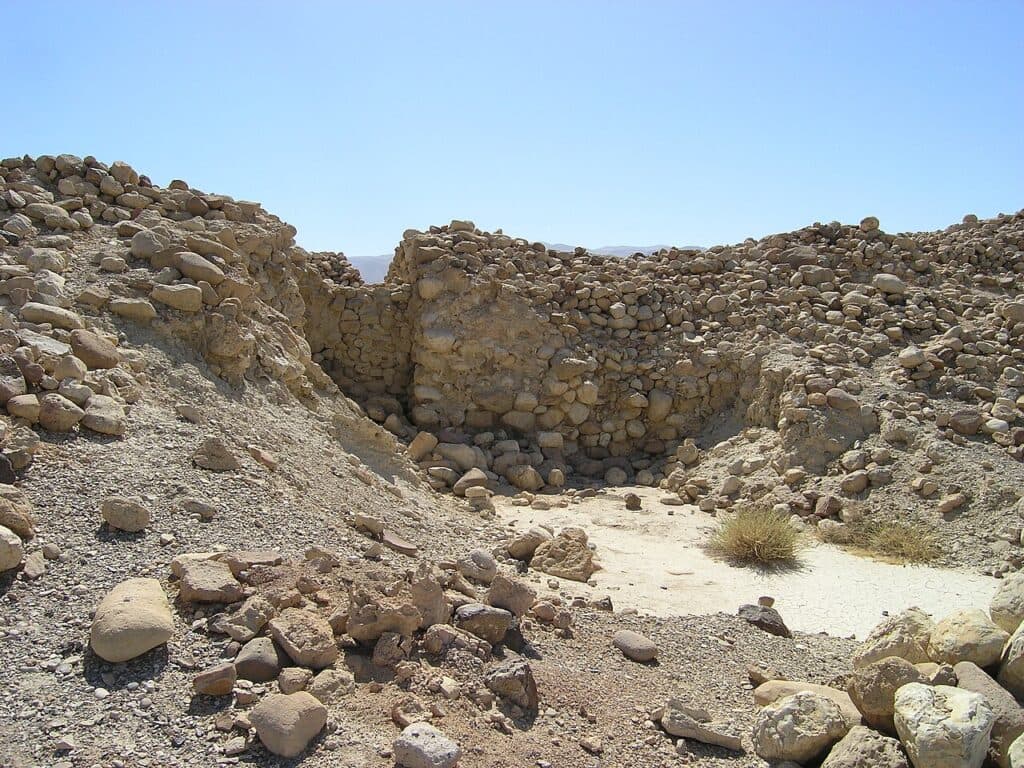
Spongy ash, reported at roughly 4 to 20 inches deep, covers Bab edh-Dhra and Numeira, which is what a fiery catastrophe would leave behind.
Then God rained upon Sodom and upon Gomorrah brimstone and fire from God out of heaven.
Genesis 19:24
Geologists see a way it could happen, because the valley sits on a fault line above pockets of bitumen, a flammable tar. Genesis even sets the stage early, since 14:10 says the Valley of Siddim was full of bitumen pits, and Greek writers later named the sea Lake Asphaltites for the tar it gave up.
When the Talmud Meets the Timeline
Genesis 14 says the cities served a Mesopotamian king for twelve years and rebelled in the thirteenth, which drew a coalition of kings into the valley. The Talmud then puts only 26 years between that war and the final destruction, and Numeira’s layers show two destruction events about 20 to 26 years apart.
Dating remains a sticking point, since archaeologists place the destruction near 2300 B.C.E. and traditional chronology points to about 1712 B.C.E. Still, the Talmud says Sodom isolated itself from travelers, and a town cut off from trade would adopt new pottery styles late, which could skew dating by style.
Seven Details That Line Up
Archaeology on the destruction is still debated, yet seven details line up:
- Five cities in Genesis and five Bronze Age sites on the shore suggest the text describes a real place.
- Mesopotamian pottery, jewelry and seals match the eastern kings of Genesis 14, so the story’s politics have a historical home.
- A huge cemetery near Bab edh-Dhra shows a crowded valley, so Sodom’s warning reached many people.
- Diverse crops match the “well watered” land and make a refusal to share even harder to excuse.
- A short gap between war and ruin agrees with the Talmud’s 26 years, so the timeline holds together.
- Numeira, occupied for under 100 years, echoes the Talmud’s 52 years for Sodom and shows how fast a society can unravel.
- Thick burnt layers match fire from above and give Genesis 19:24 physical weight.
Numeira ruins (theorized to be Gomorrah). Early Bronze Age settlements show massive layers of fire destruction and abandonment | Photo: Wikipedia
The Sin Hiding in Plain Sight
Most readers assume Sodom’s crime was something lurid, but Ezekiel 16:49 names it plainly as pride, plenty of bread and comfortable ease, with no hand extended to the poor and needy. The dig sites back up the “plenty of bread” part, since the wheat, barley, grapes and figs recovered there describe a valley that could easily have fed a hungry traveler.
The Talmud says the city answered that abundance by outlawing hospitality to protect its wealth. That isolation fits the dating puzzle, because a town closed to visitors would receive new pottery styles late, and it fits the map, where five towns sat within easy reach of one another.
Abraham in Genesis 18 shows the opposite, running to meet three travelers and feeding them in the midday heat.
Love Before Law
Hospitality like Abraham’s grows from the command in Deuteronomy 6:5 to love God with all your heart, soul and might. The next verse places His words on the heart, so obedience grows out of relationship.
Back on that shore, floaters rinse the white salt crust off their skin and head to dinner. Sodom’s test shows up in ordinary places, like the new neighbor hauling boxes alone, the coworker eating lunch at her desk, or the student far from family on a holiday weekend.
One invitation to dinner is a small act, yet it reverses the habit Ezekiel named. Keep a seat open.
Discussion0
No comments yet — be the first to share your thoughts.