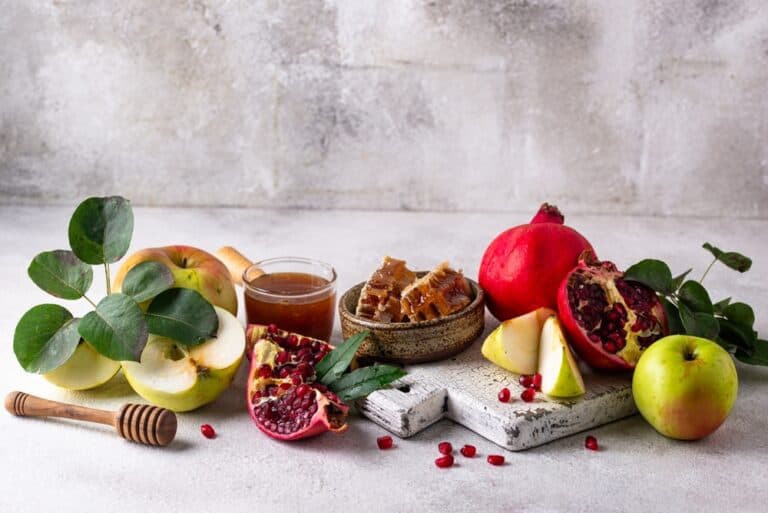

A sampling of the Rosh Hashana symbols: apples, honey, and pomegranites | Photo: Shutterstock
Takeaways
- Rosh Hashanah is the Jewish New Year, starting at sundown, September 11, 2026. It is a 2-day holiday.
- Jewish tradition teaches that God reviews every soul’s year and renders a verdict on this day.
- Before the holiday even starts, people go around asking forgiveness from anyone they’ve wronged.
- A ram’s horn called the shofar gets blown as a spiritual alarm clock.
- Foods like pomegranates, dates, and apples in honey turn the dinner table into a living prayer.
I still remember the first time I heard a shofar blast echo through a packed room. It wasn’t polished or pretty. It was raw, urgent, and it went straight through me. That sound is what pulled me into wanting to understand Rosh Hashanah, and once you see what’s actually happening inside it, you won’t hear it the same way again.

The Meaning Behind the Name
“Rosh Hashanah” literally means Head of the Year in Hebrew. Jewish tradition teaches that how you begin the year sets the tone for everything after it, the same way your head directs your whole body. This day marks the anniversary of humanity’s creation, so it’s less about fireworks and more about purpose. Every person alive gets a fresh look in the mirror.
A Day of Judgment, Wrapped in Love
Here’s the part that stopped me in my tracks. Jewish sources teach that on Rosh Hashanah, God reviews the behavior of every person and decrees their fate for the coming year. That could sound terrifying, except it’s described as judgment tempered by God’s deep love for His people. It’s less a courtroom and more a parent who wants you to succeed and is giving you one more honest look before the year locks in.
Clearing the Slate First
Before the prayers even begin, there’s a practice of actively seeking forgiveness from anyone wronged over the past year, and being just as quick to forgive others. The goal is to walk into the new year without a single grudge attached to your name. I find that idea almost more powerful than the holiday itself. Imagine starting every year with a genuinely clean slate.
The Table Becomes a Prayer
Round challah represents the cycle of the year, and dipping it in honey is a wish for sweetness. Then comes a whole sequence of symbolic foods straight from ancient Jewish teaching: dates for enemies to be finished, pomegranates so merits multiply like their seeds, and even the head of a fish so we’re “the head and not the tail.”
Fun Facts
- The curtain on the ark is swapped for a white one, symbolizing mistakes turning “white as snow.”
- Tradition holds the world itself was “born” on this day.
- A new fruit is often eaten just so a special blessing of gratitude can be said over it.
The Shofar: A Spiritual Alarm Clock
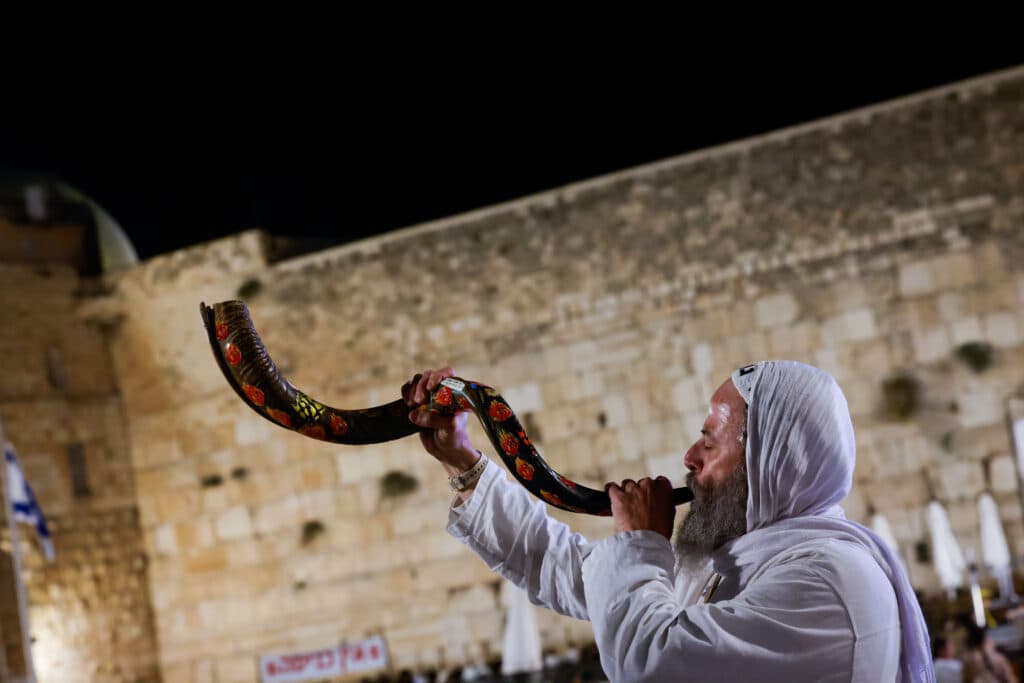
The shofar, a curved ram’s horn, produces three signature sounds: one long steady blast, a series of broken sighing notes, and a rapid burst of short cries. Jewish teaching calls it a spiritual alarm clock, jolting the soul awake before the year gets fully underway. There’s something almost physical about hearing it. It doesn’t ask you to think. It asks you to feel.
Tashlich: Letting Go by the Water
On the first afternoon, many walk to water, ideally water with fish in it, and recite prayers casting away their mistakes. The custom is even tied to the ancient story of Abraham walking through water on his way to bind Isaac. And the fish matter too. A fish’s eyes never close, a quiet reminder that God is always watching over His people. As one psalm puts it, “cast your burden upon the Lord, and He will sustain you” (Psalm 55:23).

Quick Questions and Answers
When is Rosh Hashanah in 2026? It begins at sundown on September 11 and ends after nightfall on September 13.
What does “shanah tovah” mean? It’s short for “L’shana tovah u’metukah,” a wish for a good and sweet year.
Why ask for both a “good” and “sweet” year? Jewish teaching holds that everything is ultimately good, even when it doesn’t look that way. Asking for “sweet” is asking that the good be obvious, not hidden.
I keep coming back to that shofar blast every year around this time. There’s something about a holiday built entirely on the idea that you get to start clean, forgiven, and fully seen, that stays with you long after the sound of the shofar fades. Shanah tovah.
Discussion0
No comments yet — be the first to share your thoughts.