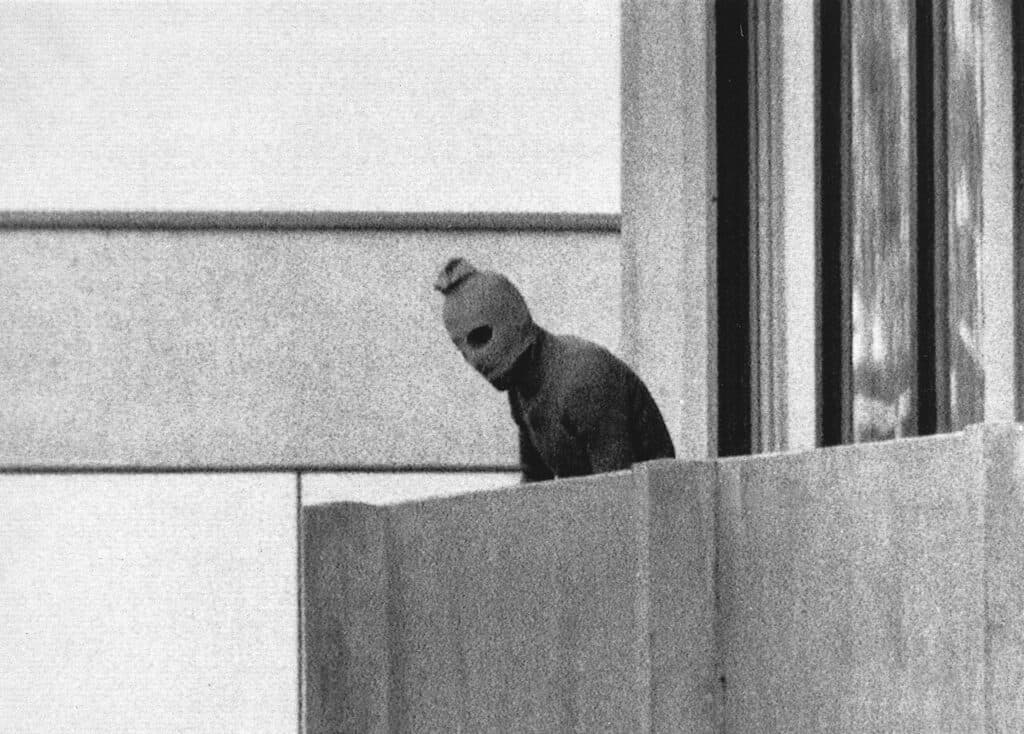

One of the most reproduced photos taken during the siege shows a kidnapper on the balcony attached to Munich Olympic village Building 31, where members of the Israeli Olympic team and delegation were held | Photo: Wikimedia
Takeaways:
- Eleven Israeli athletes went to Munich. They came home in coffins.
- Munich was the first massacre of Jews ever broadcast live to the world.
- The IOC waited 49 years for an official moment of silence.
- October 7 echoed Munich fifty-one years later, same hatred, same target.
- “Never again” is a daily choice, not a slogan.
The pictures from September 1972 are grainy now. A masked man on a balcony. A stopwatch running on live television for the first time in history while the whole world watched and did nothing.
Eleven Israeli athletes went to Munich to compete. They came home in coffins.
The Night the Olympic Village Went Dark
Just after 4 a.m. on September 5, 1972, eight gunmen from the terror group Black September climbed a fence into the Olympic Village. They knew exactly which apartments belonged to the Israeli team. Wrestling coach Moshe Weinberg and weightlifter Yossef Romano fought back and were shot where they stood. Nine more men were taken hostage: athletes, coaches, a referee, a judge.
The demands came fast. Release hundreds of Palestinian prisoners or the hostages die. German authorities staged a rescue at Fürstenfeldbruck airbase that collapsed into chaos. By midnight, every hostage was dead, killed by gunfire and grenades inside the helicopters meant to save them. September 5 is now noted in history as the Olympics’ darkest day.

Say Their Names
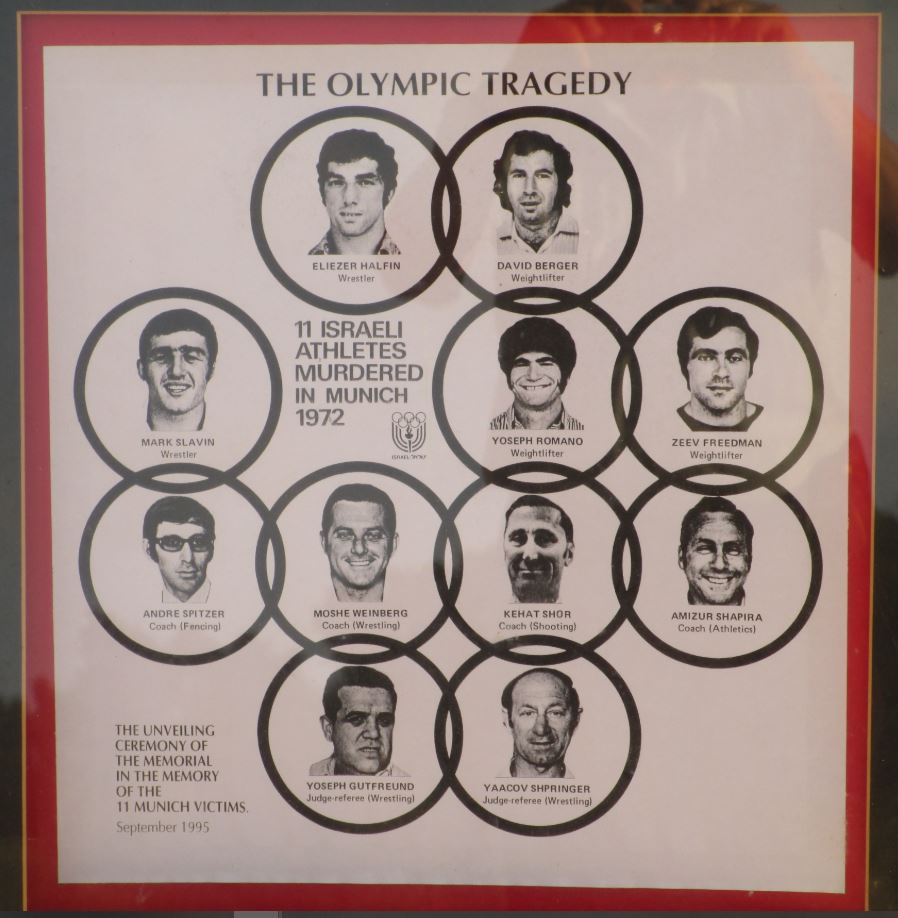
Moshe Weinberg. Yossef Romano. David Berger. Ze’ev Friedman. Eliezer Halfin. Yossef Gutfreund. Amitzur Shapira. Kehat Shorr. Mark Slavin. Andre Spitzer. Yakov Springer.
The youngest was 18. Mark Slavin had emigrated from the Soviet Union weeks earlier, chasing a dream of wrestling for Israel on the world’s biggest stage. He never got the chance.
Why This Story Belongs to All of Us
Munich was hatred with a plan, aimed at Jewish bodies simply because they were Jewish and wore the Star of David on their jerseys. That kind of hatred travels across decades and borders.
Scripture warned about a hatred that outlives generations. Remembering is a discipline, a refusal to let evil fade into a footnote.
Germany took decades to admit its security failures. The International Olympic Committee refused an official moment of silence for 49 years, finally holding one in 2021. Grief delayed that long has its own lesson: institutions protect their comfort long before they protect the truth.
From Munich to October 7
Anyone paying attention to Israel’s history sees the thread. Munich was the first massacre of Jews broadcast to a global audience. October 7, 2023, became the deadliest single day for Jews since the Holocaust. Different decades, same ideology, same target.
The people who murdered the Munich Eleven and the people who stormed the Nova festival and the kibbutzim near Gaza were separated by fifty-one years and united by the same conviction: that Jewish life in a Jewish homeland is somehow illegitimate.
What “Never Again” Actually Requires
“Never again” is a daily choice to see antisemitism clearly when it shows up disguised as politics, as protest, as commentary about a “conflict.”
It asks something of everyone who claims to stand with the God of Israel and the people He chose. Standing with Israel is a posture that shows up when the news cycle moves on and the hard questions remain.
The eleven men murdered in Munich were sons, husbands, coaches, competitors. They deserved to go home. Fifty-four years later, the least the world owes them is a memory that refuses to fade, and a resolve that finally means what it says. May their memory be a blessing.
Discussion0
No comments yet — be the first to share your thoughts.