Venezuelan Chief Rabbi Seeks Renewed Israel Relations
Venezuela’s Chief Rabbi Yitzhak Cohen conveyed a letter requesting diplomatic relations with Israel after Caracas thanked Israel for earthquake assistance

Venezuela Israel relations may be facing a possible opening after Rabbi Yitzhak Cohen, the Chief Rabbi of Venezuela, conveyed a letter of Venezuela, conveyed a letter requesting the establishment of diplomatic ties between Caracas and Jerusalem.
According to the report, Rabbi Cohen passed the letter through Venezuela’s Foreign Minister Felix Gonzalez. The letter was intended for President Delcy Rodriguez and called for diplomatic relations between Venezuela and Israel.
The meeting also included a notable message of gratitude. Foreign Minister Gonzalez thanked Israel for the assistance it provided to Venezuela after the earthquake disaster that struck the country. That detail gives the diplomatic request a deeper setting: before politics, there was rescue work, humanitarian aid, and Israeli personnel helping Venezuelans in a moment of crisis.
The Tanakh says, “Cast your bread upon the waters, for after many days you will find it.” The verse fits this story because acts of help can return later as trust, memory, and unexpected openings between nations.
A Human Opening After Disaster

Israel’s disaster assistance in Venezuela now appears to carry diplomatic weight beyond the immediate emergency. Humanitarian missions often begin with practical needs: search, rescue, engineering, medical care, and coordination on the ground. Yet the impact can outlast the crisis, especially when local officials and communities remember who came to help.
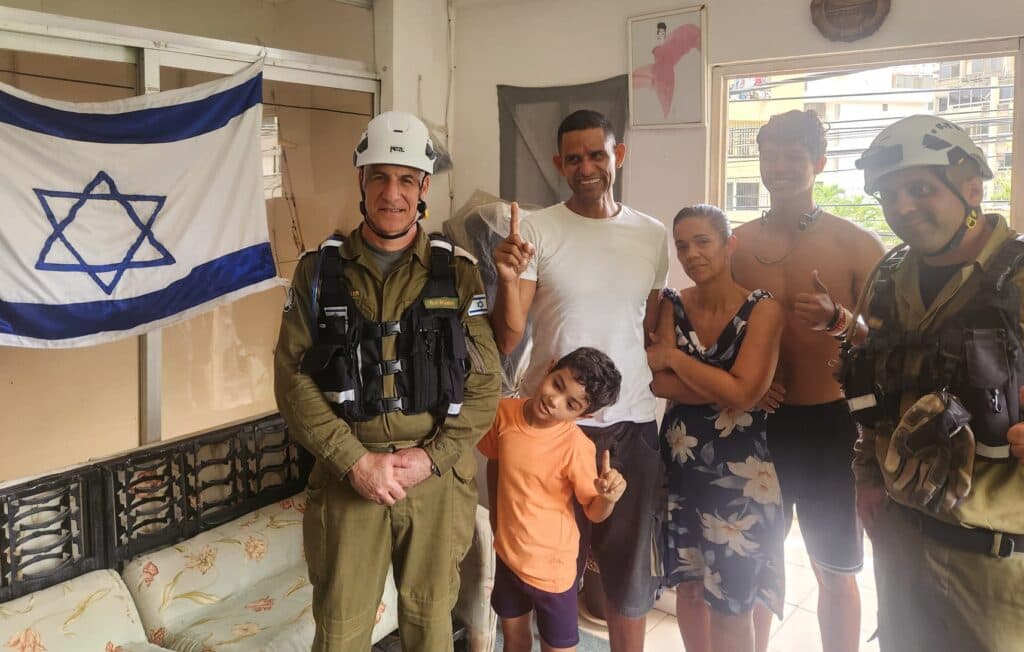
That backdrop gives new relevance to “Israeli Engineers Find Flag In Christian Home In Venezuela.” Israeli Home Front Command engineers helping in Venezuela were surprised to find a large Israeli flag hanging inside a Christian family’s home. The image of an Israeli flag inside a Venezuelan home already suggested that affection for Israel existed below the level of formal diplomacy. Rabbi Cohen’s letter now moves that feeling into the political arena.
For Israel, any possible warming with Venezuela would matter because diplomatic isolation has long been a tool used against the Jewish state. Every country willing to reopen a door weakens that campaign. In Latin America, where anti-Israel rhetoric has often found allies among left-wing governments, even a modest signal from Caracas would draw attention.
Why Washington Will Notice
The United States also has reason to watch this carefully. Venezuela sits inside America’s own hemisphere, and any shift in its foreign posture affects the broader map of regional diplomacy. If Caracas shows interest in renewed ties with Israel, Washington will read it not only as an Israel story, but also as a possible sign of changing calculations inside Venezuela’s leadership.
For the Trump administration and pro-Israel lawmakers, the issue carries strategic value. Israel’s humanitarian presence can open doors that raw diplomacy often cannot. A country that thanks Israel publicly after a disaster may become harder for anti-Israel blocs to pull back into automatic hostility.
None of this means relations are guaranteed. A request through the chief rabbi is not the same as a signed agreement. Still, the sequence matters: Israeli aid after tragedy, public gratitude from Venezuela’s foreign minister, and now a Jewish community leader asking for formal ties.
Covenant Of Help That Opens Doors
The United States and Israel each carry a covenantal responsibility before God in a distinct way. America’s covenantal tradition emphasizes liberty, moral leadership, and the use of strength to help nations in need. Israel’s covenant is ancient and unique, rooted in the God of Israel, Torah, Jewish peoplehood, sovereignty, and the return to the land.
This story brings those missions into the language of mercy and diplomacy. Israel did not help Venezuela because it first received diplomatic guarantees. It helped because Jewish sovereignty carries responsibility, and because the Jewish state often turns technical excellence into lifesaving action.
America understands that same principle in its own tradition: aid, rescue, and moral leadership can shape alliances more powerfully than pressure alone. If Venezuela moves even slightly closer to Israel after receiving Israeli assistance, it shows how acts of rescue can soften hardened political lines.
The possible warming between Venezuela and Israel remains uncertain. But the message is already clear: Israeli help was noticed, Jewish leadership in Venezuela is acting, and a door that seemed closed may now have a narrow opening.
For more stories on Israel, faith, and the values behind the headlines, follow Sinai on Facebook and Instagram.
Discussion0
No comments yet — be the first to share your thoughts.