Under God’s Hand: Israel and the US See Progress on All Fronts in Day Five of Roar and Fury
On the fifth day of Operations “Lion’s Roar” and “Epic Fury”, the campaign against Iran and its proxies unfolded across four arenas, Iran, Lebanon, the broader region, and the Israeli home front, in a relentless sequence that began before dawn and continued late into the night. The morning opened with widespread sirens across Israel, as

On the fifth day of Operations “Lion’s Roar” and “Epic Fury”, the campaign against Iran and its proxies unfolded across four arenas, Iran, Lebanon, the broader region, and the Israeli home front, in a relentless sequence that began before dawn and continued late into the night.
The morning opened with widespread sirens across Israel, as early alerts sent civilians into protected spaces. Within minutes, the Home Front Command announced that the immediate threat had passed, but the pattern for the day had been set: intermittent launches, aerial infiltrations, and rapid interceptions.
At the same time, the Israeli Air Force was already deep into operations over Iran. Overnight and into the early morning hours, the IDF completed its tenth wave of strikes against regime targets. Fighter jets struck missile storage and launch complexes in Isfahan, including facilities used to house and fire Qadr ballistic missiles. According to the IDF, numerous additional sites used for storing ballistic missiles and air defense systems were also hit, further expanding Israel’s aerial superiority over key regions of Iran.
🎯STRUCK: A large Iranian terror regime military compound in eastern Tehran.
Struck command centers in the compound include:
* The IRGC headquarters
* The Intelligence Directorate headquarters
* The ‘Basij’ headquarters
* The ‘Quds Force’ headquarters
* The Internal Security… pic.twitter.com/XBvXqks29R— Israel Defense Forces (@IDF) March 4, 2026
The International Atomic Energy Agency later confirmed damage to structures near the nuclear facility in Isfahan. Footage released by the IDF showed strikes on Iranian military assets, including an MI-17 combat helicopter and personnel operating air defense systems.
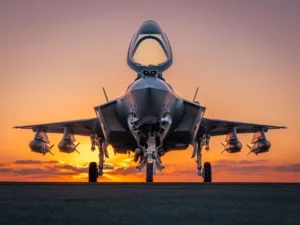
In a dramatic development, an Israeli “Adir” fighter jet shot down an Iranian warplane over Tehran’s skies, underscoring the degree to which Israeli and American forces now operate with freedom in Iranian airspace. It was the first time in the world that an F-35 has downed a manned enemy aircraft. It is also the first aerial kill by an Israeli fighter pilot since 1985.
Lebanon
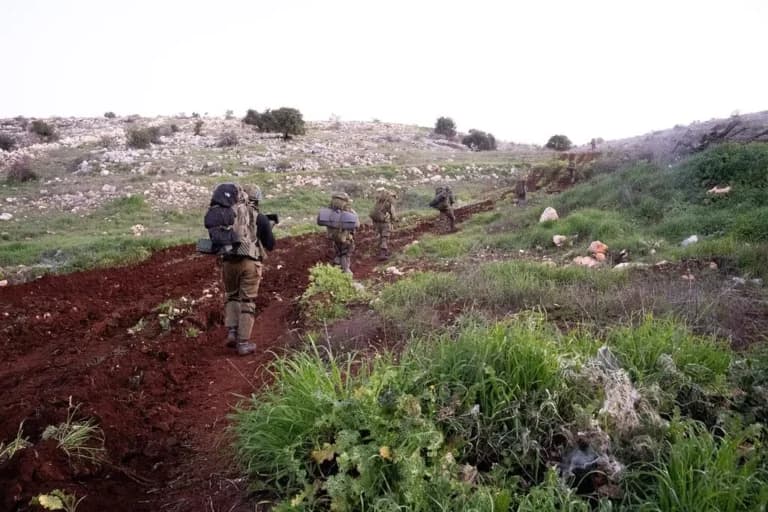
In Lebanon, the IDF simultaneously escalated pressure on Hezbollah. After issuing evacuation warnings in Arabic to residents of Beirut’s Dahieh district, Israeli forces struck Hezbollah infrastructure in the area. Additional ground footage showed Division 146 entering a defensive mission along the western Lebanese border, reinforcing Israel’s forward defense posture.
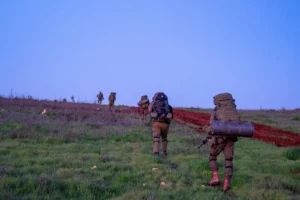
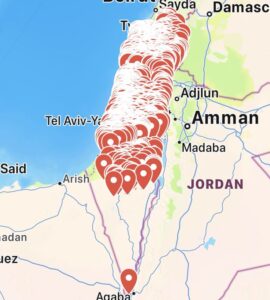
Northern Command chief Maj. Gen. Rafi Milo met with local leaders and declared that Hezbollah had made a “grave mistake” by joining the war. “We will not stop until it receives a very severe blow,” he said, adding that roughly 250 targets in Lebanon had already been struck and that operations would continue daily in Beirut, Tyre, and Sidon.
BREAKING: IDF Spokesperson:
“The IDF attacked a terrorist from the Hezbollah terror organization in the Beirut area, more details to follow.” pic.twitter.com/PjO50KqW9M
— World Source News (@Worldsource24) March 4, 2026
Impact on the Region
As the morning progressed, the regional dimension of the conflict widened. Qatar reported that Iran had launched ten drones and two ballistic missiles toward its territory, all intercepted. Turkey’s Defense Ministry said a ballistic missile fired by Iran toward Turkey had been intercepted by NATO forces. Reuters reported renewed attacks on Saudi Aramco facilities. Iraqi sources claimed that pro-Iranian militias launched drones toward Jordan and that a U.S. base near Baghdad’s international airport had come under drone attack.
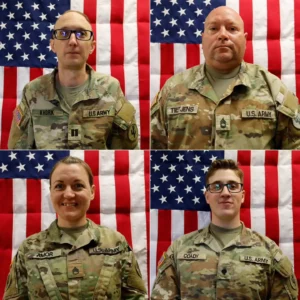
In Washington, the Pentagon released the names of four additional American reservists killed in recent Iranian strikes. The fallen service members were identified as Capt. Cody Khork, 35, of Winter Haven, Florida; Sgt. 1st Class Nicole Amor, 39, of White Bear Lake, Minnesota; Sgt. Declan Coady, 20, of West Des Moines, lowa; and Sgt. 1st Class Noah Tietjens, 42, of Bellevue, Nebraska.
Shortly afterward, the commander of U.S. Central Command stated that in fewer than 100 hours since the start of the operation, American forces had struck nearly 2,000 targets with more than 2,000 munitions. He said Iran’s air defenses had been severely degraded, hundreds of ballistic missile launchers and drones destroyed, and seventeen Iranian vessels, along with a submarine, sunk. According to his remarks, no Iranian naval vessel now poses a threat to shipping in the Gulf.
The U.S. Air Force continues to execute a high volume of airstrikes into Iran. The two most powerful air forces in the world (🇺🇸+🇮🇱) are dominating the skies over the world’s largest state sponsor of terror. pic.twitter.com/0nfwY3zdCL
— U.S. Central Command (@CENTCOM) March 4, 2026
The Home Front
Back in Israel, the home front remained under intermittent fire throughout the afternoon. Sirens sounded repeatedly in the north, in the Galilee, along the Lebanese border, and later in central Israel and Jerusalem.
Several launches from Lebanon were intercepted, while additional projectiles were identified from Iran. In some cases, debris or impacts were reported in areas including Jerusalem and the Carmel region, though no casualties were reported. Two Israeli soldiers were moderately wounded in southern Lebanon, apparently by anti-tank fire.
In Tehran, local footage showed multiple explosions as Israel launched additional waves of strikes. During the tenth wave, Israeli aircraft destroyed air defense systems at Mehrabad Airport in the Iranian capital. By late afternoon and into the evening, reports described further explosions across Tehran, as the IDF continued to target regime infrastructure.
Hezbollah positions in southern Lebanon also came under renewed attack, even as additional evacuation alerts were distributed in Beirut’s Dahieh district ahead of more strikes.
As the day moved into evening, sirens once again sounded across northern Israel following hostile aircraft infiltrations and additional launches. The Home Front Command repeatedly updated guidance, at times permitting civilians to leave shelters while instructing them to remain in close proximity to protected spaces.
On the diplomatic front, Qatar accused Iran of escalating the conflict after missiles struck civilian areas despite Iranian claims that they were aimed at American interests. Meanwhile, the White House press secretary sharply criticized the Obama-era nuclear agreement with Iran, calling it naive and asserting that future generations would view this moment as the point at which the threat of a nuclear Iran was erased.
God is Our Fortress
By nightfall, the picture was clear: Israel had expanded its aerial dominance over Iran, struck critical missile and defense infrastructure, and deepened its campaign against Hezbollah in Lebanon. The United States, operating in parallel, reported sweeping successes across air and maritime domains. For Israeli civilians, the rhythm of the day was measured in sirens, shelter doors, and cautious returns to routine, as the war pressed into its fifth night.
As the troops in the field and the civilians on the home front give the battle their all, God watches from Above:
The Lord of Hosts is with us; the God of Jacob is our fortress forever.
Go and see the works of the Lord, that He has wrought devastation in the earth.
He puts a stop to wars until the end of the earth; He will break the bow and cut the spear [to pieces]; wagons He will burn with fire.
Desist, and know that I am God; I will be exalted among the nations, I will be exalted upon the earth.
The Lord of Hosts is with us; the God of Jacob is our fortress forever.
(Psalms 46:8-12)
Discussion0
No comments yet — be the first to share your thoughts.