Turkish Defense Ministry Denies Abu Al-Duhur Delegation
Turkey denied that a military delegation was present at Abu al-Duhur during Israel’s strike and said it will keep supporting Syria’s military rebuilding

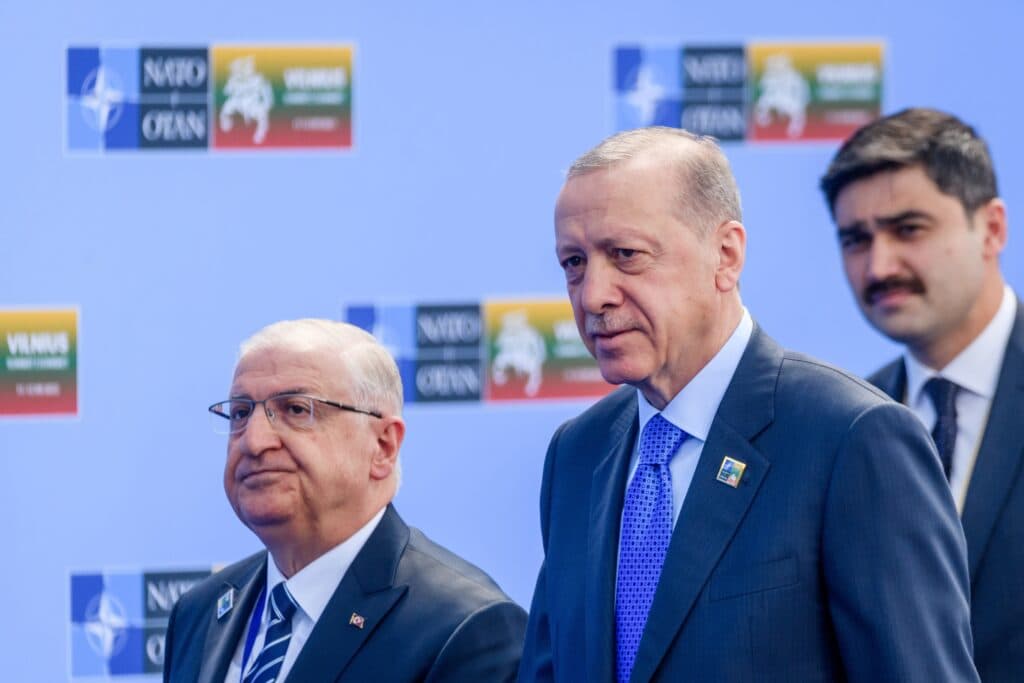
The Turkish Defense Ministry denied that any Turkish military delegation was present at Syria’s Abu al-Duhur Air Force base before or during the Israeli strike on the site.
“We declare that there was no Turkish military delegation at the Abu al-Thuhur Air Force base in Syria before or during the Israeli strike on the base,” the ministry said.
The statement came after Israel said Syria was close to violating a security status quo by allowing Turkish forces to deploy at an airbase near Aleppo. Turkey rejected that claim and again condemned Israel’s military action in Syria.
Proverbs says, “He that pleadeth his cause first seemeth just, but his neighbor cometh and searcheth him.” That warning fits a dispute where Israel, Turkey, and Syria are presenting sharply different versions of the same military event. The facts matter because the stakes involve borders, airpower, and the future of Syria’s armed forces.
Turkish Defense Ministry Denial
The Turkish Defense Ministry said Israel must stop what it called “reckless attacks” for the sake of Syria’s peace and stability, as well as the stability of the wider region.
The ministry also said Israel should comply with international law. Ankara has repeatedly described Israeli strikes in Syria as violations of Syrian sovereignty.
Israel sees the same theater differently. Jerusalem argues that hostile military infrastructure in Syria can threaten Israeli security before it becomes visible to the wider world. The question at Abu al-Duhur is whether Turkish-backed military activity was moving toward a line Israel had already warned against.
The denial from Ankara therefore does not end the dispute. It sharpens it. Turkey says no delegation was present. Israel says Syria was about to allow a Turkish deployment that could threaten Israel’s security.
One Army Principle
Turkey also said it will continue supporting Syria as Damascus works to build its military infrastructure and capability under the “One Army” principle.
That phrase matters. In simple terms, Turkey is presenting its role as support for a unified Syrian military, not a separate Turkish military project. Ankara wants to frame its cooperation with Damascus as part of Syria’s reconstruction and stabilization.

For Israel, however, the concern is not only what Turkey calls the project. The concern is what capabilities, airbases, weapons, training, and personnel may eventually create on the ground.
The exchange follows “Israel-Syria Status Quo Dispute Draws Turkish Response.” That article reported that Israel said Syria nearly breached a security status quo by allowing Turkish forces near Aleppo, while Turkey rejected the claim and condemned the strikes.
Now the argument has moved from the strike itself to the facts around the base. Was Turkey building a presence there, or only supporting Syria’s broader military rebuilding? That question could shape the next stage of Israel-Turkey tension in Syria.
Covenant Of Watchfulness And Order
The United States and Israel carry separate covenantal missions before God, and both have reason to watch this dispute closely. America’s role is to prevent Syria from becoming the next arena of open conflict between two powerful regional actors. Turkey is a NATO member, and Israel remains Washington’s closest ally in the region.
Israel’s covenantal burden is more immediate. The Jewish state must defend its people when new military structures form near its borders, even when other countries describe those structures as stabilizing.
That is why Abu al-Duhur matters beyond one runway. It has become a test of trust, deterrence, and competing visions for postwar Syria. Turkey says it is helping Syria build one national army. Israel says it will not accept new threats to its security frontier.
For now, the Turkish Defense Ministry has denied the presence of a delegation and pledged continued support for Syria’s military rebuilding. Israel’s warning remains in place. Syria sits between them, and Washington will likely face growing pressure to manage the space before one strike becomes a wider crisis.
For more stories on Israel, faith, and the values behind the headlines, follow Sinai on Facebook and Instagram.
Discussion0
No comments yet — be the first to share your thoughts.