
Jewish Power Disqualification Bid Tests Election Limits
The Democrats seek to disqualify Jewish Power over racism and rule-of-law claims, while Ben-Gvir’s party has filed a counter-petition against its opponents

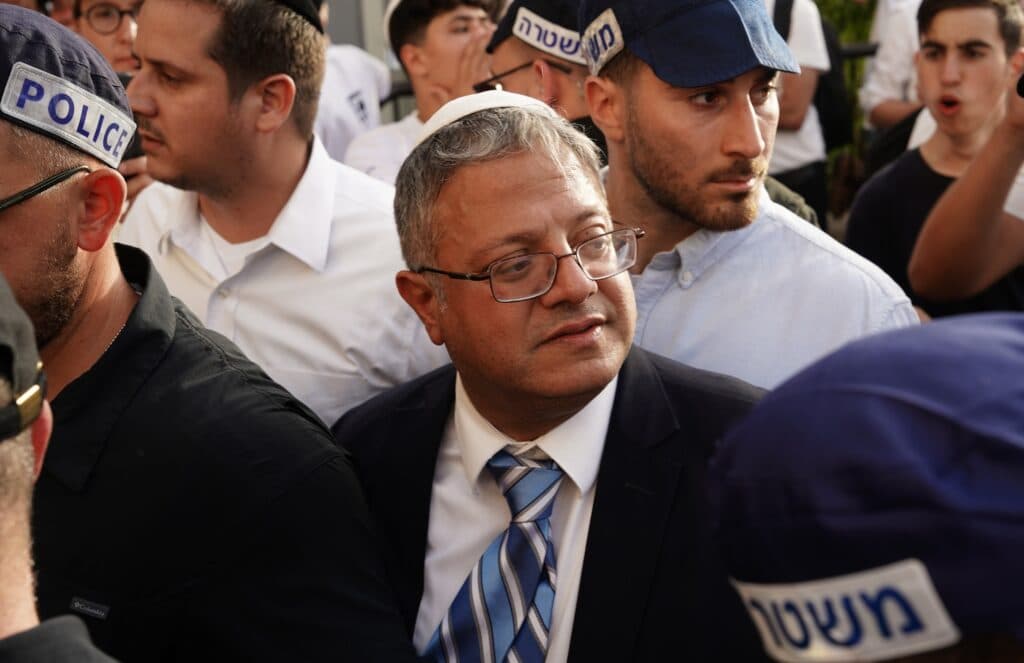
A Jewish Power disqualification request has placed one of Israel’s most divisive political parties at the center of a new election battle. The opposition Democrats party asked the Central Elections Committee to bar Itamar Ben-Gvir’s Jewish Power, or Otzma Yehudit, from the October 27 election. The petition accuses the party of inciting racism and undermining Israel’s democratic institutions.
The Democrats argue that Jewish Power lawmakers have moved beyond ideology and used political authority to challenge court orders and the Supreme Court. Their petition also focuses heavily on Ben-Gvir’s conduct as national security minister. Ben-Gvir rejected the effort, while Jewish Power later filed its own petition seeking to disqualify the Democrats.
Deuteronomy 16:20 commands, “Justice, justice shalt thou pursue.” The repetition matters here. Justice cannot depend on whether the accused sits on the right or left, and democratic safeguards lose credibility when they become tools used only against political opponents.
Jewish Power Disqualification Has a High Legal Bar
Israeli law does allow parties and candidates to be barred from Knesset elections in exceptional circumstances. Section 7A of Basic Law: The Knesset includes incitement to racism, rejection of Israel as a Jewish and democratic state, and support for armed struggle against Israel among the grounds for disqualification. Israeli courts have historically interpreted those powers narrowly because excluding a party also restricts citizens’ right to vote for it.
The Democrats’ concerns cannot simply be dismissed as partisan hostility. Ben-Gvir was convicted in 2007 of incitement to racism and supporting a terrorist organization. He has also described himself as a disciple of Rabbi Meir Kahane, whose Kach movement was barred from the Knesset. Those facts explain why Jewish Power repeatedly faces scrutiny that most Israeli parties do not.
At the same time, disqualification is an extraordinary remedy. A democracy that removes parties too easily risks allowing election committees and courts to decide political contests that voters would normally settle themselves. That concern becomes stronger when rival parties begin filing reciprocal petitions against one another.
Hard-Line Politics on Both Sides
The dispute became more complicated when Jewish Power responded with a petition against the Democrats. It accused Yair Golan’s party of racism and rejecting Israel’s Jewish and democratic character, citing rhetoric directed at settlers and Haredim. The competing petitions are not legally identical, and the evidence behind each must be judged separately.

Yet they expose two different forms of political excess. On the right, rhetoric that sometimes treats whole populations as enemies or weakens respect for lawful institutions can damage the Jewish state it claims to defend. On the left, using disqualification proceedings too readily against ideological opponents can create its own dangerous precedent, especially when voters remain capable of rejecting those parties at the ballot box.
That does not require pretending every accusation is equal. Israel can recognize serious concerns about Kahanist ideology while also demanding a very high standard before millions of voters lose a political choice. Democracy requires both limits on genuine extremism and restraint in deciding when those limits have actually been crossed.
Ben-Gvir’s confrontational style has surfaced well beyond this election case. In “Ben-Gvir: Recognize Falkland Islands as Argentine Territory,” he urged Israel to recognize Argentina’s Falkland Islands claim and sanction Britain after London targeted Israeli communities in Judea and Samaria. The episode reflected the combative politics that appeal to his supporters while reinforcing critics’ concerns about escalation.
A Jewish State Strong Enough for Disagreement
Israel and the United States share a covenantal political tradition built around liberty under law. Both societies allow fierce disagreement because national strength does not require ideological uniformity. At the same time, neither tradition treats racism, political violence or contempt for constitutional restraints as harmless.
For Israel, that balance carries an additional responsibility. A Jewish state should defend its Jewish character without treating Arab citizens as inherently disloyal. It should also preserve democratic competition without allowing parties to place themselves permanently above the courts and laws governing everyone else.
The answer to political extremism cannot simply become extremism in the opposite direction. Jewish Power should be judged by the same legal standards applied to every other party. Its opponents should likewise resist turning exceptional disqualification powers into routine campaign weapons.
The Jewish Power disqualification fight therefore tests more than Ben-Gvir’s political future. It asks whether Israel can confront genuine extremism while preserving the democratic restraint that distinguishes a confident state from one afraid of its own voters. The principle in Deuteronomy remains demanding precisely because justice must remain justice even when applied to people we strongly oppose.
For more stories on Israel, faith, and the values behind the headlines, follow Sinai on Facebook and Instagram.
Discussion0
No comments yet — be the first to share your thoughts.