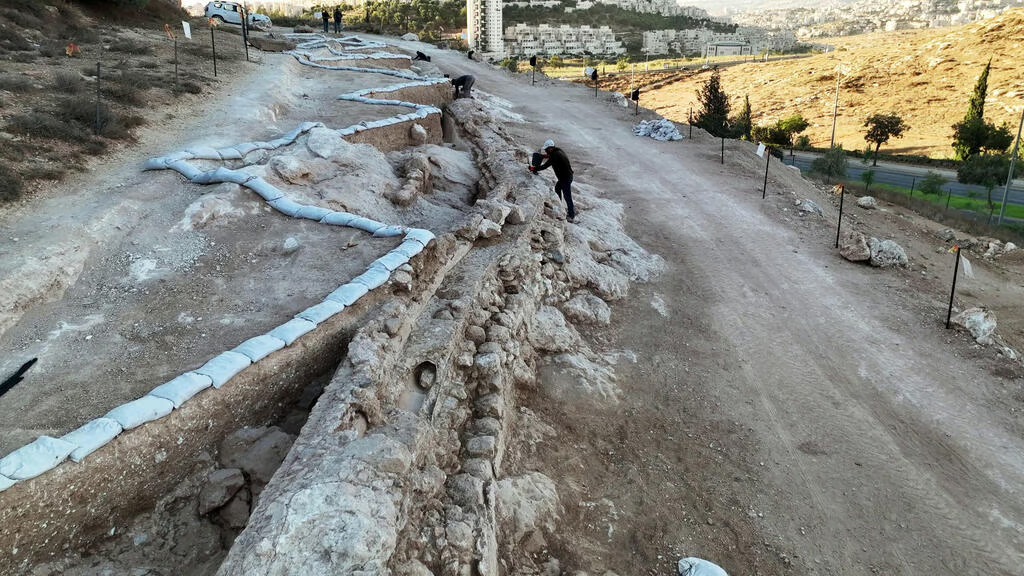
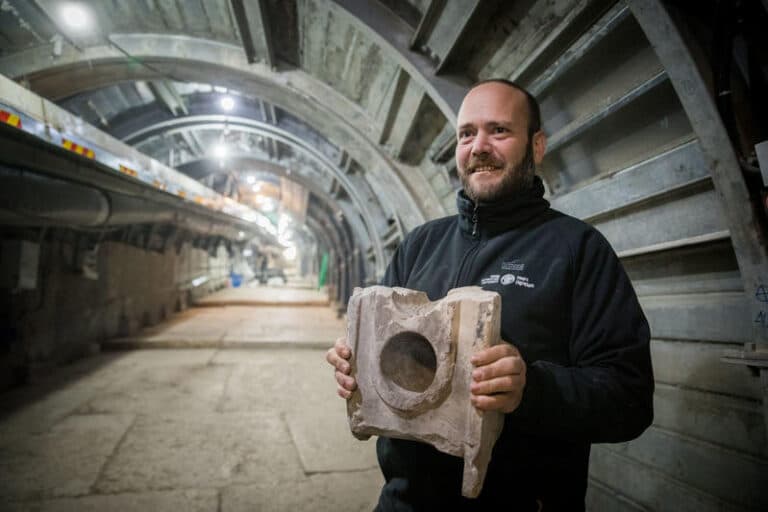

Israel Antiquities Authority Archaeologist Ari Levi holds a 2000-year-old measuring table found at the Pilgrimage Road at the City of David, in the East Jerusalem neighborhood of Silwan, on January 6, 2020 | Photo: Yonatan Sindel/Flash90
Takeaways
- A 2,000-year-old stone road in Jerusalem just fully opened to the public in 2026.
- The Pilgrimage Road connects the Pool of Siloam to the Temple Mount.
- Pontius Pilate paved the road, built on the foundations Herod the Great laid.
- Archaeologists found silver coins, jewelry, and a “trumpeting” inscription along the route.
- Visitors today can retrace the exact steps ancient Jewish pilgrims once climbed.
Descending Into the Silence
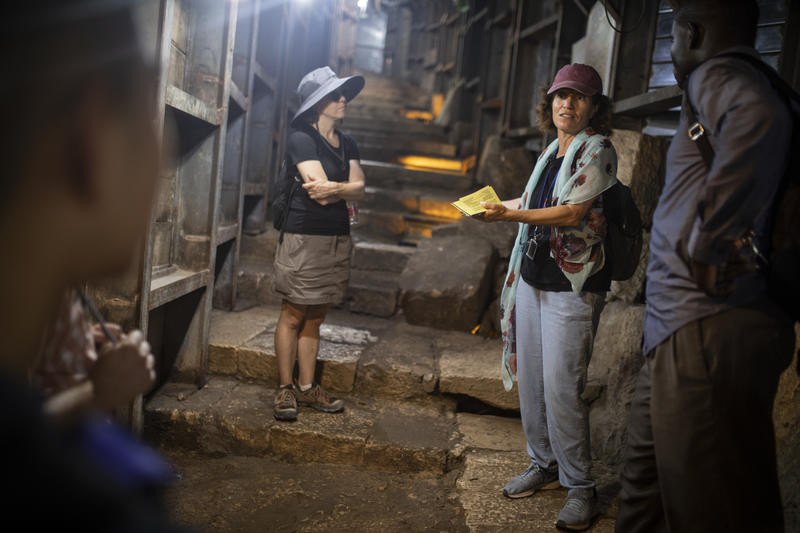
I remember the exact moment the tunnel went quiet beneath the Old City this year. My guide stopped talking, and for a few seconds there was nothing but the sound of my own footsteps on stone. Massive limestone slabs stretched ahead of me, worn smooth by feet that walked this same path two thousand years earlier. I had read about the Pilgrimage Road for years. Standing on it felt different entirely.
Discovered by Accident
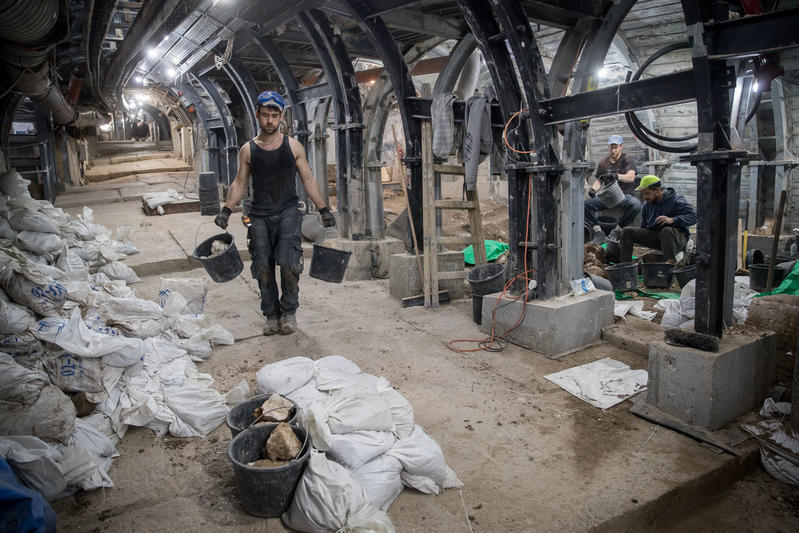
The road first surfaced in 2004, when a burst sewage pipe in Jerusalem’s Silwan neighborhood exposed a set of large, precisely cut steps. Archaeologists with the Israel Antiquities Authority recognized the stones immediately, since they matched the Southern Steps near the Western Wall. Ari Levy, director of excavations at the site for the IAA, has overseen much of the dig, which relies on a system of pulleys to haul dirt up from underground so it can be sifted by hand. That patient process turned up silver coins that pilgrims once brought as Temple donations, along with ancient cookware and jewelry, small traces of the people who actually walked here.
A City Built by Romans and Jews Alike
Levy describes the Jerusalem this road belonged to in simple terms. “It was a Jewish city and a Roman city,” he said, a city with a large, thriving population living under Roman rule while still centered on the Temple. The construction itself began under Herod the Great, the Roman client king of Judea whose building projects reshaped the city, including a major renovation of the Second Temple. After Herod’s death, Roman prefects kept building. Levy attributes the actual paving of the Pilgrimage Road to the infamous governor Pontius Pilate, who connected Mount Zion and the City of David directly to the Temple and the rest of ancient Jerusalem in the early first century CE.
A Street Built for Multitudes
The stones tell you who this road was built for. It runs between 8 and 30 meters wide in places, wide enough to carry the crowds that filled Jerusalem three times a year for Passover, Shavuot, and Sukkot. Coins minted under Pilate’s governorship turned up beneath the pavement, confirming the dating. Merchants’ weights and oil lamps line the route too, evidence of stalls and daily commerce running alongside the sacred procession above. Archaeologists have also found a replica of a stone inscribed in ancient Hebrew, reading “to the place of trumpeting,” believed to mark the spot on the Temple Mount where a priest once stood to announce the start of the Sabbath.
2026 Grand Opening to Tourists
A partial section was first unveiled to dignitaries back in June 2019. The fully uncovered route, however, only opened to everyday visitors in late January 2026, connecting the Pool of Siloam all the way to the southern end of the Western Wall at the foot of the Temple Mount for the first time since antiquity. City of David officials say visitor numbers have climbed steadily since the opening, and tour guides describe leading groups who walk the incline slowly, some carrying a Hebrew Bible, some simply quiet. The design itself encourages that pace: two shallow steps, a landing, two more steps, another landing, a rhythm meant to slow a pilgrim down before reaching holy ground.
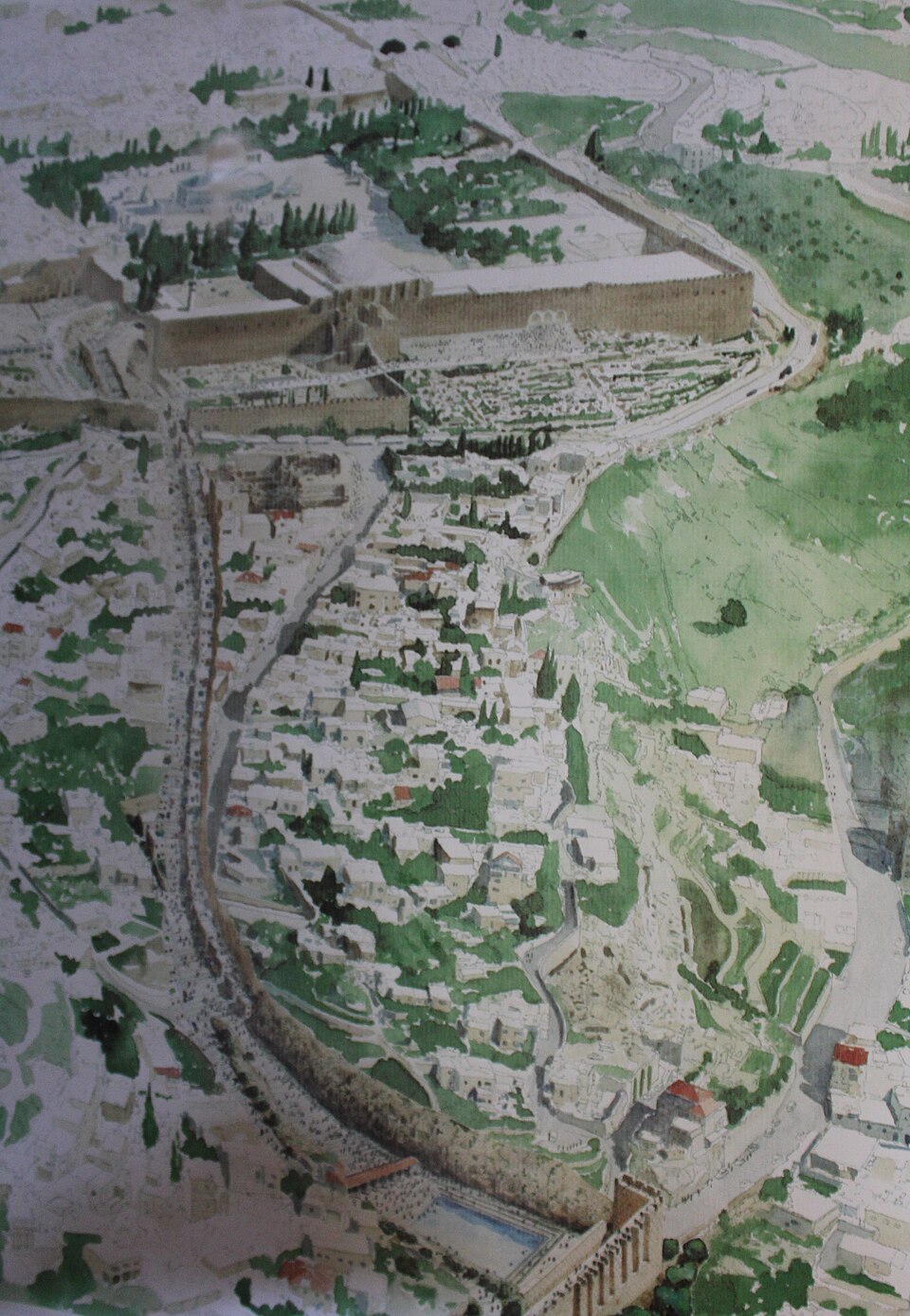
Before the ascent, worshippers immersed in the Pool of Silwan, a ritual bath at the base of the valley. From there they climbed, step by step, toward the Temple. King David captured that same anticipation long before the stones were ever cut: “I rejoiced when they said to me, let us go to the house of God” (Psalm 122:1). Walking the road today, that verse feels like a description of an actual physical experience you can retrace with your own feet.
Stones That Still Speak
By the time I reached the top of the incline, my legs were tired and my mind was somewhere else entirely. I thought about the merchants who once sold their goods along this street, the families who bathed in the pool below before their climb, the coins dropped and lost beneath two thousand years of rubble. None of that history stayed buried. It waited, patiently, under a modern city that never stopped being built on top of it.
Jerusalem has a way of doing that. It keeps its oldest stories close to the surface, ready to resurface the moment someone starts digging, or the moment a pipe happens to burst in the right place at the right time.
Discussion0
No comments yet — be the first to share your thoughts.