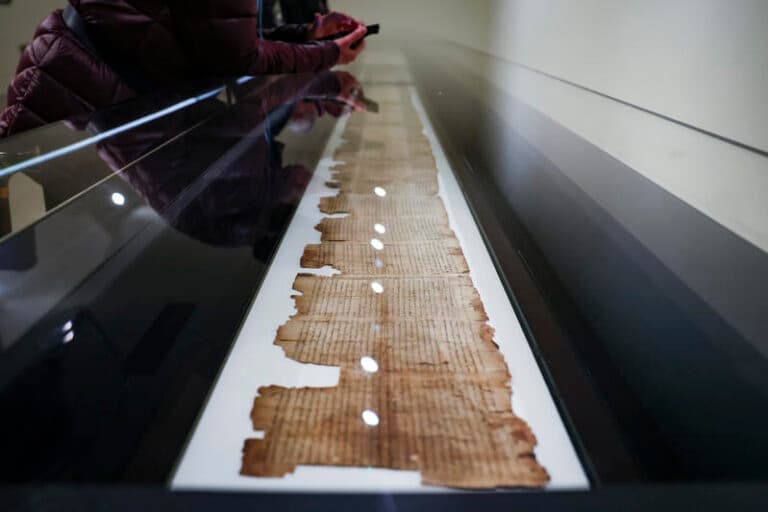

The Isaiah Scroll, the oldest known biblical manuscript, on display at the Israel Museum in Jerusalem, February 26, 2026 | Photo: Flash90
Takeaways:
- The scrolls are nearly 2,000 years old.
- They still match the Hebrew Bible read today.
- Ancient Jewish life was full of arguments.
- Israel sits at the center of the whole story.
- Fringe groups vanished. The tradition survived.
A shepherd boy lost a goat in 1947. He threw a rock into a cave to chase it out. Instead of a goat, he found history in a jar. That jar held some of the oldest Hebrew scripture on earth. Scholars call the discovery the Dead Sea Scrolls. Most people know the headline. Few know what the scrolls actually prove.
What the Dead Sea Scrolls Actually Are
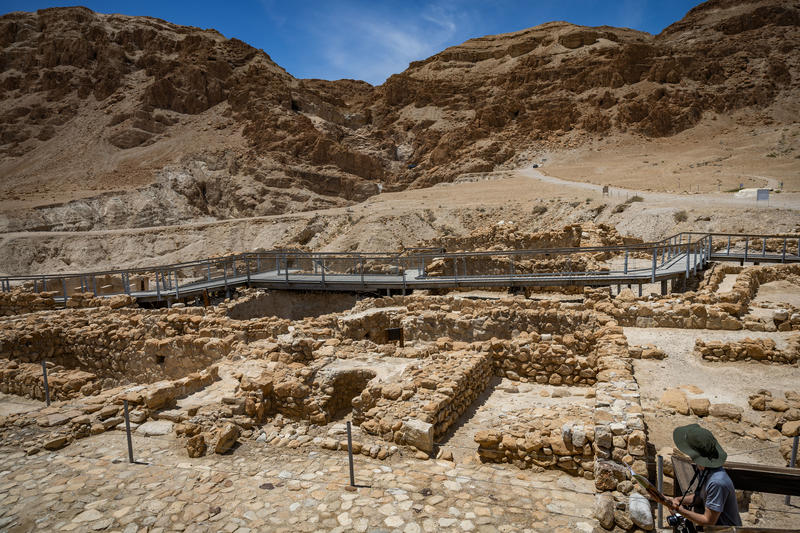
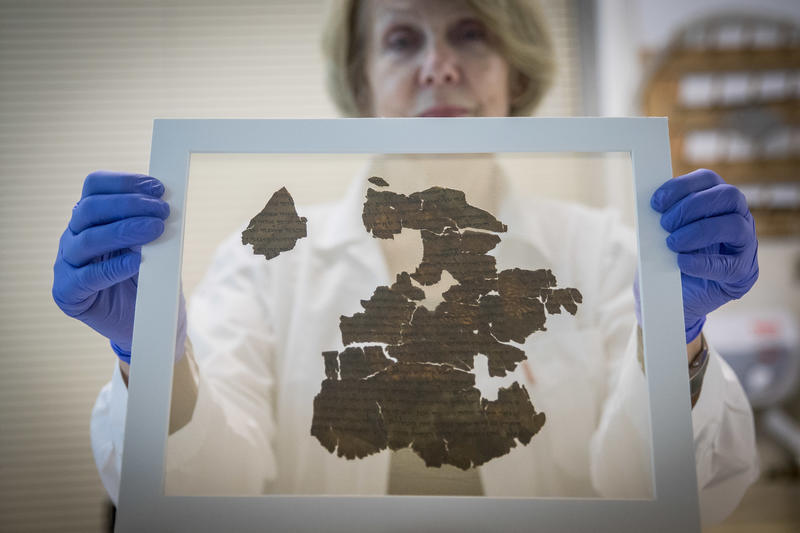
Between 1947 and 1956, roughly 900 manuscripts turned up. They came from eleven caves near Qumran, right by the Dead Sea. Some scrolls hold full books of the Hebrew Bible. Others hold community rules, hymns, and commentary. This was the Second Temple period. The Temple stood in Jerusalem until Rome destroyed it in 70 CE.
Bedouin shepherds found the first jars. Archaeologists spent the next decade tracking down the rest, cave by cave, fragment by fragment.
A Messier, More Interesting Ancient Israel
The Qumran community kept its own calendar. Its own purity laws. Its own reading of scripture. That means ancient Jewish life was never one single script. People argued over the calendar, over Temple practice, over what counted as clean.
Sound familiar? People have always argued about how to practice faith properly. The scrolls just preserve one side of a very old debate.
The Bible That Barely Budged
Before Qumran, the oldest complete Hebrew Bible copies dated to the 10th century. The scrolls pushed that back a thousand years. Compare a scroll of Isaiah to a medieval copy. The words match. The structure matches. Only small spelling differences show up.
That kind of consistency is rare for a text copied by hand across a thousand years.
📖 Read this article about 3 must-see Biblical sites in Israel.
Why Israel Keeps Coming Up
Every cave. Every jar. Every scroll. All of it traces back to one small stretch of land by the Dead Sea.
These texts were not scattered across the ancient world. They were written in Israel, by people living in Israel, arguing about laws tied to life in Israel. That geography is the whole point. It ties Jewish identity, scripture, and land together long before any modern argument about who belongs where.
How Jewish Tradition Reads the Scrolls
Jewish tradition never treated Qumran as some secret alternative faith. It was one voice among several. Most of those voices faded.
The tradition that survived is the one still practiced today. The scrolls actually back this up. They show how carefully that tradition guarded its own texts across the centuries.
So What’s the Real Takeaway
A lost goat led to one of the biggest archaeological finds of the last century. What it revealed was a Jewish world already ancient. Already arguing. Already tied to the land of Israel. Two thousand years later, people are still reading the exact same words.
A goat wandered off. A shepherd threw a rock. And a jar in a quiet cave ended up confirming something Israel had known all along.
Want to keep reading? Find out why so many Jews are buried on the Mount of Olives. Explore more on faith, values, and the Land of Israel at Sinai Project.
Discussion0
No comments yet — be the first to share your thoughts.