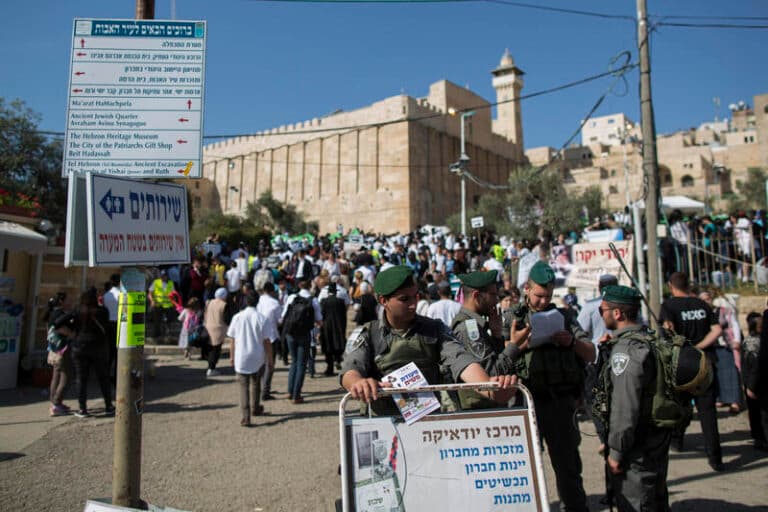

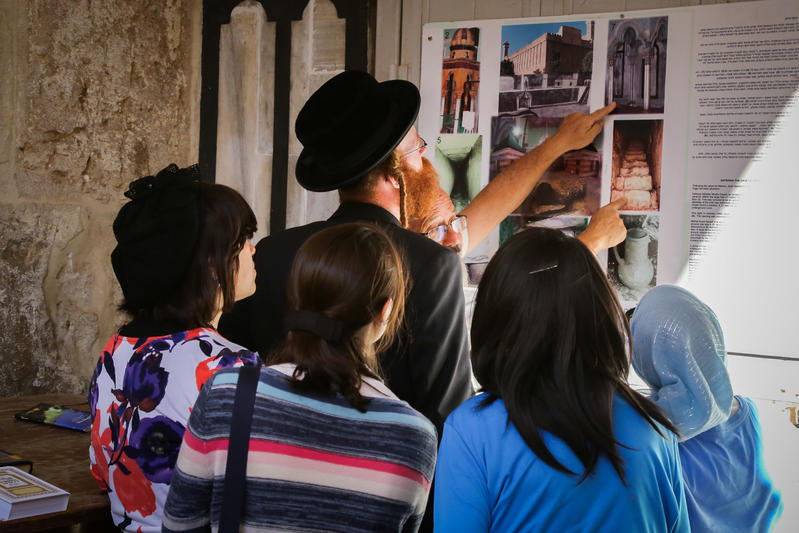
Hundreds of Jews arrive to Hebron to pray at the Cave of the Patriarch, during the Jewish holiday of Passover | Photo: Yonatan Sindel/Flash90
Takeaways
- Hebron holds the first recorded land purchase in the entire Bible.
- The Cave of the Patriarchs is believed to hold up to six biblical figures, possibly more.
- Thousands gather in Hebron every year for a tradition called Shabbat Chayei Sarah.
- Jewish tradition says Esau’s head is buried at the site.
- Hebron is a living city with prayer, family, and daily life happening right on top of ancient history.
Imagine standing in the exact spot where Abraham buried Sarah. The actual cave, the same stone walls, still standing, still visited, still prayed at today. Every autumn, thousands of people travel to that small, rocky city south of Jerusalem to read the story of Abraham’s purchase out loud, right where Genesis says it happened. That’s Hebron. And by the end of this article, you’ll understand why that scene gives me chills every single time.
The First Real Estate Deal in the Bible
Genesis tells us that Abraham bought a burial plot for his wife Sarah in a place called Machpelah. He paid full price, in front of witnesses, for a cave and the field around it. Genesis records the negotiation in detail, down to the silver weighed out and the exact wording of the deed.
That’s exactly why Jewish tradition treats it as the first documented claim to the land of Israel.
That detail matters more than it seems. The Jewish connection to this land didn’t start with modern politics or even with the kingdom of David. It started with a receipt.
What Stands There Today
The structure over the cave nowadays is enormous. It rises like a fortress over Hebron’s old city, built from massive stone blocks that have stood for thousands of years, with additions layered on top by different rulers across history. Walking up to it feels less like visiting a museum and more like walking into a working synagogue that happens to be a few thousand years old.
People pray there right now, this week, same as they did last week. The city around it has neighborhoods, shops, and a small but determined Jewish community living where the story of Genesis actually unfolded.
📖 It wasn’t just great men of the Bible who perpetuated faith, courage, and wisdom. Read here to learn about the extraordinary Matriarchs buried in Hebron.
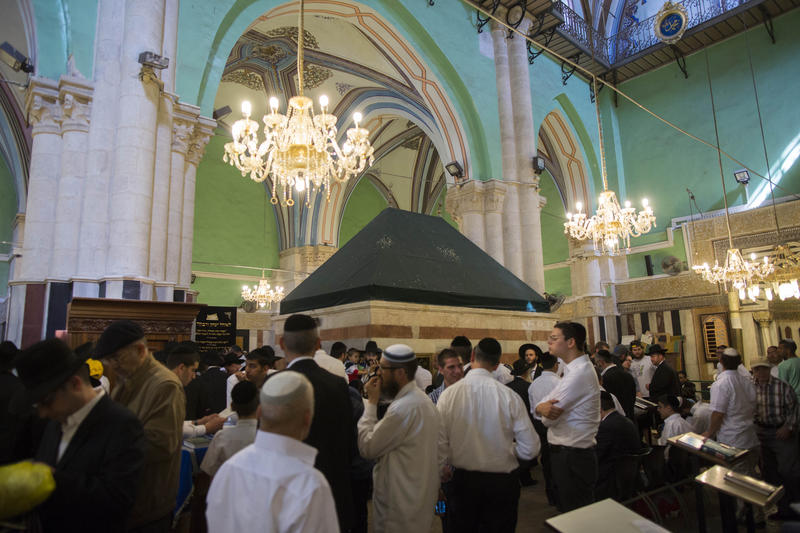
Six Graves (and Maybe a Seventh and Eighth)
Jewish tradition holds that the cave contains three couples: Abraham and Sarah, Isaac and Rebekah, and Jacob and Leah. Some traditions go further and connect the site to Adam and Eve, adding an even older layer to an already ancient place.
Trivia point: Jewish tradition also holds that Esau’s severed head is buried at the site, tied to a dramatic tradition account of a dispute at Jacob’s burial. It’s one of the stranger threads woven into Hebron’s history, and it tells you how much layered meaning this small plot of land carries.
The Day the Bible Comes Alive
Once a year, during the Torah portion called Chayei Sarah, Hebron fills with visitors for a gathering that Jewish sources describe as one of the most moving events on the calendar. Thousands travel there specifically to read the account of Abraham’s purchase, at the very cave where it happened.
It’s rare to get a moment where text, geography, and memory line up this perfectly. Most biblical events are tied to places we can only imagine. This one, you can actually stand in.
Rootedness, Not Sentiment
In Jewish thought, Hebron represents more than ancestry. It’s tied to hospitality, memory, and the belief that biblical history isn’t something to admire from a distance. In Hebron, history and the Bible are most definitely alive.
Trivia point: Jewish sources describe the cave as one of the most significant pieces of real estate on earth, precisely because of what it represents rather than its size. That’s a striking way to think about a walled stone structure in a small city.
A City Still Living Its History
So picture that cave again. The one Abraham walked into to bury Sarah, nearly 4,000 years ago, silver counted out, deed witnessed, grief and faith bound together in one transaction.
Jewish sources have never treated that moment as ancient history filed away and forgotten. They treat it as an open account, still being paid into, which is why Hebron never became a ruin left to archaeologists.
Instead, it became a home people kept returning to, generation after generation. Jews visit the cave every single day of the year, with buses and crowds and tourists building especially during the three pilgrimage festivals: Pesach, Sukkot, and Shavuot.
Hebron then and now is one continuous story, still being told from inside the very walls where it began.
Want to keep reading? Click here for a fascinating article on why Jerusalem’s Temple Mount is the considered the holiest place on earth. Explore more on faith, values, and the Land of Israel at Sinai Project.
Discussion0
No comments yet — be the first to share your thoughts.