Syrian President Says Agreement With Israel Could Lead To Peace
Syrian President Ahmed al-Sharaa said Syria is working toward a security agreement with Israel and supports exclusive Lebanese state control over weapons

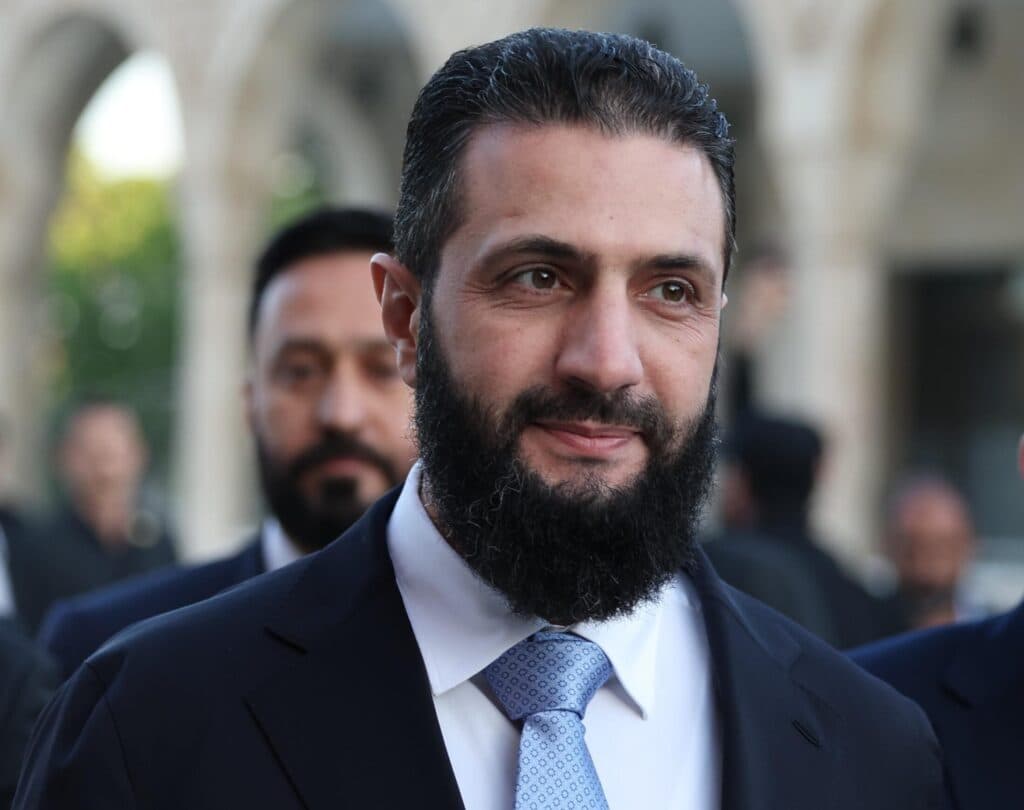
Syrian President Ahmed al-Sharaa said Syria is working to reach a security agreement with Israel, a statement that could carry major consequences for Israel, Lebanon, the United States, and the wider region.
In an interview with Al Jazeera, al-Sharaa said Syria has no intention of intervening militarily in Lebanon. He added that Damascus is discussing solutions with the Lebanese government that could bring Lebanon to “safe shores.” Al-Sharaa also warned that any chaos in Lebanon would directly affect Syria. Therefore, he said, Syria supports the principle that weapons should belong exclusively to the Lebanese state, along with the decision over war and peace.
The Tanakh says, “Seek peace and pursue it.” That verse fits this moment because peace is not only a diplomatic slogan. It requires borders, responsibility, lawful authority, and the removal of armed groups that drag nations into war.
Syria Israel Security Agreement
Al-Sharaa said Syria is concerned about the expansion of the war in the region. He also said his government is refraining from confrontation with Israel and has no interest in such a confrontation.
The most significant statement came when he said Syria is working to reach a security agreement with Israel, with the participation of several countries. According to al-Sharaa, if that security agreement succeeds, it could pave the way for comprehensive peace. However, he also said Syria would not give up its claim to the Golan Heights.
For Israel, the statement matters because Syria has long served as one of the most sensitive fronts on Israel’s northern and northeastern security map. A serious security framework could reduce the danger of direct confrontation, weaken Iranian access routes, and reshape the regional balance.
Lebanon, Hezbollah, And State Sovereignty
Al-Sharaa’s remarks also place Lebanon at the center of the discussion.
His support for weapons being held only by the Lebanese state directly challenges the militia model that has allowed Hezbollah to dominate Lebanon’s war-and-peace decisions. That issue connects naturally to “Lebanese Lawmaker Backs Historic Israel-Lebanon Framework.” Fouad Makhzoumi backed the Israel-Lebanon framework agreement, while Israel Katz said Israel will remain in Lebanon until Hezbollah is disarmed.
Together, these developments point to the same strategic question: can Lebanon, Syria, and the wider region move toward state sovereignty instead of militia rule?
For the United States, that question matters deeply. Washington has an interest in a region where governments, not Iranian-backed armed groups, control borders, weapons, diplomacy, and security decisions. If Syria supports a framework that limits chaos in Lebanon and avoids war with Israel, it could create a rare opening for American diplomacy. For Israel, the test remains practical. Words matter, but security arrangements must produce real changes on the ground.
Covenant Of Sovereignty And Peace
The United States and Israel share a covenantal understanding before God rooted in faith, freedom, lawful order, and the defense of life.
That shared covenant appears when both countries support sovereign states over terror armies. It appears when both recognize that peace cannot survive if militias control weapons while governments carry the blame. It also appears when America and Israel insist that diplomacy must protect families, borders, and the right of nations to live without constant threat.
America’s best interest is a Middle East where Syria does not become another platform for Iran, Lebanon is not held hostage by Hezbollah, and Israel does not face another northern war. Israel’s interest is even more immediate: secure borders, a weakened Iranian axis, and a regional environment where peace becomes possible without sacrificing security.
Al-Sharaa’s interview does not resolve the conflict. It does, however, show that Syria is speaking in a different language: security agreement, no military intervention in Lebanon, concern over regional war, and exclusive state control over weapons.
Ultimately, Israel will judge the moment by actions. If Syria truly seeks a security arrangement, and if Lebanon moves toward disarming Hezbollah, the region could enter a new chapter. If not, the same old danger will return under new words.
For more stories on Israel, faith, and the values behind the headlines, follow Sinai on Facebook and Instagram.
Discussion0
No comments yet — be the first to share your thoughts.