People Of Israel: Margalit Zinati, The Last Guardian Of Peki’in
Margalit Zinati, the longtime guardian of Peki’in’s ancient synagogue, represents a rare chain of Jewish continuity in the Land of Israel, from Musta’arabi heritage to modern sovereignty

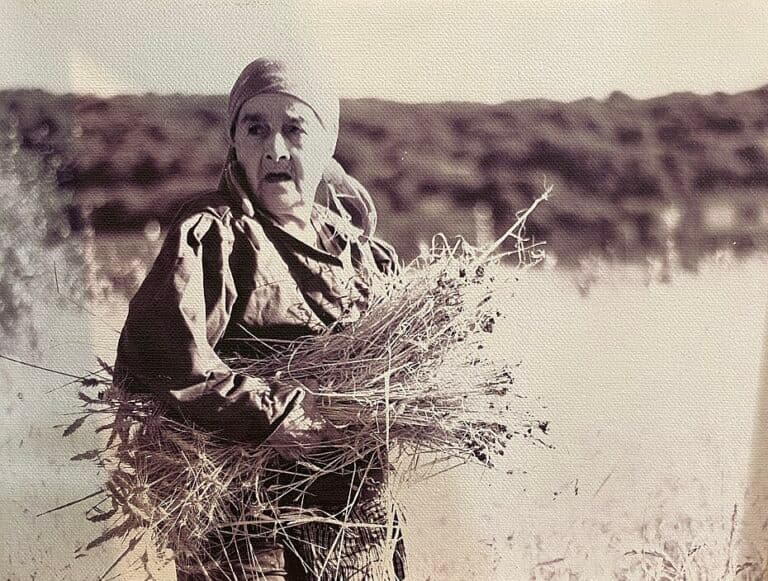
Margalit Zinati is one of the clearest living symbols of Jewish continuity in the Land of Israel. Born in Peki’in in 1931, she became known as the “keeper of the Jewish embers,” the woman who guarded the ancient synagogue and kept alive a Jewish story that reaches back through exile, return, persecution and sovereignty.
Her story fits the opening article in a new “People of Israel” series because it is not only personal. It is national. It is the story of a Jewish woman who chose duty over comfort, memory over disappearance and covenant over surrender.
Jeremiah gives the frame: “Thus says the Lord, who gives the sun for light by day.” In that same passage, the prophet ties Israel’s endurance to the fixed order of creation. Margalit Zinati’s life gives that idea a human face. She stayed where generations before her had stayed.
Margalit Zinati And Jewish Peki’in
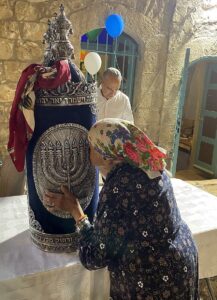
Margalit Zinati was born in Peki’in in 1931 to Yosef and Mazal-Saada Zinati, members of a family that became the living symbol of the village’s ancient Jewish presence. According to Peki’in tradition, the Zinati family descends from one of the priestly families that settled in the Galilee after the destruction of the Second Temple.
That tradition sits at the heart of Peki’in’s Jewish story. After the Romans destroyed the Temple in Jerusalem, Jewish memory holds that several priestly families moved north to the Galilee. Peki’in became one of the places where that memory survived. Over time, the village became known as one of the rare communities in the Land of Israel where a Jewish presence endured across centuries.
Peki’in also connects to the world of the sages. Local tradition identifies the village with Rabbi Yehoshua ben Hananiah and with Rabbi Shimon bar Yochai, who is said to have hidden from the Romans in a nearby cave with his son, Rabbi Elazar. The cave, spring and carob tree remain part of the Jewish and local memory of the village.
Margalit grew up with her brother Shaul inside one of the last Jewish homes in Peki’in. Around her were the ancient synagogue, the family fields and the memory of a Jewish community that had refused to disappear.
The Musta’arabi Jews Of The Land
The Jews of Peki’in belonged to the older Jewish population of Eretz Yisrael, often known as Musta’arabim. In this context, Musta’arabim were not simply “Arabic-speaking Jews” in a broad Middle Eastern sense. They were Jews of the Land of Israel who had remained in the country for centuries and became Arabized in language, dress and daily culture while keeping their Jewish faith and identity.
That made them distinct from later Sephardi and Ashkenazi communities. Sephardi Jews largely came from Spain and Portugal after the 1492 expulsion, bringing their own customs, language and rabbinic traditions. Ashkenazi Jews came from Central and Eastern Europe. The Musta’arabim represented something older in the local landscape: Jews rooted in the Land itself, shaped by the region around them, but still tied to Torah, synagogue life and Jewish continuity.
In Peki’in, that world survived in a visible way through the Zinati family.
A Family That Stayed
The modern history of Jewish Peki’in was painful. During the Arab Revolt of 1936 to 1939, most of the village’s Jews fled. Some left permanently. The Zinati family also left for a time, moving temporarily to Hadera, but they returned.
During Israel’s War of Independence, the family was forced out again for a period. Yet after the war, Margalit came back to Peki’in and made the decision that shaped the rest of her life.
She chose not to marry because marriage would likely have required her to leave the village. Instead, she stayed to care for her parents, guard the synagogue and protect the last living Jewish presence in Peki’in. What began as family duty became a national mission.
For years, Margalit opened the synagogue, swept its floors and courtyard, welcomed visitors and told the story of the Jewish families who once lived there. Her life became a bridge between the ancient Jewish past of the Galilee and the restored sovereignty of the modern State of Israel.
The Embers Continue
The ancient synagogue of Peki’in carries layers of Jewish memory. Local tradition connects the site to the sages of the Mishnah and Talmud. The synagogue was damaged in the 1837 earthquake and rebuilt in 1873.
Inside are ancient Jewish stones, including symbols associated with the Temple. Local tradition says some of these stones came from the destroyed Second Temple in Jerusalem. Whether read through archaeology, family memory or sacred tradition, the synagogue remains one of the most powerful symbols of Jewish endurance in the Galilee.
Margalit Zinati became known as the keeper of Peki’in’s Jewish embers because she did not allow that memory to go dark. She guarded a synagogue, but she also guarded a chain of identity.
No confirmed public information identifies one specific person who will personally take over Margalit’s role after her passing. However, Beit Zinati, the synagogue and the heritage work built around her family story now help preserve what she carried alone for so many years.
Her life tells a simple truth: Jewish history in the Land of Israel was never only a story of exile and return. In places like Peki’in, it was also a story of Jews who stayed.
For more stories on Israel, faith, and the values behind the headlines, follow Sinai on Facebook and Instagram.
Discussion0
No comments yet — be the first to share your thoughts.